
Can my dog eat potatoes?
Can dogs eat potatoes?In moderation
Only cooked and peeled; raw, green and sprouting potatoes contain solanine.
Yes, but only cooked and peeled: potatoes boiled until soft, without salt, butter or seasoning, are safe for dogs in small amounts. Raw potatoes are hard to digest, and the skin, green patches, sprouts and the plant contain a lot of solanine, which can cause vomiting, diarrhoea and weakness. Cooking doesn't make green or sprouting potatoes safe either. Depending on size, one to four teaspoons are enough as an extra.
How much potato can your dog eat?
Enter the weight – the amount updates straight away. You can adjust age, activity and neutering below.
How the calculator works
- Daily requirement: Resting energy requirement 70 × 15 kg^0.75 ≈ 534 kcal × factor 1.6 ≈ 855 kcal.
- Treat allowance: at most 10% of that = 86 kcal for all treats combined.
- Calorie limit: 86 kcal ÷ 86 kcal/100 g = 100 g of potatoes.
- Guide value for dogs 10–25 kg: 2 × teaspoon of potato (cooked, mashed) at 5 g each = 10 g (guide value from the source).
- Recommendation: the smaller of the two, rounded down to half portions → 2 × 5 g = 10 g ≈ 9 kcal.
Sources: 10% rule from the WSAVA guide to treats · kcal value: USDA FoodData Central. Daily requirement as in the dog calorie calculator.
Result · 15 kg · Adult
Up to 2
× teaspoon of potato (cooked, mashed) on a snack day
(≈ 10 g, 9 kcal)
How often: Only occasionally as an extra, not every day. All treats together should make up no more than 10% of daily calories. If potato is a side in your home-cooked recipe, the DoggoMeal app works out the grams to match – the amounts here apply to an extra on top of the normal food.
Treat allowance 86 kcal (10% of 855 kcal) · 1 teaspoon of potato (cooked, mashed) ≈ 5 g
Limited by: guide value
Here the guide value for dogs 10–25 kg sets the limit (guide value from the source): at most 2 × teaspoon of potato (cooked, mashed). In terms of calories, up to 100 g would be possible.
Based on Chewy (vet-reviewed): 1 teaspoon for dogs up to approx. 9 kg, 1–3 teaspoons up to approx. 23 kg, 1–2 tablespoons (3–6 teaspoons) up to approx. 41 kg. Here we've taken values towards the lower end for each weight class.
This applies if it's the only snack that day – if your dog gets other treats too, give correspondingly less.
 The app calculates recipes in grams, kcal and portions to suit your dog's weight, age, activity and allergies.
Potatoes for dogs: amount by weight
| Weight | Maximum per snack day | kcal |
|---|---|---|
| 5 kg | 1 teaspoon of potato (cooked, mashed)≈ 5 g | ≈ 4 |
| 10 kg | 1 teaspoon of potato (cooked, mashed)≈ 5 g | ≈ 4 |
| 20 kg | 2 × teaspoon of potato (cooked, mashed)≈ 10 g | ≈ 9 |
| 30 kg | 4 × teaspoon of potato (cooked, mashed)≈ 20 g | ≈ 17 |
| 40 kg | 4 × teaspoon of potato (cooked, mashed)≈ 20 g | ≈ 17 |
- All snacks together no more than 10% of daily calories (WSAVA recommendation). If your dog gets other treats too, give correspondingly less.
- Guide value per weight class – small up to 10 kg, medium 10–25 kg, large over 25 kg: Based on Chewy (vet-reviewed): 1 teaspoon for dogs up to approx. 9 kg, 1–3 teaspoons up to approx. 23 kg, 1–2 tablespoons (3–6 teaspoons) up to approx. 41 kg. Here we've taken values towards the lower end for each weight class.
Emergency note
Eaten raw or green potato?
How serious this is depends on your dog's size, the amount, and whether the potato was green or sprouting: that's where most of the solanine is. The same goes for the leaves and berries of the potato plant. Large raw pieces can also get stuck in the throat or gut. Don't try to make your dog vomit yourself.
Possible symptoms
- Vomiting
- Diarrhoea
- Wind or a bloated tummy
- Lethargy
- Muscle weakness
- Gagging
- With large amounts, nervous system disorders, even loss of consciousness
When to see a vet?
If your dog is vomiting, has diarrhoea or seems lethargic or weak, call your vet or the emergency vet service immediately. Get in touch even without any signs if it has eaten green or sprouting potatoes, parts of the plant or a larger amount of raw potato, especially if it's a small dog. If possible, take any leftovers with you to the vet.
In an emergency: call your vet or an animal hospital
Outside opening hours, an emergency vet service or an animal hospital can help. Note down the amount, the time and the packaging, and don't try to make your dog vomit yourself. Poison information centres mainly advise on poisoning in people and only help with animals when they have capacity – the first point of contact for your dog is your vet.
What's in it
- Provides potassium, vitamins C and B6 and a little fibre.
- Almost fat-free: 0.1 g of fat per 100 g when cooked.
- Cooked and unseasoned, easy to digest and gentle on the stomach.
- Mashed, it can be spread on a lick mat or stuffed into a chew toy.
What to watch out for
- Raw potatoes, green patches, sprouts and the plant contain solanine. It can cause vomiting, diarrhoea, lethargy and weakness, and in large amounts also disorders of the nervous system.
- The skin contains many times more solanine than the inside, with particularly high levels at the eyes. Potatoes that have been kept in the light and turned green contain considerably more.
- Cooking hardly destroys solanine; much of it passes into the cooking water. Cooking doesn't make green or sprouting potatoes safe.
- Raw or half-cooked pieces are hard to digest; large pieces can get stuck in the throat or block the gut.
- Potatoes are high in starch – around 86 kcal per 100 g cooked. Too much contributes to weight gain.
- If your dog has diabetes or is overweight, only give potatoes after checking with your vet.
- Chips, crisps, fried potatoes and hash browns are greasy and salted and can contain onion or garlic, which are toxic to dogs.
- Mashed potato from the table or from a packet contains butter, milk or salt; a lot of butter can trigger pancreatitis.
How to prepare potatoes
How to do it
- Use only firm potatoes without green patches or sprouts
- Peel them and cut out the eyes and any small green patches generously
- Boil them in water without salt until they're soft enough to mash with a fork
- Pour away the cooking water and let the potatoes cool
- Mash them or cut them into small pieces
- The first time, give just one teaspoon and keep an eye on digestion
Better not
- Raw, half-cooked, green or sprouting potatoes
- Potato peel, even cooked
- Butter, milk, cream, salt, onion, garlic or seasoning
- Chips, crisps, fried potatoes, hash browns or croquettes
- Potato salad, mashed potato from the table or instant mash
- Peelings, sprouts and potato plant leaves left lying around in the bin or garden
How often?
Only occasionally as an extra, not every day. All treats together should make up no more than 10% of daily calories. If potato is a side in your home-cooked recipe, the DoggoMeal app works out the grams to match – the amounts here apply to an extra on top of the normal food.
Frequently asked questions about potatoes
Can dogs eat raw potatoes?
No. Raw potatoes are hard to digest, large pieces can get stuck in the throat or gut, and they contain solanine, some of which passes into the cooking water during cooking. Only give potatoes boiled until soft and peeled.
Can my dog eat potato peel?
Better not. The skin contains many times more solanine than the inside, with particularly high levels at the eyes and in green skin. The AKC and PetMD consider a small piece of cooked skin that isn't green to be safe – but peeling is still the safe choice.
Can dogs eat green or sprouting potatoes?
No, not even cooked. Green patches and sprouts contain particularly high levels of solanine, and cooking hardly destroys it. Cut away small green patches and eyes generously. If a potato is green over a large area, throw it away.
Can dogs eat mashed potato?
Yes, if you mash it yourself from boiled, peeled potatoes – without butter, milk, salt or seasoning. Mashed potato from the family table isn't suitable, and instant mash from a packet is made up with milk, which dogs with lactose intolerance don't tolerate.
Can dogs eat chips, crisps or fried potatoes?
No. Chips, crisps, fried potatoes and hash browns are fried in fat, salted and can contain onion or garlic, which are toxic to dogs. They aren't suitable as a snack.
Can dogs eat sweet potatoes?
Yes, cooked and peeled. Botanically, the sweet potato isn't a potato and isn't a member of the nightshade family; the ASPCA lists it as non-toxic to dogs. Raw, it's hard to chew and can upset the stomach or block the gut. Caution is needed if your dog has diabetes.
Can puppies eat potatoes?
Yes, small pieces of well-cooked, peeled potato without seasoning. As an example, the AKC mentions a few pieces in a food toy for a young Border Collie. Give only a little and watch how your puppy tolerates it the first time.
Can my dog eat potatoes every day?
As an extra, better only now and then: potatoes should make up only a small part of the overall diet. If you cook your dog's food yourself and potato is in the recipe, it's planned in there as a side.
How many calories are in a boiled potato?
A medium-sized potato boiled without its skin weighs around 167 g and has just over 140 kcal. That's more than double the snack limit for a 10 kg dog with normal needs, which is around 63 kcal a day.
Can I pour the potato cooking water over my dog's food?
No. During cooking, much of the solanine passes from the potato into the cooking water. Pour it away and give your dog only the cooled, peeled potatoes.
How can I tell if a potato has too much solanine?
By green patches under the skin and by sprouts. Potatoes that have been kept in the light turn green and then contain considerably more solanine; frost and damage also increase the levels. So store potatoes in a cool, dark place.
Does boiled potato help with diarrhoea?
Boiled, unseasoned potato is easy to digest, and PetMD mentions it as part of a bland diet for mild stomach and gut upsets. It doesn't replace treatment: if the diarrhoea persists, vomiting starts or your dog seems lethargic, it needs to see the vet.
Recipes with potatoes
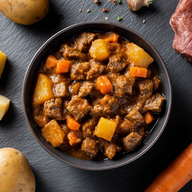
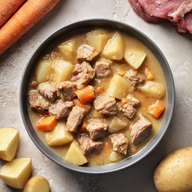
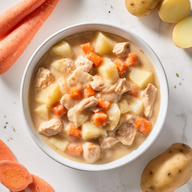
Ingredients and method are on the website; the app works out the amounts for your dog.
Similar foods
- YesGrains & sidesRiceOnly cooked and without salt, stock or seasoning, as a small extra portion with the food.See the answer
- In moderationGrains & sidesPastaOnly cooked, without salt, oil or sauce, and only a small bite now and then.See the answer
- YesVegetablesCarrotRaw or cooked, without salt, butter or seasoning, in small pieces; not carrot cake.See the answer
- In moderationVegetablesTomatoOnly ripe, red tomatoes without any green; never unripe fruit or plant parts.See the answer
- YesVegetablesCourgetteRaw or cooked, without oil or seasoning; never feed courgettes that taste bitter.See the answer
- In moderationGrains & sidesOatsPlain and cooked in water, in small amounts and no more than twice a week.See the answer
Sources
- Can Dogs Eat Potatoes? – American Kennel Club (AKC)
- Can Dogs Eat Potatoes? Benefits, Risks, and Feeding Tips – PetMD (vet-reviewed)
- Can Dogs Eat Potatoes? – Chewy (vet-reviewed)
- CliniTox Pflanzengifte: Solanum tuberosum – Institut für Veterinärpharmakologie und -toxikologie, Universität Zürich
- Toxic and Non-toxic Plants: Sweet Potato Vine – ASPCA Animal Poison Control Center
- Can Dogs Eat Sweet Potatoes? – American Kennel Club (AKC)
- Vergiftung beim Hund: Richtig helfen – aber wie? (Presseinformation 30/2012) – Bundestierärztekammer
- Potatoes, boiled, cooked without skin, flesh, without salt (SR Legacy, FDC 170440) – USDA FoodData Central
- Feeding treats to your dog – WSAVA Global Nutrition Committee (10% rule in the calculator)
Reviewed on · DoggoMeal editorial team
This page is no substitute for veterinary advice. Dogs with pre-existing conditions – for example of the kidneys, liver or pancreas, or with diabetes – and dogs with allergies often need their own rules. If your dog has symptoms or you're unsure, ask your vet.
Recipes that fit your dog
DoggoMeal is an app for iPhone and Android: you create a profile for your dog, choose a recipe, and the app calculates grams, kcal and portions to suit your dog's weight, age, activity and allergies.
- Dog profile
- Recipes with gram amounts
- Allergy warnings
- Cooking with video
Free · no subscription · every feature included
