
Can my dog eat rice?
Can dogs eat rice?Yes
Only cooked and without salt, stock or seasoning, as a small extra portion with the food.
Yes, dogs can eat rice – cooked, without salt or seasoning and in small amounts. White rice is easy to digest and is part of the bland diet after digestive problems; brown rice has more fibre. At 130 kcal per 100 g cooked, rice remains an extra portion that doesn't replace normal food.
How much rice can your dog eat?
Enter the weight – the amount updates straight away. You can adjust age, activity and neutering below.
How the calculator works
- Daily requirement: Resting energy requirement 70 × 15 kg^0.75 ≈ 534 kcal × factor 1.6 ≈ 855 kcal.
- Treat allowance: at most 10% of that = 86 kcal for all treats combined.
- Calorie limit: 86 kcal ÷ 130 kcal/100 g = 66 g of rice.
- Guide value for dogs 10–25 kg: 4 × tablespoon of cooked rice (level) at 10 g each = 40 g (guide value from the source).
- Recommendation: the smaller of the two, rounded down to half portions → 4 × 10 g = 40 g ≈ 52 kcal.
Sources: 10% rule from the WSAVA guide to treats · kcal value: USDA FoodData Central. Daily requirement as in the dog calorie calculator.
Result · 15 kg · Adult
Up to 4
× tablespoon of cooked rice (level) on a snack day
(≈ 40 g, 52 kcal)
Treat allowance 86 kcal (10% of 855 kcal) · 1 tablespoon of cooked rice (level) ≈ 10 g
Limited by: guide value
Here the guide value for dogs 10–25 kg sets the limit (guide value from the source): at most 4 × tablespoon of cooked rice (level). In terms of calories, up to 66 g would be possible.
According to PetMD (vet-reviewed): 1–3 tablespoons for small dogs, ¼ cup for medium-sized and ½ cup for large dogs, two to three times a week – converted at 158 g of cooked rice per cup (USDA).
This applies if it's the only snack that day – if your dog gets other treats too, give correspondingly less.
 The app calculates recipes in grams, kcal and portions to suit your dog's weight, age, activity and allergies.
Rice for dogs: amount by weight
| Weight | Maximum per snack day | kcal |
|---|---|---|
| 5 kg | 2 × tablespoon of cooked rice (level)≈ 20 g | ≈ 26 |
| 10 kg | 2 × tablespoon of cooked rice (level)≈ 20 g | ≈ 26 |
| 20 kg | 4 × tablespoon of cooked rice (level)≈ 40 g | ≈ 52 |
| 30 kg | 8 × tablespoon of cooked rice (level)≈ 80 g | ≈ 104 |
| 40 kg | 8 × tablespoon of cooked rice (level)≈ 80 g | ≈ 104 |
- All snacks together no more than 10% of daily calories (WSAVA recommendation). If your dog gets other treats too, give correspondingly less.
- Guide value per weight class – small up to 10 kg, medium 10–25 kg, large over 25 kg: According to PetMD (vet-reviewed): 1–3 tablespoons for small dogs, ¼ cup for medium-sized and ½ cup for large dogs, two to three times a week – converted at 158 g of cooked rice per cup (USDA).
What's in it
- Easy to digest and low in fat when cooked: 100 g of cooked white rice has 0.3 g of fat and hardly any sugar.
- White rice is mild and low in fibre – which is why it's part of the bland diet vets use after digestive problems.
- Brown rice provides around four times as much fibre and just over three times as much magnesium as white rice.
- Rice contains no gluten.
What to watch out for
- Complete dog food already contains carbohydrates. Larger amounts of rice on top encourage weight gain.
- White rice has a high glycaemic index and can raise blood sugar – if your dog has diabetes or is overweight, only give it after checking with your vet.
- Seasoned rice isn't suitable: onions, garlic and a lot of salt harm dogs – onions and garlic even when cooked or as powder in seasoning and soup mixes.
- Rice contains more inorganic arsenic than other grains, and brown rice and rice cakes contain more than white rice. Washing it and cooking it in plenty of water partly reduces the level.
- Brown rice is harder to digest than white rice and isn't the right choice for diarrhoea.
- Raw, the starch in rice is poorly digestible – only give rice cooked.
- Rice doesn't replace a balanced dog food.
How to prepare rice
How to do it
- Wash the rice in a sieve before cooking
- Cook until soft in plenty of unsalted water, then drain off the cooking water
- Leave to cool and mix into the normal food
- The first time, give only a little and keep an eye on digestion
Better not
- Salt, stock, butter or seasoning in the cooking water
- Leftover risotto, fried rice or rice stir-fry
- Sushi rice – it's dressed with rice vinegar, sugar and salt
- Raw rice
- Salted or coated rice cakes
- Rice as a substitute for normal food
How often?
As an extra with the normal food two to three times a week, not every day. All treats together should make up no more than 10% of daily calories. If you cook for your dog yourself and rice is part of the recipe, the DoggoMeal app works out the amount to suit it.
Frequently asked questions about rice
Can dogs eat brown rice or wholegrain rice?
Yes, cooked and unseasoned. Brown rice has around four times as much fibre as white rice, but it is harder to digest and contains more arsenic. So for digestive problems, use white rice.
Can dogs eat basmati or jasmine rice?
Yes. Basmati and jasmine are white long-grain varieties and are as suitable for dogs as other white rice – cooked, without salt or seasoning. Leave out seasoned ready-made rice from a pouch and rice from restaurants.
Can my dog eat raw rice?
No – only give rice cooked, as recommended by the AKC and PetMD. Raw, the starch in the grain is poorly digestible: in a laboratory study of grains from dog food, including rice, the starch was almost four times as digestible after ten minutes of cooking as it was raw.
Can dogs eat rice cakes or puffed rice?
A piece of an unsalted, uncoated rice cake isn't toxic, but it makes little sense as a snack: one cake (9 g) has around 35 kcal, and according to the German Federal Institute for Risk Assessment (BfR), rice cakes can contain more arsenic than white rice. Don't give salted, sweetened or chocolate-coated cakes or puffed rice bars – chocolate is toxic to dogs.
Can dogs eat fried rice, risotto or sushi rice?
No. Seasoned rice dishes such as fried rice can contain onions, garlic or a lot of salt; risotto is cooked with shallots, stock and butter; and sushi rice is dressed with rice vinegar, sugar and salt. The onion family and a lot of salt harm dogs. For your dog, cook a small portion of plain rice.
Can puppies eat rice?
Yes, cooked and unseasoned, in small amounts. But rice doesn't replace a complete puppy food. As with any new food, start with a little and talk to your vet first.
Can my dog have rice every day?
As an extra on top of complete food, better not: PetMD advises two to three times a week, and the AKC points out that complete food already contains carbohydrates. If rice is a fixed part of a home-cooked recipe, the DoggoMeal app works out the amount to suit the recipe.
Does rice help with diarrhoea?
Cooked white rice is part of the bland diet vets recommend for mild digestive problems; its starch firms up the stools. How much chicken and rice your dog should then get each day is worked out by the bland diet calculator at doggomeal.de/en/schonkost-hund-rechner. If the diarrhoea lasts longer than two days, is bloody or your dog seems unwell, it needs to see your vet.
How many calories are in a tablespoon of cooked rice?
A level tablespoon of cooked white rice weighs about 10 g and has around 13 kcal. A quarter cup – around 40 g with just over 50 kcal – is, according to PetMD, already the portion for a medium-sized dog.
Is the arsenic in rice a problem for my dog?
Rice contains more inorganic arsenic than other grains because the plant absorbs it from the soil and irrigation water; brown rice, rice cakes and rice flakes contain more than white rice. The BfR advises eating a varied diet and washing rice, cooking it in plenty of water and draining off the cooking water. That's also how to prepare your dog's portion.
Can my dog eat rice if it has diabetes or is overweight?
Only after checking with your vet. White rice has a high glycaemic index and can raise blood sugar; brown rice is somewhat lower. At 130 kcal per 100 g cooked, rice also adds calories, which count when a dog is overweight.
How much rice belongs in home-cooked dog food?
That depends on the recipe and on the dog. The amounts on this page apply to an extra portion on top of normal food. If you cook for your dog yourself, the DoggoMeal app works out the amount of rice to suit the recipe and your dog's weight, age and activity.
Recipes with rice
Ingredients and method are on the website; the app works out the amounts for your dog.
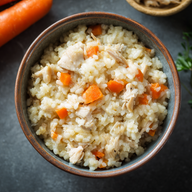 Main DishesChicken & Rice
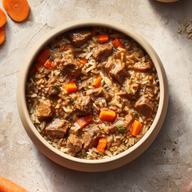 Main DishesLamb & Rice
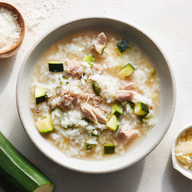 Main DishesRabbit & Rice
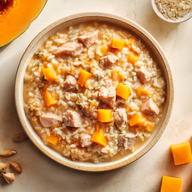 Main DishesTurkey & Rice
 Special OccasionsDog Sushi
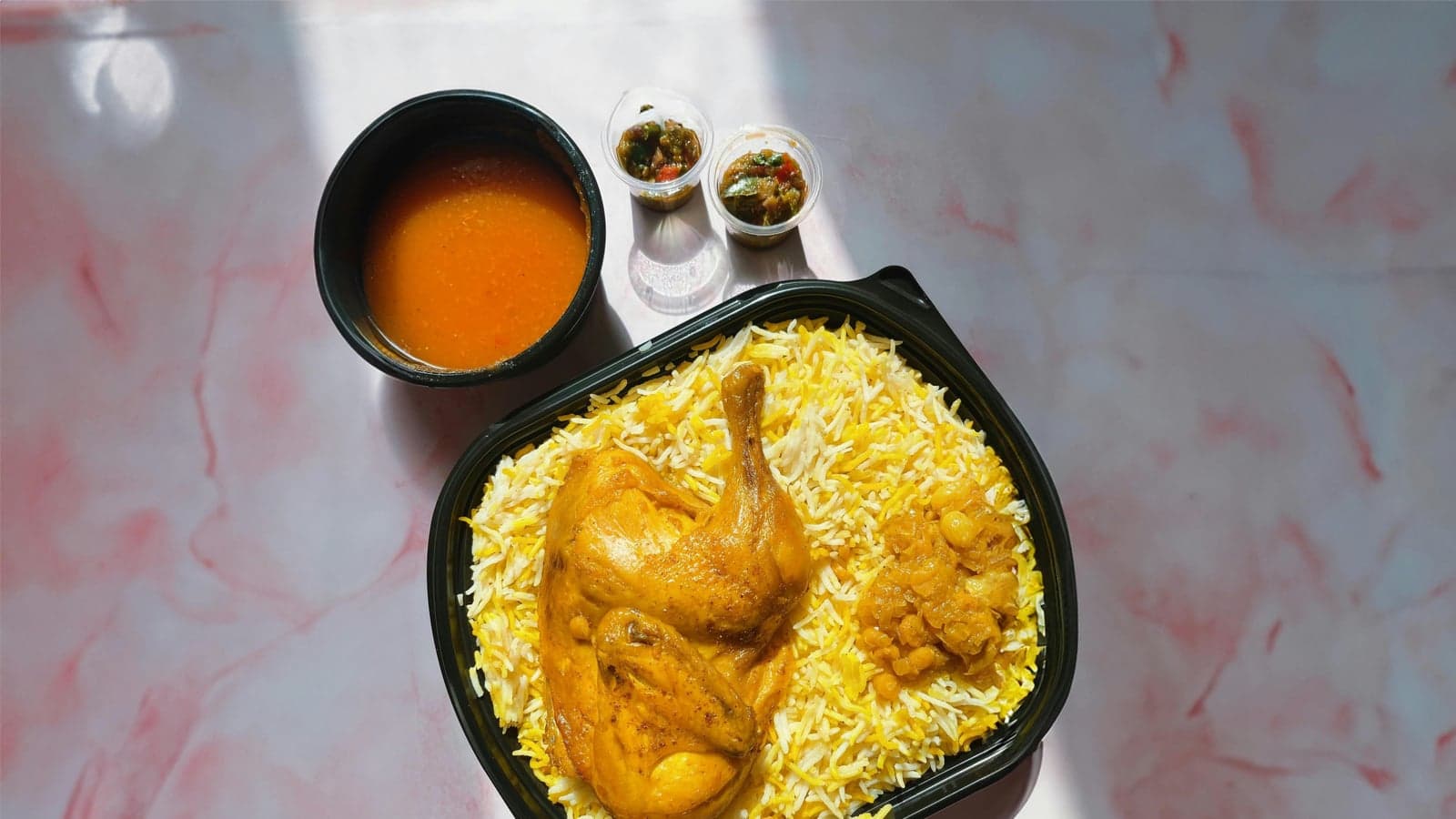 MagazineBland diet for dogs – chicken and rice (1 : 2)From “Bland diet for dogs”
 MagazineBeginner's daily recipe for dogs – turkey, rice, vegetablesFrom “Homemade dog food for beginners”
 MagazineSalmon and potato crackersFrom “Homemade dog treats”
Similar foods
- In moderationVegetablesPotatoOnly cooked and peeled; raw, green and sprouting potatoes contain solanine.See the answer
- In moderationGrains & sidesPastaOnly cooked, without salt, oil or sauce, and only a small bite now and then.See the answer
- In moderationGrains & sidesOatsPlain and cooked in water, in small amounts and no more than twice a week.See the answer
- In moderationGrains & sidesCouscousOnly cooked plain in water, without salt or seasoning; not if your dog has a wheat allergy.See the answer
- In moderationGrains & sidesRuskOnly plain rusks without chocolate or raisins, and rarely, because of the sugar and calories.See the answer
- YesVegetablesCarrotRaw or cooked, without salt, butter or seasoning, in small pieces; not carrot cake.See the answer
Sources
- Can Dogs Eat Rice? – American Kennel Club (AKC)
- Can Dogs Eat Rice? – PetMD (vet-reviewed)
- Diarrhea in Dogs – VCA Animal Hospitals
- People Foods to Avoid Feeding Your Pets – ASPCA Animal Poison Control Center
- Garlic and Onion (Allium spp) Toxicosis in Animals – Merck Veterinary Manual
- Fragen und Antworten zu Arsengehalten in Reis und Reisprodukten – Bundesinstitut für Risikobewertung (BfR)
- The effect of heat treatment applied to cereals used in dog foods on gelatinization and digestibility of starch – Eurasian Journal of Veterinary Sciences (2017)
- Rice, white, long-grain, regular, unenriched, cooked without salt (SR Legacy, FDC 169757) – USDA FoodData Central
- Feeding treats to your dog – WSAVA Global Nutrition Committee (10% rule in the calculator)
Reviewed on · DoggoMeal editorial team
This page is no substitute for veterinary advice. Dogs with pre-existing conditions – for example of the kidneys, liver or pancreas, or with diabetes – and dogs with allergies often need their own rules. If your dog has symptoms or you're unsure, ask your vet.
Recipes that fit your dog
DoggoMeal is an app for iPhone and Android: you create a profile for your dog, choose a recipe, and the app calculates grams, kcal and portions to suit your dog's weight, age, activity and allergies.
- Dog profile
- Recipes with gram amounts
- Allergy warnings
- Cooking with video
Free · no subscription · every feature included
