
Can my dog eat eggs?
Can dogs eat eggs?In moderation
Only fully cooked, without salt or fat, and no more than once or twice a week.
Yes, dogs can eat eggs if they're fully cooked – hard-boiled, scrambled or poached, without butter, oil, salt or seasoning. Eggs provide protein and vitamins, but they have around 155 kcal per 100 g. As a guide, give a quarter of an egg to one and a half eggs, depending on size, once or twice a week; don't give raw eggs.
How much egg can your dog eat?
Enter the weight – the amount updates straight away. You can adjust age, activity and neutering below.
How the calculator works
- Daily requirement: Resting energy requirement 70 × 15 kg^0.75 ≈ 534 kcal × factor 1.6 ≈ 855 kcal.
- Treat allowance: at most 10% of that = 86 kcal for all treats combined.
- Calorie limit: 86 kcal ÷ 155 kcal/100 g = 55 g of eggs.
- Guide value for dogs 10–25 kg: 1 × hard-boiled egg (medium, size M) at 50 g each = 50 g (guide value from the source).
- Recommendation: the smaller of the two, rounded down to half portions → 1 × 50 g = 50 g ≈ 78 kcal.
Sources: 10% rule from the WSAVA guide to treats · kcal value: USDA FoodData Central. Daily requirement as in the dog calorie calculator.
Result · 15 kg · Adult
Up to 1
hard-boiled egg (medium, size M) on a snack day
(≈ 50 g, 78 kcal)
How often: Once or twice a week, not every day. All treats together should make up no more than 10% of daily calories – so on egg days, give fewer other treats.
Treat allowance 86 kcal (10% of 855 kcal) · 1 hard-boiled egg (medium, size M) ≈ 50 g
Limited by: guide value
Here the guide value for dogs 10–25 kg sets the limit (guide value from the source): at most 1 hard-boiled egg (medium, size M). In terms of calories, up to 55 g would be possible.
Based on PetMD: ¼ to ½ an egg for dogs up to about 9 kg, 1 egg at about 10–23 kg, 1½ eggs at 23–41 kg, each once or twice a week. A medium egg (size M) weighs around 50 g without its shell.
This applies if it's the only snack that day – if your dog gets other treats too, give correspondingly less.
 The app calculates recipes in grams, kcal and portions to suit your dog's weight, age, activity and allergies.
Eggs for dogs: amount by weight
| Weight | Maximum per snack day | kcal |
|---|---|---|
| 5 kg | 24 g | ≈ 37 |
| 10 kg | ½ hard-boiled egg (medium, size M)≈ 25 g | ≈ 39 |
| 20 kg | 1 hard-boiled egg (medium, size M)≈ 50 g | ≈ 78 |
| 30 kg | 1½ × hard-boiled egg (medium, size M)≈ 75 g | ≈ 116 |
| 40 kg | 1½ × hard-boiled egg (medium, size M)≈ 75 g | ≈ 116 |
- All snacks together no more than 10% of daily calories (WSAVA recommendation). If your dog gets other treats too, give correspondingly less.
- Guide value per weight class – small up to 10 kg, medium 10–25 kg, large over 25 kg: Based on PetMD: ¼ to ½ an egg for dogs up to about 9 kg, 1 egg at about 10–23 kg, 1½ eggs at 23–41 kg, each once or twice a week. A medium egg (size M) weighs around 50 g without its shell.
What's in it
- Provides easily digestible protein: a hard-boiled egg has around 12.6 g of protein per 100 g.
- Contains vitamin A, riboflavin, vitamin B12, folate, iron and selenium.
- The yolk contains the fat-soluble vitamins A, D, E and K.
- Hard-boiled and chopped small, it can be sprinkled over food; scrambled egg made without fat fits in a chew toy or on a lick mat.
What to watch out for
- Raw eggs can contain salmonella. This affects you too if you feed raw eggs.
- Raw egg white contains avidin, which binds biotin. Feeding raw eggs regularly can lead to biotin deficiency; cooking makes avidin inactive.
- Eggs are high in calories: a medium egg provides around 78 kcal. Too many contribute to weight gain.
- The yolk is high in fat. If your dog has had pancreatitis, is overweight or is on a low-fat diet, give cooked egg white at most, or leave eggs out.
- Too much egg in one go can cause wind or diarrhoea, especially the first time.
- An egg allergy is rare, but possible. Warning signs are vomiting, diarrhoea, itching, swelling or breathing problems.
- Eggshell has sharp edges that can injure the throat or digestive tract.
- Eggs that are fried in butter or oil, salted or seasoned aren't suitable for dogs.
How to prepare eggs
How to do it
- Hard-boil the egg until the white and yolk are completely firm
- Let it cool, peel it and cut it into small pieces
- Cook scrambled egg all the way through without butter, oil, salt, milk or seasoning
- The first time, give just a small piece and keep an eye on digestion
- Keep cooked eggs in the fridge and use them within four days
Better not
- Raw or soft-boiled eggs
- Fried eggs with a runny yolk
- Eggs fried in butter or oil, salted or seasoned
- Pieces of eggshell
- Omelette, egg salad or scrambled egg with other ingredients
- Eggs as a daily side
How often?
Once or twice a week, not every day. All treats together should make up no more than 10% of daily calories – so on egg days, give fewer other treats.
Frequently asked questions about eggs
Can dogs eat raw eggs?
No. Raw eggs can contain salmonella, which can make your dog ill and can also put you at risk when you feed them. Raw egg white also contains avidin, which binds biotin; feeding it regularly can lead to biotin deficiency. Raw eggs have no additional benefit over cooked ones.
Can dogs eat boiled eggs?
Yes. Hard-boiled eggs are the simplest option: boil them until the white and yolk are completely firm, let them cool, then peel and chop them small. Leave out salt, butter and seasoning.
Can dogs eat scrambled or fried eggs?
Scrambled egg, yes, if it's cooked all the way through without butter, oil, salt, milk or other ingredients. The same goes for a fried egg: without fat and with a completely firm yolk – a runny yolk isn't fully cooked. Don't give scrambled egg with bacon, ham, cheese or chives.
Can dogs eat eggshells?
Not as a snack. Pieces of shell have sharp edges and can injure the throat or digestive tract. As a source of calcium, eggshell is boiled or baked and finely ground – only do this if your vet sees a need for calcium and tells you the amount.
Can dogs eat egg yolk, or only egg white?
Both, if cooked. The yolk contains vitamins A, D, E and K, but has more fat and calories than the white. With pancreatitis, excess weight or a low-fat diet, cooked egg white on its own is the more cautious choice – discuss this with your vet. Don't give raw egg white because of the avidin.
Can puppies eat eggs?
Yes, cooked eggs in small amounts. Introduce egg slowly, give less than you would an adult dog and keep an eye on digestion. If your puppy vomits or has diarrhoea, stop giving egg and ask your vet.
How often can my dog eat eggs?
PetMD gives once or twice a week as a guide. Eggs aren't meant as a daily side unless your vet recommends it: they provide a lot of calories and can throw a balanced diet off balance.
My dog ate a raw egg – what should I do?
Watch your dog closely. Fever, vomiting, diarrhoea and lethargy are signs of a salmonella infection. If they appear, call your vet.
How many calories are in a boiled egg?
According to the USDA, a hard-boiled egg has 155 kcal per 100 g. A medium egg (size M) weighs around 50 g without its shell, which is about 78 kcal. For a 10 kg dog, the snack limit is just over 60 kcal a day – a whole egg is already too much.
Can a dog be allergic to eggs?
It's rare, but possible. For the first few times, watch for vomiting, diarrhoea, itching, swelling or breathing problems, as well as recurring ear infections. If you notice any of these, leave eggs out and ask your vet.
Does a boiled egg help with stomach and gut problems?
Plain boiled egg can be gentle on the stomach for some dogs. If your dog is unwell, though, ask your vet first before giving it egg.
How long do boiled eggs keep for my dog?
Up to four days in the fridge. So you can boil a few eggs in advance and give small pieces spread over the week.
I cook for my dog myself – do these amounts apply to that too?
No. The amounts on this page are an extra on top of the normal food. If you cook all of your dog's food yourself, the amount of egg depends on the recipe; the DoggoMeal app works it out to suit the recipe.
Recipes with eggs
Ingredients and method are on the website; the app works out the amounts for your dog.
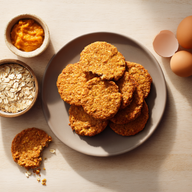 Snacks & TreatsPumpkin Oat Bites
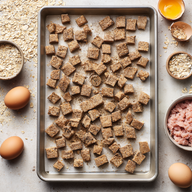 Snacks & TreatsTurkey Treats (Oven)
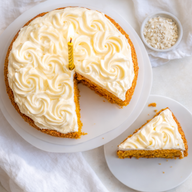 Special OccasionsBirthday Cake
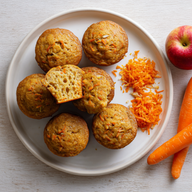 Special OccasionsMini Muffins
- Dog biscuitsDog biscuits with rolled oats, egg and chicken liver≈ 21 kcal per biscuit
- Dog biscuitsBanana dog biscuits with just 3 ingredients≈ 19 kcal per biscuit
- Dog biscuitsDog biscuits on a baking mat with baby food≈ 2.2 kcal per biscuit
- Dog biscuitsTuna dog biscuits: savoury and quick to make≈ 16 kcal per biscuit
 MagazineYoghurt and banana ice cream · Dog ice cream with chicken liver · Watermelon ice for dogs · Chicken broth ice cubes · Peanut butter and carrot ice creamFrom “Homemade dog ice cream”
 MagazineDog birthday cake with banana, peanut butter and oatsFrom “Dog birthday cake recipe”
 MagazineDried chicken hearts from the oven · Carrot and apple biscuits · Salmon and potato crackers · Beef lung from the oven · Banana chipsFrom “Homemade dog treats”
 MagazineBeginner's daily recipe for dogs – turkey, rice, vegetablesFrom “Homemade dog food for beginners”
Similar foods
- In moderationFishSalmonOnly cooked through, boneless and unseasoned, no more than once a week.See the answer
- YesGrains & sidesRiceOnly cooked and without salt, stock or seasoning, as a small extra portion with the food.See the answer
- In moderationGrains & sidesOatsPlain and cooked in water, in small amounts and no more than twice a week.See the answer
- In moderationVegetablesPotatoOnly cooked and peeled; raw, green and sprouting potatoes contain solanine.See the answer
- In moderationDairyCream cheesePlain only, without herbs, garlic or onions, and only a little because of fat and lactose.See the answer
- In moderationGrains & sidesPastaOnly cooked, without salt, oil or sauce, and only a small bite now and then.See the answer
Sources
- Can Dogs Eat Eggs? Benefits, Risks, and Safety Tips – American Kennel Club (AKC)
- Can Dogs Eat Eggs? Benefits, Risks, and Feeding Tips – PetMD (vet-reviewed)
- Nutritional Requirements of Small Animals – Merck Veterinary Manual
- Egg, whole, cooked, hard-boiled (SR Legacy, FDC 173424) – USDA FoodData Central
- Lebensmittel: Eier, Eiprodukte (Gewichtsklassen) – Bayerisches Landesamt für Gesundheit und Lebensmittelsicherheit (LGL)
- United States Standards, Grades, and Weight Classes for Shell Eggs (AMS 56) – USDA Agricultural Marketing Service
- Feeding treats to your dog – WSAVA Global Nutrition Committee (10% rule in the calculator)
Reviewed on · DoggoMeal editorial team
This page is no substitute for veterinary advice. Dogs with pre-existing conditions – for example of the kidneys, liver or pancreas, or with diabetes – and dogs with allergies often need their own rules. If your dog has symptoms or you're unsure, ask your vet.
Recipes that fit your dog
DoggoMeal is an app for iPhone and Android: you create a profile for your dog, choose a recipe, and the app calculates grams, kcal and portions to suit your dog's weight, age, activity and allergies.
- Dog profile
- Recipes with gram amounts
- Allergy warnings
- Cooking with video
Free · no subscription · every feature included
