Homemade dog ice cream: 5 sugar-free frozen treats
Make sugar-free dog ice cream at home: 5 recipes with banana, chicken liver, watermelon, broth and peanut butter. For 10 kg, 1–2 cubes a day are plenty.
By the DoggoMeal editorial teamPublished Updated 8 min read
In short
You can make dog ice cream yourself in ten minutes: plain yoghurt, water or unsalted broth as the base, plus banana, cooked chicken liver, watermelon or xylitol-free peanut butter – with no sugar and no sweetener. Ice cream counts as a treat: all snacks together should stay below 10% of daily calories, so for a 10 kg dog under around 63 kcal – that's about two yoghurt and banana cubes.

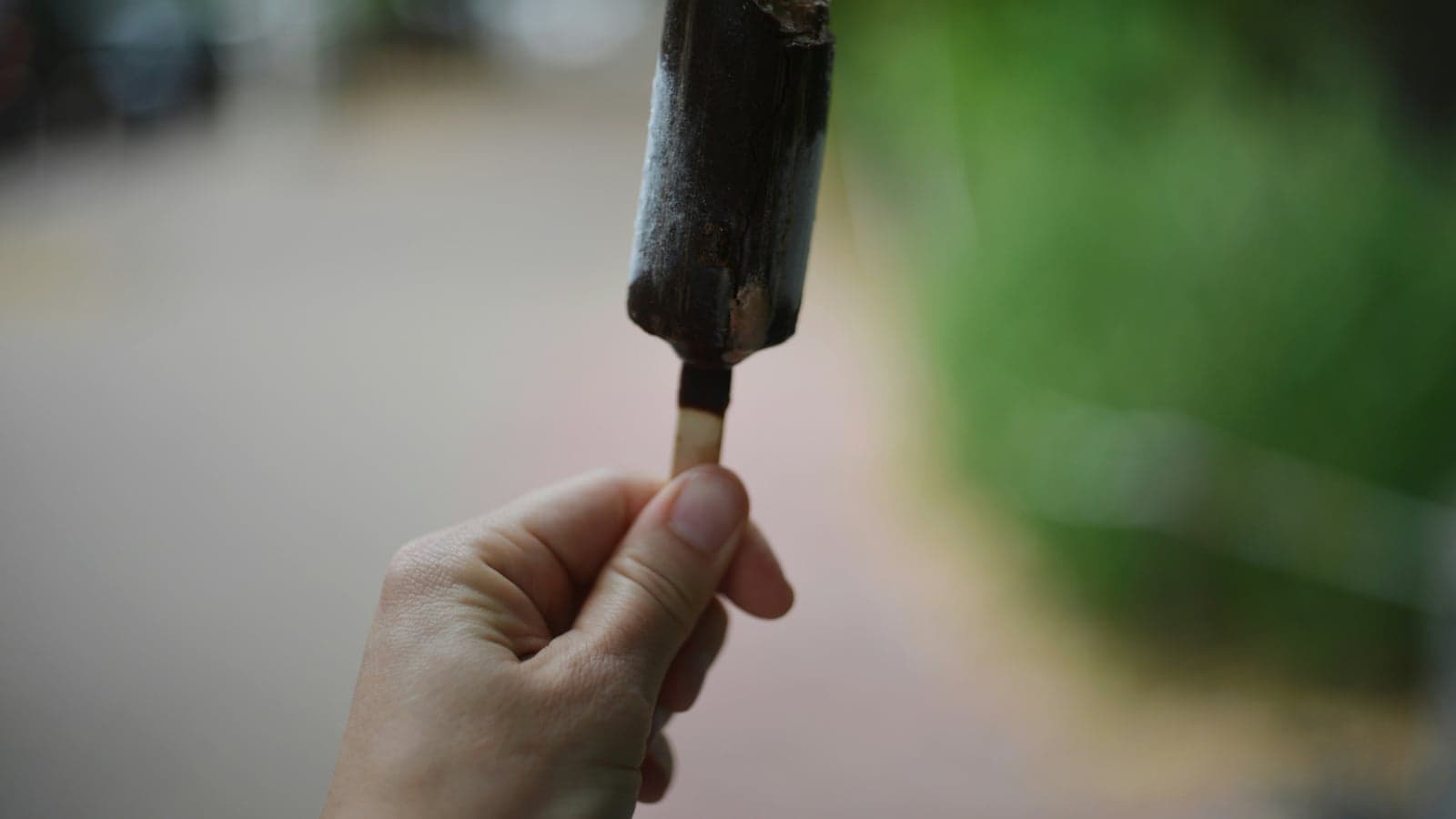
In summer, we make Nami ice cream from puréed blueberries + kefir, frozen in silicone moulds. She loves it – the perfect way to cool down on hot days.
You can make dog ice cream yourself in ten minutes: a base of plain yoghurt, water or unsalted broth, plus an ingredient your dog loves – banana, cooked chicken liver, watermelon, chicken or peanut butter without xylitol. Sugar, sweetener and chocolate stay out. And because ice cream is a treat, the 10 per cent rule applies: for a 10 kg dog, that's no more than about 63 kcal a day for all snacks together.
Shop-bought dog ice cream is convenient, but when you make it yourself, you know exactly what's in it. Here are five recipes that don't need any sugar – and the amounts that suit your dog.
Homemade dog ice cream: the 5 recipes at a glance
The calories are roughly calculated from typical nutritional values – they vary depending on the yoghurt, the ingredient or the size of the cube. For the daily limit, this level of accuracy is enough.
What you need
A silicone ice cube tray with 30 ml compartments. Frozen ice cream is easy to push out of silicone, while plastic trays tend to crack. Paw or bone shapes look cute but aren't a must. Plus a stick blender or small blender – that's all.
For small dogs, smaller compartments (10–15 ml) are worthwhile. That way, you can give a piece more often without blowing the daily budget.
1. Yoghurt and banana ice cream – the creamy classic
Mash a ripe banana (about 120 g) with a fork, add 250 g of plain yoghurt (3.5% fat, unsweetened) and blend briefly until creamy. Pour into the tray and freeze for at least 4 hours. This makes about 12 cubes at around 20–25 kcal each.
Dogs have only a little lactase, the enzyme that breaks down milk sugar. Many still tolerate small amounts of yoghurt well, but some react with soft stools. In that case, use lactose-free plain yoghurt – or one of the dairy-free recipes.
2. Dog ice cream with chicken liver – for keen lickers
Liver smells irresistible to most dogs. We use cooked chicken liver rather than liver sausage: supermarket liver sausage is practically always salted and seasoned, and many varieties contain onions. Cook the liver in water without salt until it's no longer pink inside – poultry often carries germs such as Campylobacter that are only killed when it's cooked through.
Here's how: purée 40 g of cooked, cooled chicken liver with 300 ml of water until smooth (for a creamier version, use half water, half plain yoghurt). Pour into the tray and freeze. With water, this makes about 11 cubes at around 6 kcal each. The mixture also works for freezing into a Kong or lick mat – that will keep your dog busy for a while.
3. Watermelon ice for dogs – light and refreshing
Watermelon is more than 90% water and low in calories. Important: remove the seeds and leave out the rind, as both are hard to digest.
Purée 300 g of flesh without the seeds, mix in 2 tbsp of plain yoghurt if you like, and freeze. This makes about 10 cubes at around 9–11 kcal each. Because this ice is so light, it's ideal for very hot days. Watermelon still contains fruit sugar, though – here too, it's better to spread one to three cubes over the day than to give a whole bowlful at once.
It works the same way with strawberries: wash 300 g, remove the green tops, purée and freeze – this makes about 10 cubes at around 10 kcal each.
4. Chicken broth ice cubes – dairy-free and full of flavour
Simmer 500 ml of water with 200 g of chicken breast for about 30 minutes. No salt, no onion, no garlic, no stock cubes – ready-made stocks often contain a lot of salt and onion or garlic powder. Let the broth cool, skim off the layer of fat and pull the meat into small pieces. Put the pieces of meat into the compartments, pour the broth over them and freeze.
This makes about 20 cubes at around 10–15 kcal – considerably less without the pieces of meat. Broth ice is suitable for dogs that don't tolerate dairy, and it gets a little extra fluid into your dog. It's best given outside or on tiles, as it drips.
5. Peanut butter and carrot ice cream – only without xylitol
Blend 1 tbsp of peanut butter, 1 small carrot (about 60 g, finely grated), 200 g of plain yoghurt and 100 ml of water until smooth, then freeze. This makes about 12 cubes at around 20 kcal each.
The most important rule in this article: only use peanut butter without xylitol (birch sugar, E 967), without sugar and ideally without salt. In dogs, xylitol triggers a strong release of insulin. From as little as about 0.1 g per kilogram of body weight, there's a risk of dangerously low blood sugar; from about 0.5 g per kilogram, the liver can fail. If the jar says “sugar-free” or “light”, read the ingredients list especially carefully. Ideally, choose one made from 100% peanuts.
For dogs that don't like peanuts: carrot and yoghurt on their own work too.
How much dog ice cream can my dog have?
Ice cream isn't a main food, it's a treat. The WSAVA recommends that all treats together make up less than 10% of daily calories. The table shows the budget for a neutered, normally active adult dog – calculated as in our calorie needs calculator (resting requirement 70 × body weight^0.75, factor 1.6).
The 10% budget is an upper limit for all treats together – training titbits, chews and ice cream. If there's ice cream on a hot day, other snacks are dropped accordingly. For the stomach and teeth, one to three small cubes spread over the day are more comfortable than one large portion anyway. You can work out your own dog's daily requirement here: work out your dog's calorie needs.
These ingredients never belong in dog ice cream
- Xylitol and other sweeteners – including in “sugar-free” yoghurt, ice cream or peanut butter
- Chocolate and cocoa – including as sprinkles or sauce
- Grapes and raisins – can lead to kidney failure in dogs
- Macadamia nuts and other nuts in larger amounts
- Onion, garlic, leek – including as powder in stock or liver sausage
- Sugar, syrup, honey in larger amounts
- Alcohol – for example from rum and raisin ice cream
More on amounts and emergencies in our guide to foods that are toxic to dogs. Which ingredients are fine for everyday use is shown in our food list from A to Z.
Serving it right
- Let it thaw: Rock-hard cubes straight from the freezer can be uncomfortable for teeth and gums. Two or three minutes on a plate is enough.
- The right size: The cube should suit the dog. A small dog gets small compartments; a large dog shouldn't be able to swallow the cube whole.
- Stay with them: Supervise your dog, especially the first time and with dogs that tend to gulp their food.
- Not every dog likes cold things: Some dogs look at the ice in confusion at first. Let it melt a little and it'll smell stronger – that usually does the trick.
Ice cream is no protection against the heat
Dog ice cream is a nice change, but it doesn't replace shade, fresh water or cool rest periods. On hot days, go for walks early in the morning and late in the evening, and never leave your dog in the car.
If your dog shows signs of overheating – heavy panting that doesn't ease off, staggering, vomiting, very red or bluish gums and mucous membranes, unresponsiveness – get them into the shade straight away, wet them with cool (not ice-cold) water and call the vet. At that point, an ice cube won't help any more.
Storage
Push the finished cubes out of the tray and store them in a well-sealed, labelled freezer bag. For flavour and texture, it's best to use them up within about four weeks. Don't refreeze thawed ice cream made with broth, meat or yoghurt.
More snack ideas
If you'd like to give your dog something homemade outside the summer months too, you'll find biscuits, dried snacks and crackers in our guide to homemade dog treats. Which other fruits are suitable is covered in which fruit is healthy for dogs; how much of it suits your dog's weight is shown on our “Can my dog eat …?” pages.
The DoggoMeal app works out your dog's daily ration and shows you how much room is left for treats such as ice cream. Get the app.
Yoghurt and banana ice cream for dogs
A simple, sugar-free dog ice cream with ripe banana and plain yoghurt – quick to make and a little cool-down on hot days.
- Prep time
- 10 min
- Total time
- 4 hr 10 min
- Makes
- About 12 ice cubes of 30 ml each (around 20–25 kcal per cube)
Ingredients
- 1 ripe banana (about 120 g)
- 250 g plain yoghurt, 3.5% fat, unsweetened (or lactose-free plain yoghurt)
- Optional: 1 tsp peanut butter without xylitol, sugar or salt
Method
- Mash the banana in a bowl with a fork.
- Add the plain yoghurt and blend briefly with a stick blender until creamy.
- If you like, stir in a teaspoon of xylitol-free peanut butter – check the ingredients list first.
- Pour the mixture into a silicone ice cube tray with 30 ml compartments.
- Freeze for at least 4 hours until solid.
- Leave to thaw for 2–3 minutes before serving. As a guide: 1 cube a day for a 5 kg dog, 1–2 for 10 kg, 2–3 for 20 kg body weight.
Matching calculators, free in your browser
Frequently asked questions
Is ice cream dangerous for dogs?
Homemade dog ice cream without sugar, sweetener or toxic ingredients is generally unproblematic for healthy dogs in small amounts. It becomes dangerous with ingredients such as xylitol, chocolate, grapes or macadamia nuts, with amounts that are too large, and when a dog hastily gulps down large, rock-hard pieces. Let the cubes thaw briefly and stay with your dog while they eat.
Can my dog eat regular ice cream?
Better not. Ice cream made for humans contains a lot of sugar, fat and milk, which many dogs don't tolerate well, and it can contain chocolate, raisins, nuts or sweeteners such as xylitol. A licked spoonful of vanilla ice cream is usually not an emergency, but it can trigger diarrhoea. With chocolate ice cream, rum and raisin or sugar-free ice cream: check the ingredients list and, if in doubt, call the vet straight away.
How long does dog ice cream keep?
Well sealed in the freezer at −18 °C, dog ice cream keeps for a long time. For good flavour and little freezer burn, use it up within about four weeks. Don't refreeze thawed cubes – especially those made with broth, meat or yoghurt.
What is “glace” for dogs?
Glace is the Swiss word for ice cream. It means the same as dog ice cream: frozen treats made specifically for dogs, without sugar or sweeteners. All the recipes in this article work just as well as dog glace.
Can every dog eat yoghurt ice cream?
Many adult dogs tolerate small amounts of plain yoghurt well. But dogs only have a little lactase, the enzyme that breaks down milk sugar – if their stools turn soft, use lactose-free yoghurt or go straight for broth or watermelon ice.
How much dog ice cream can my dog have per day?
All treats together should stay below 10% of daily calories. For a neutered, normally active 10 kg dog with a daily requirement of around 630 kcal, that's no more than about 63 kcal – for example two yoghurt and banana cubes. In practice, 1–3 cubes a day are enough, depending on size.
Sources
This article is based on the following expert sources. You can read how we work under Editorial team & methodology.
- Feeding treats to your dog – WSAVA Global Nutrition Committee
- Xylitol Toxicosis in Dogs – Merck Veterinary Manual
- People Foods to Avoid Feeding Your Pets – ASPCA Animal Poison Control Center
- Hähnchen häufig mit Salmonellen und Campylobacter belastet – Bundesinstitut für Risikobewertung (BfR)
Less maths, more cooking.
The article tells you what matters. The DoggoMeal app turns it into a recipe with gram amounts to suit your dog's weight, age, activity and allergies.
- Dog profile
- Recipes with gram amounts
- Allergy warnings
- Doggopedia
Free · no subscription · every feature included


DoggoMeal editorial team
DoggoMeal is a dog nutrition app, founded and run by Kim Marques. Nami, our Shiba, is part of everyday life – her experiences with food changes, bland diets and the like appear in many articles as personal examples.
Our content follows the recommendations of the NRC, WSAVA and FEDIAF. You'll find the sources for this article above under “Sources”. The articles are no substitute for veterinary advice – if your dog has symptoms, please talk to your vet.