What fruit can dogs eat? A safe list with amounts
Apple without the core, blueberries, watermelon – and grapes are off limits. Which fruits your dog can eat, how much, and which ones to avoid.
By the DoggoMeal editorial teamPublished Updated 6 min read
In short
Good choices are apple and pear without the core, blueberries, strawberries, watermelon without seeds or rind, and banana in small amounts. Grapes and raisins are off limits – even small amounts can cause kidney failure. Fruit counts as a treat: together with all other treats, it should stay below 10% of the daily calories, so for a 10 kg dog below around 63 kcal.

Nami loves pieces of apple (without the pips!). Blueberries are her highlight – she senses it the moment the bowl is on the table. Banana is fine too, but not too often.
Good choices are apple and pear without the core, blueberries, strawberries, watermelon without seeds or rind, and banana in small amounts. Grapes and raisins are off limits. Fruit counts as a treat – all treats together stay below 10% of the daily calories. What else your dog can eat from the kitchen is shown in the A to Z list of foods.
Very few dogs say no to a piece of apple. In our community, we often see owners using fruit as a healthy treat – and that's a good idea, as long as you know what's fine and what isn't. Because with fruit, the gap between “highly recommended” and “life-threatening” is unfortunately very wide.
The safe classics
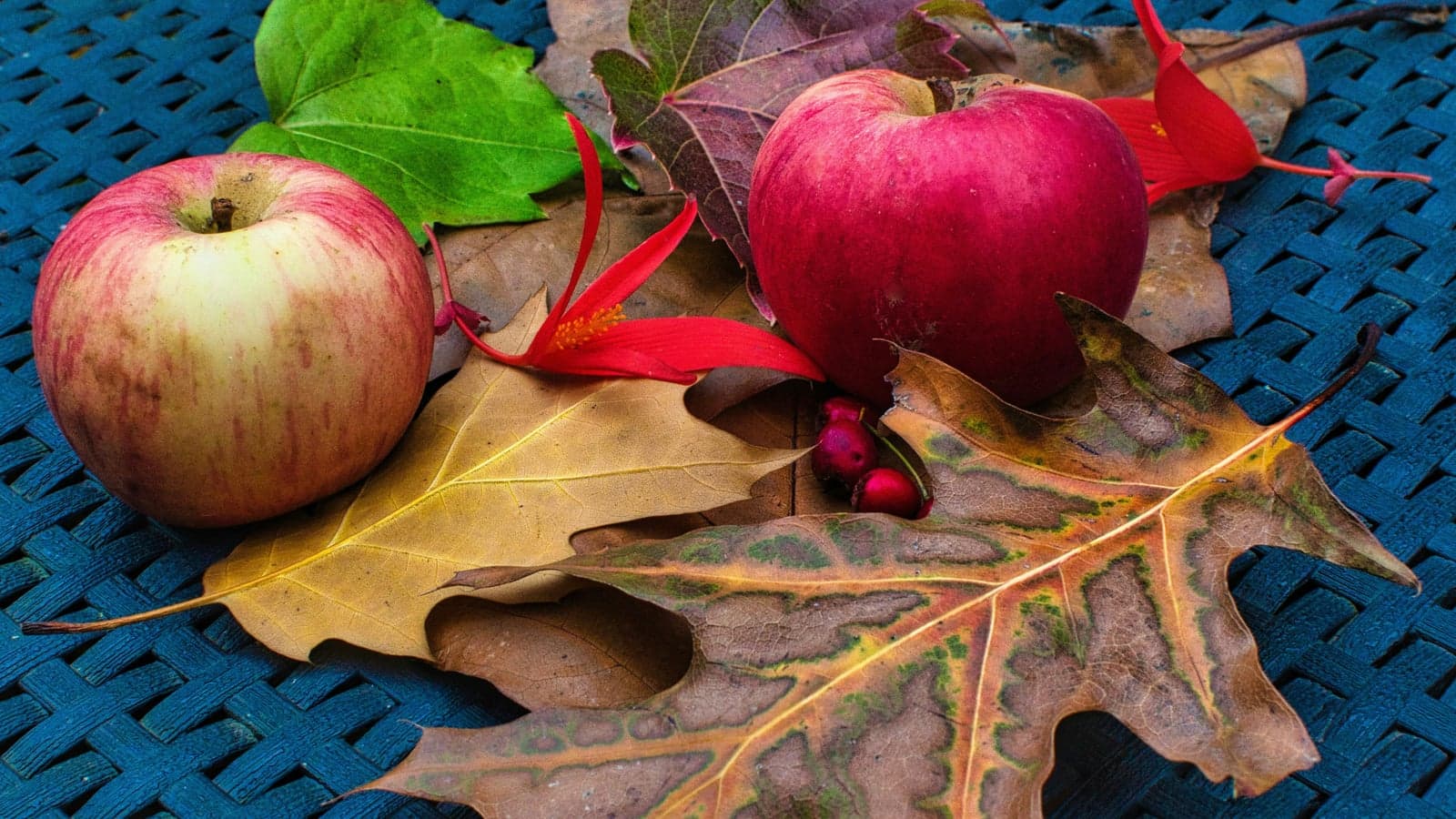
Apple is the number one fruit for dogs. Sweet, crunchy, packed with pectin and vitamin C. But – and this is the most important rule – the pips have to come out. Apple pips contain amygdalin, which releases cyanide in the body. If one or two pips are swallowed, nothing will happen, but on a regular basis you really should remove them. The core, with its hard edges, can also sit uncomfortably in the digestive tract. A quarter slice of apple is a perfect treat for most dogs.
Banana is fine, but high in sugar. Half a banana a day for a medium-sized dog is the upper limit; there's no need for more. Bananas provide potassium and magnesium, which is nice after long walks or exercise. By the way: frozen banana slices make a great substitute for ice cream in summer.
Pear works like apple – here too, remove the area around the core. Ripe, soft pears are particularly easy to digest.
Blueberries are, honestly, the showcase fruit for dogs. Packed with antioxidants, low in calories, small in size, perfect as training treats. We know dogs that beg for blueberries as if they were sweets. 10 to 20 a day are perfectly fine for a medium-sized dog.
Watermelon is worth its weight in gold in summer. But please only the flesh – remove the seeds and leave out the rind, because both are hard to digest and, in the worst case, can cause an intestinal blockage. Watermelon is more than 90 per cent water and low in calories – puréed and frozen, it becomes a summer treat: homemade dog ice cream: 5 recipes without sugar.
Strawberries are fine too. Fresh but unwashed isn't ideal – so give them a quick rinse. Two or three strawberries as a treat are no problem for a medium-sized dog. With strawberries, just watch out for possible allergies – they're not as rare as you might think.
Raspberries and blackberries work like blueberries as small treats – washed, without stalks and only a few a day.
The red line: fruit you must never give
There's no “in moderation” here. This list is absolute.
-
Grapes and raisins – this is the most important point in this article. Even small amounts can cause acute kidney failure in some dogs. Tartaric acid is now considered the likely trigger, and its content varies widely from fruit to fruit – that's what makes it so treacherous: some dogs eat a few grapes without any symptoms, while others become seriously ill after just a few. Leave out anything that contains grapes or raisins – including cereal bars, trail mix, gingerbread and Christmas stollen. If your dog has accidentally eaten some, call your vet practice immediately. More on amounts and emergencies in our guide to toxic foods for dogs.
-
Avocado contains persin, which is dangerous mainly to birds, rabbits and horses. For dogs, the flesh is less critical, but it's very high in fat, and the large stone can get stuck in the gut. So leave it out altogether.
Caution is needed
Cherries aren't generally forbidden, but – like apple pips – the stones contain amygdalin, a precursor of cyanide. If you want to give cherries, only give them pitted and in small amounts. Honestly, we recommend switching straight to blueberries or strawberries – it's simpler.
Persimmons (sharon fruit) are hard to digest with their skin, and the seeds can cause problems. Ripe, peeled persimmons with the seeds removed are fine in tiny amounts, but the balance of risk and benefit isn't convincing.
Citrus fruits such as orange, mandarin or lemon are acidic and can irritate the stomach in larger amounts. A segment of mandarin is no problem, but there's no need to give them regularly – most dogs don't like them anyway.
Pineapple and honeydew melon are allowed, but high in sugar. Only give fresh flesh without skin, core or seeds, in small pieces.
Stone fruit in general – plums, apricots, peaches, nectarines – can be given in small pieces with the stone removed, but the stones themselves are off limits (a choking hazard, and they also contain cyanide precursors).
The sugar aspect that many people forget
Fruit is healthy, but fruit is also fruit sugar. A banana has around 12 g of sugar per 100 g, a grape around 15 g. For a 10 kg dog, the daily amount of sugar is quickly exceeded, and in the long term this affects weight and teeth and, in predisposed dogs, insulin balance too. Miniature Pinschers, Dachshunds and overweight Labradors don't tolerate fruit in the amounts a young, sporty Border Collie could have.
In practice, this means: fruit is a treat and a topping, never a main ingredient. All treats together – fruit included – should stay below 10% of the daily calories. For a neutered, normally active 10 kg dog with a daily requirement of around 630 kcal, that's about 63 kcal – for example, half a small banana plus a few blueberries. You can find the exact value for your dog here: calculate your dog's calorie needs. How much of a particular fruit suits their weight is worked out on the “Can my dog eat this?” pages.
Want to be on the safe side?
The DoggoMeal app automatically works out the right amount of fruit for you – including a warning if you enter an ingredient that's dangerous for dogs. Get the app, and you'll never again have to wonder whether the banana still fits in today or would be one too many.
Matching calculators, free in your browser
Frequently asked questions
How many blueberries can my dog eat a day?
For a small dog under 10 kg, 5 to 10 blueberries a day are plenty; medium-sized dogs can have 15 to 20, and large dogs up to a small handful. More isn't better, because blueberries contain fruit sugar too.
Are all grapes really deadly, or only certain varieties?
Grapes and raisins of every variety – with or without seeds, green or red, organic or conventional – can cause acute kidney failure in dogs. Tartaric acid is now considered the likely trigger, and its content varies widely; that's why dogs react so differently. There is no safe amount, so: don't feed them at all.
Can my dog have banana if they're overweight?
Banana is nutritious but high in sugar. For overweight dogs, give it rarely and in very small pieces – about half a slice as a treat. Blueberries or watermelon are lower-calorie alternatives that your dog will enjoy just as much.
Sources
This article is based on the following expert sources. You can read how we work under Editorial team & methodology.
- Grape, Raisin, and Tamarind Toxicosis in Dogs – Merck Veterinary Manual
- People Foods to Avoid Feeding Your Pets – ASPCA Animal Poison Control Center
- Feeding treats to your dog – WSAVA Global Nutrition Committee
Less maths, more cooking.
The article tells you what matters. The DoggoMeal app turns it into a recipe with gram amounts to suit your dog's weight, age, activity and allergies.
- Dog profile
- Recipes with gram amounts
- Allergy warnings
- Doggopedia
Free · no subscription · every feature included


DoggoMeal editorial team
DoggoMeal is a dog nutrition app, founded and run by Kim Marques. Nami, our Shiba, is part of everyday life – her experiences with food changes, bland diets and the like appear in many articles as personal examples.
Our content follows the recommendations of the NRC, WSAVA and FEDIAF. You'll find the sources for this article above under “Sources”. The articles are no substitute for veterinary advice – if your dog has symptoms, please talk to your vet.