Fat in dog food: does your dog need it, and how much?
Fat is vital for dogs – but how much do they need? Which oils make sense, what the omega ratio means and when fat becomes dangerous.
By the DoggoMeal editorial teamPublished Updated 6 min read
In short
Fat is vital for dogs – as a source of energy with around 9 kcal per gram, as a carrier of vitamins A, D, E and K and as a supplier of essential fatty acids. According to FEDIAF, an adult dog needs at least 5.5% fat in the dry matter and a puppy 8.5%; most complete foods are above this. Fat becomes dangerous mainly in large amounts at once, for example from leftover roast – that can trigger inflammation of the pancreas.

With our Nami, you can see it in her coat – since salmon oil started going into her bowl regularly, it's noticeably shinier.
Yes, dogs need fat: it provides energy, transports vitamins A, D, E and K and contains essential fatty acids. According to FEDIAF, dog food should contain at least 5.5% fat in the dry matter, and 8.5% for puppies. Fat becomes dangerous mainly in large amounts at once – for example from leftover roast, which can trigger inflammation of the pancreas.
You're standing in the kitchen searing a steak, and your dog is sitting next to you with eyes like saucers. A slurp of frying fat for your four-legged friend? Please don't. But feeding completely fat-free? Also wrong.
Fat is one of the most misunderstood topics in dog nutrition. In our community, there are two camps: some swear by “as lean as possible”, while others pour in salmon oil every day as if it were water. Both are wide of the mark. Let's sort the whole thing out honestly.
Why your dog needs fat in the first place
Fat isn't just a source of energy. It transports the fat-soluble vitamins A, D, E and K – without fat, these vitamins simply don't get into the body. Your dog could drink litres of carrot juice (for the vitamin A) and it would achieve nothing if there were no fat with it.
Fat also provides more than twice as much energy per gram as protein or carbohydrates. 1 g of fat = 9 kcal. For an active Border Collie herding sheep all day long, it's the main source of energy.
And then there's the coat. If your dog has a dull, brittle coat, lots of dandruff or dry skin – the first thing to adjust is almost always the fat. More precisely: the fatty acids.
The omega trick: 3 vs. 6
This is where it gets interesting. There are two important families of polyunsaturated fatty acids: omega-3 and omega-6. You need both. But the ratio makes the difference.
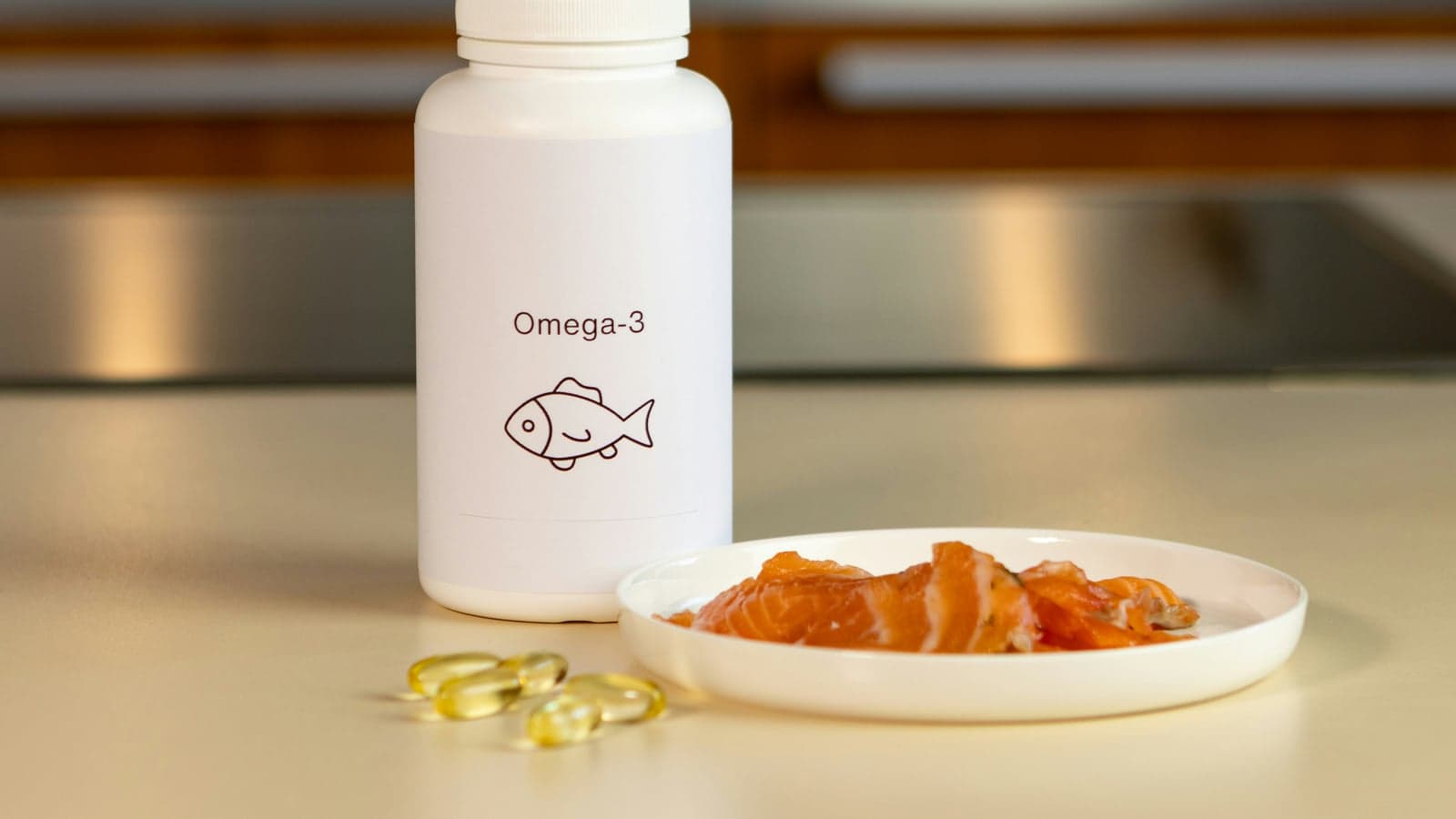
In modern commercial food, omega-6 dominates (it comes from poultry fat, sunflower oil, maize). Omega-6 tends to promote inflammation. Omega-3 (from fish, linseed, algae) has an anti-inflammatory effect. There's no scientifically established ideal figure for the ratio. However, many experts recommend adding omega-3 in a targeted way – especially for skin or joint problems.
What you can do about it:
- Salmon oil (e.g. from Pets Deli, AniForte or Grau): provides EPA and DHA directly, which dogs can make best use of. 1 tsp per 10 kg of dog daily.
- Hemp oil: naturally has a good ratio (3:1) and tastes nutty. A good alternative for dogs that dislike the taste of fish.
Linseed oil is often recommended, but dogs convert the plant-based ALA into EPA/DHA only poorly (to a limited extent). As the sole source of omega-3, it's not enough.
How much fat is right?
Concrete figures for everyday use:
The FEDIAF guidelines give a minimum of 5.5% fat in the dry matter for adult dogs and 8.5% for puppies; most complete foods are well above this. A worked example: a neutered, normally active 20 kg dog needs around 1,060 kcal a day, so about 295 g of dry food at 360 kcal per 100 g. If the pack says 12% crude fat, that's around 35 g of fat a day. The food amount calculator works out the amount for your food.
If you cook yourself: very lean recipes, for example made only with chicken breast, can provide too little fat and energy. In that case, slightly fattier types of meat or oil can help – how much depends on the recipe. You'll find a fully calculated basic recipe in the beginner's guide to home cooking.
Very active working and sporting dogs are often given foods richer in energy and fat. Overweight dogs and dogs with a history of pancreatitis, on the other hand, tend to need lower-fat rations – how far to reduce is decided by the vet practice. More on weight loss in helping your dog lose weight.
When fat becomes dangerous
Oh, and this is important: too much fat in one go can trigger pancreatitis. That's an acute inflammation of the pancreas – painful and sometimes fatal. Breeds at risk include Yorkshire Terriers, Schnauzers (especially Miniature Schnauzers) and Cocker Spaniels.
The classic scenario: the family is enjoying a cosy raclette evening, and the dog gets cheese rind, bacon scraps and sausage ends. The next morning, the dog is lying there listless, vomiting and in severe abdominal pain. That's an emergency. Please go straight to the vet – don't wait and see.
Food that's very high in fat over the long term isn't ideal either: it provides a lot of energy in a small volume and quickly leads to excess weight.
Recognising signs of deficiency
Too little fat is just as much of a problem. Signs:
A dull, scruffy coat. Dry, flaky skin. Itching with no allergy behind it. Poor wound healing. In puppies, growth problems.
If you see this and haven't changed anything about the food: check the label. “Crude fat” is a mandatory declaration. Convert the value to dry matter (with dry food, little changes; with wet food, a lot does) and compare it with the FEDIAF minimum values of 5.5% for adult dogs and 8.5% for puppies. If the problems persist, have your dog examined by a vet – skin problems have many possible causes.
The honest summary
Fat isn't the enemy. It's essential. But as with everything in nutrition: the dose makes the poison. Look at the fat content of your food, supplement with a good oil if necessary, and avoid fatty leftovers from the table.
If you cook yourself and don't know whether your ration contains enough fat – and above all the right omega ratio – the DoggoMeal app will help. You enter your ingredients, and the app automatically works out the fat content, the omega-3/6 ratio and the vitamin A supply. No calculator, no spreadsheet. Get the app
Matching calculators, free in your browser
Frequently asked questions
How much fat does a dog need each day?
The European FEDIAF guidelines give a minimum of 5.5% fat in the dry matter for adult dogs and 8.5% for puppies. Most complete foods are above this. Very active dogs are often given higher-fat foods, while overweight dogs and dogs that have had pancreatitis tend to get lower-fat ones – after consulting the vet practice.
Which oil is best for dogs?
Salmon oil is the classic, because it provides plenty of EPA and DHA (omega-3). Linseed oil is the plant-based alternative, but dogs make less use of it. Hemp oil tastes good to dogs and has a favourable omega ratio. Rule of thumb: 1 tsp of salmon oil per 10 kg of dog per day.
When is fat dangerous for my dog?
If your dog gets large amounts of fat in one go (dripping from a roast, sausage, cheese rind), it can trigger acute pancreatitis. Symptoms: severe abdominal pain, vomiting, diarrhoea, lethargy. That's an emergency – go to the vet immediately. Food that's too fatty over a long period is also a strain.
Sources
This article is based on the following expert sources. You can read how we work under Editorial team & methodology.
- Nutritional Guidelines for Complete and Complementary Pet Food – FEDIAF – European Pet Food Industry Federation
- Nutrient Requirements of Dogs and Cats (2006) – National Research Council (NRC), National Academies Press
- Pancreatitis in Small Animals – Merck Veterinary Manual
Less maths, more cooking.
The article tells you what matters. The DoggoMeal app turns it into a recipe with gram amounts to suit your dog's weight, age, activity and allergies.
- Dog profile
- Recipes with gram amounts
- Allergy warnings
- Doggopedia
Free · no subscription · every feature included


DoggoMeal editorial team
DoggoMeal is a dog nutrition app, founded and run by Kim Marques. Nami, our Shiba, is part of everyday life – her experiences with food changes, bland diets and the like appear in many articles as personal examples.
Our content follows the recommendations of the NRC, WSAVA and FEDIAF. You'll find the sources for this article above under “Sources”. The articles are no substitute for veterinary advice – if your dog has symptoms, please talk to your vet.