Raw bones for dogs: are they safe or dangerous?
Never cooked bones, raw chicken necks only with care, marrow bones best avoided: what to know about splinters, size, constipation and broken teeth.
By the DoggoMeal editorial teamPublished Updated 6 min read
In short
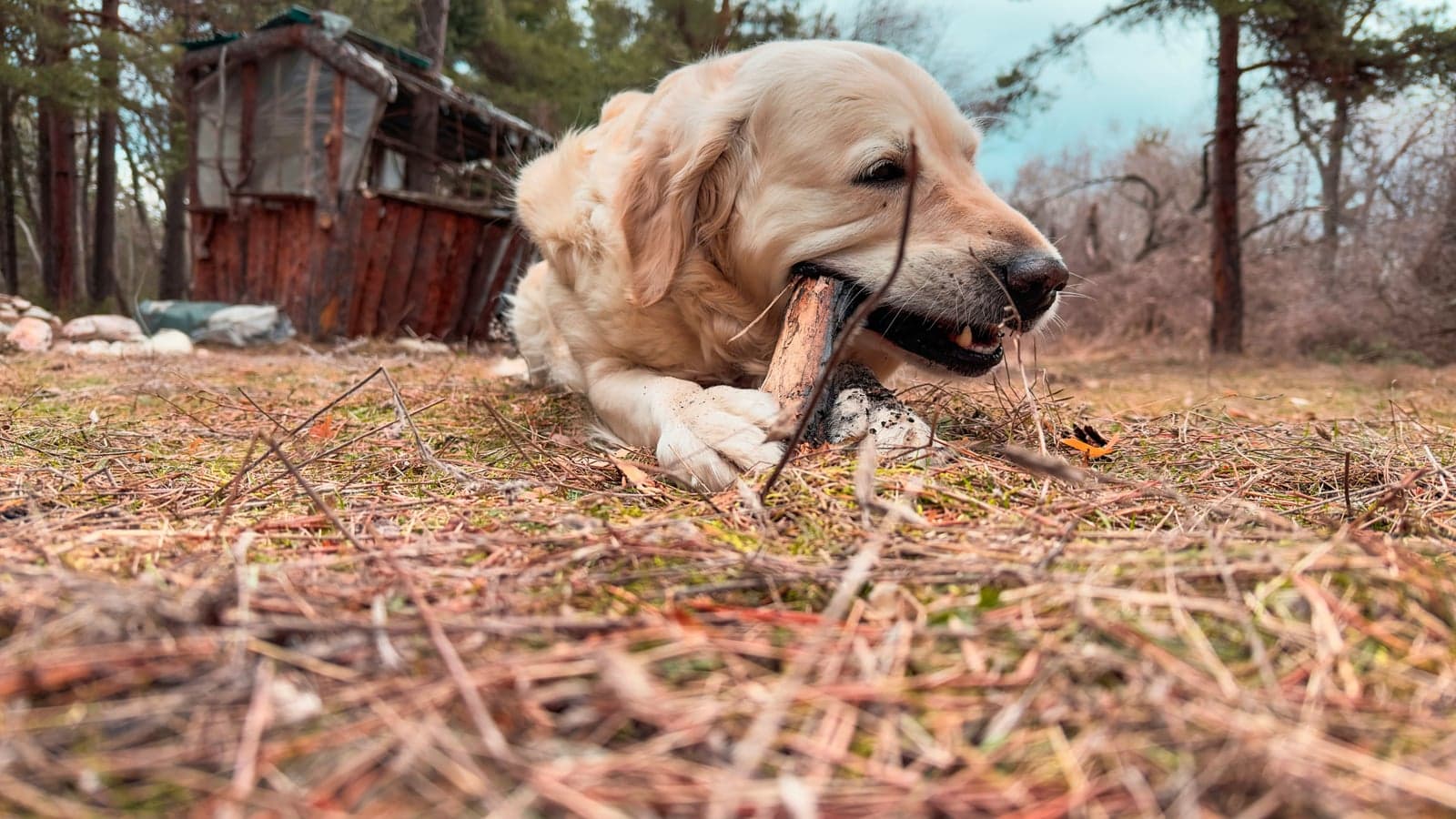
Cooked bones are off limits for dogs because they splinter into sharp pieces. Raw, soft, meaty bones such as chicken or turkey necks are manageable for many dogs under supervision, but not risk-free: veterinary professional bodies warn that raw bones, too, can cause broken teeth, constipation and injuries to the digestive tract. Hard marrow bones are particularly tricky because of broken teeth.

For Nami, a chew bone is guaranteed to keep her busy for a whole hour. We give raw chicken necks as a reward. A tip from our own experience: NEVER cooked bones – they splinter.
Cooked bones are off limits; raw bones are manageable for many dogs under supervision, but never completely risk-free. The WSAVA, the World Small Animal Veterinary Association, explicitly warns that cooked and raw bones can lead to broken teeth, constipation and injuries – and that bones don't reliably prevent plaque.
Picture this: it's Sunday, you've got chicken in the oven, and your dog is sitting next to you with big eyes. Can they have the thigh bone? Please don't. But the raw chicken neck from yesterday in the fridge? That's a whole different story.
Bones are one of the most hotly debated topics in our community. Some people swear by them, others warn about emergency operations. The truth – as so often – lies somewhere in the middle. But with clear rules.
Why dogs need bones at all
In the wild, wolves gnaw on bones. That provides calcium and phosphorus, keeps the animal busy and tires it out. In raw feeding (BARF), raw bones cover part of the calcium requirement – in the BARF model, about 12 to 15% of the daily ration comes from raw, meaty bones. How raw feeding and cooking compare is explained in home cooking vs. raw feeding (BARF).
Even if your dog isn't raw-fed, one raw bone a week can be a worthwhile activity. But only if you know what you're doing.
The golden rule: NEVER cooked
This is the most important sentence in this article. Cooked bones – whatever the animal, whatever the size – must never go into your dog. When heated, bone loses its elasticity. Instead of being chewed up, it splinters into sharp, elongated pieces. These splinters can injure the oesophagus, get stuck in the stomach or perforate the intestines. Emergency surgery is then often needed – expensive and not without risk.
That also applies to the chicken leg from lunch, the beef soup bone and the lamb bone your father-in-law has “always” fed. Please don't. The German Federal Chamber of Veterinarians also warns about splintering bones and sharp-edged bone fragments. More about other dangerous leftovers from the table is in foods toxic to dogs.
Which raw bones are unproblematic
The safest raw bones are soft, meaty bones – that is, bones with plenty of muscle meat on them and little hard substance:
- Raw chicken necks and turkey necks
- Raw chicken wings (for medium-sized to large dogs)
- Raw rabbit ribs
- Lamb breast bones
These hardly splinter when chewed. They're flexible and get ground into small pieces before being swallowed. For a 15 kg dog, a raw chicken neck (around 80–100 g) is a good size – about twice a week.
Where it gets tricky: marrow bones and hard long bones
Beef marrow bones look great. A big piece, plenty to keep your dog busy, marrow inside – a happy dog. The problem: they're extremely hard. Dogs who bite into them too enthusiastically break their teeth on them. Broken molars from hard bones are a familiar problem in vet practices – the treatment is painful and expensive. The WSAVA generally advises against very hard chews.
What's more: some dogs try to swallow the piece of marrow bone whole. If it gets stuck in the throat or stomach, that's an emergency. Beef leg bones (sawn cross-sections) only under supervision and not for very determined chewers.
A compromise: buy the marrow bone cut lengthways (you can get this from a good butcher). Then your dog can get at the marrow without ruining their teeth on the hard ring.
Size is everything
A Chihuahua with a turkey neck – nonsense. A St Bernard with a chicken wing – it's gone in three seconds, unchewed, and that isn't ideal either. The rule of thumb: the bone should be bigger than your dog's gullet, so that they're forced to chew. And it should be small enough for your dog to manage it.
Practical examples: an 8 kg Pug can cope with a chicken neck or a quail. A 30 kg German Shepherd needs turkey necks or lamb ribs instead. Very large dogs such as Great Danes or Bernese Mountain Dogs get oxtail or larger lamb bones.
Risks you should keep in mind
Even with the best bones, things sometimes happen. The most common problems:
Constipation. If your dog eats too many bones, their stools turn white, hard and crumbly – and sometimes get stuck. Then only the vet can help, because the bone mass won't come out on its own. The solution: 1–2 times a week at most, not every day.
Tooth damage. Especially in dogs who gulp their food or dogs who have already lost a tooth. A broken molar hurts, easily becomes infected and usually has to be extracted.
Salmonella and co. Raw poultry can carry germs such as salmonella or campylobacter. Healthy adult dogs fall ill from them less often, but they can shed the germs. Better not for animals with a weakened immune system, very old dogs or young puppies. In households with small children, pregnant women or people with a weakened immune system, good hygiene when handling raw bones is a must.
Alternatives if bones aren't right for your dog
Not every dog copes with raw bones. Some are too wild, some have sensitive teeth, some simply throw everything back up. Then there are good alternatives:
- Dried beef head skin (keeps for a long time, soft enough)
- Beef tendons (natural chews, low in fat)
- Tripe or lung in dried form
- Lamb's ears (careful – they disappear quickly)
Industrial chew bones made from pressed material are, by the way, often a worse choice than genuine natural products – many contain sugar, flavourings and colourings.
What to look out for when buying
Freshness is everything. Raw bones from the freezer section of a specialist shop are a reliable source as long as the cold chain is intact – but they're not germ-free either, because freezing doesn't kill all bacteria. At the butcher's, the rule is: bones from that day, not left lying around for two weeks. Thawing and refreezing is not a good idea.
By the way: some vets advise against raw bones in general. Others recommend them. It's a question of school of thought – both sides have their arguments. If your dog has never had any problems, you pay attention to size and freshness and you avoid cooked bones, you won't go far wrong.
If something does happen
Has your dog wolfed down a problematic bone? Watch them closely for 24 to 48 hours. Symptoms such as retching, vomiting, lethargy, bloody or white hard stools, straining without passing any stool or a swollen belly – vet, immediately. Which other warning signs matter with tummy troubles is explained in stomach and gut problems in dogs. If in doubt, it's better to call once too often than once too rarely.
Want to have raw feeding calculated properly, including the bone content? The DoggoMeal app works out the daily ration with all its components – meat, offal, bones, vegetables – tailored to your dog. Take a look: Get the app.
Matching calculators, free in your browser
Frequently asked questions
Which raw bones are safe for my dog?
No bone is completely safe. The most suitable are soft, meaty bones such as raw chicken or turkey necks – matched to the size of your dog, under supervision and not for dogs who gulp their food. They splinter less often than cooked bones, but they can still get stuck or cause constipation.
Why are cooked bones so dangerous?
Cooking changes the structure of the bone. Bones become brittle and splinter into sharp, elongated pieces that can tear the oesophagus or intestines. Whether it's leftovers from the Sunday roast or cooked soup bones – it's a clear no every time.
My dog has swallowed a bone – what should I do?
Stay calm and keep a close eye on your dog. With small, soft pieces, nothing usually happens. With large pieces, retching, vomiting, bloody stools or lethargy, go to the vet immediately. Never make your dog vomit yourself – that can do more damage.
Sources
This article is based on the following expert sources. You can read how we work under Editorial team & methodology.
- Feeding treats to your dog – WSAVA Global Nutrition Committee
- Raw Meat Based Diets for Pets – WSAVA Global Nutrition Committee
- BARFen – aber richtig! (Presseinformation 22/2016) – Bundestierärztekammer
Less maths, more cooking.
The article tells you what matters. The DoggoMeal app turns it into a recipe with gram amounts to suit your dog's weight, age, activity and allergies.
- Dog profile
- Recipes with gram amounts
- Allergy warnings
- Doggopedia
Free · no subscription · every feature included


DoggoMeal editorial team
DoggoMeal is a dog nutrition app, founded and run by Kim Marques. Nami, our Shiba, is part of everyday life – her experiences with food changes, bland diets and the like appear in many articles as personal examples.
Our content follows the recommendations of the NRC, WSAVA and FEDIAF. You'll find the sources for this article above under “Sources”. The articles are no substitute for veterinary advice – if your dog has symptoms, please talk to your vet.