Dog digestion time, upset stomach and diarrhoea: what helps
How long do dogs take to digest food? The stomach is half empty after 1.5–3 hours, and passing it takes 1–2 days. Plus home remedies for diarrhoea.
By the DoggoMeal editorial teamPublished Updated 9 min read

In short
For mild diarrhoea or a single bout of vomiting, plenty of water, a short rest for the stomach and small portions of a bland diet help; blood, listlessness and persistent vomiting, as well as puppies and senior dogs, need a vet early on. Digestion takes longer in dogs than many people think: half of a meal has left the stomach after about 1.5 to 3 hours, and the whole passage through to the stool usually takes around one to two days.
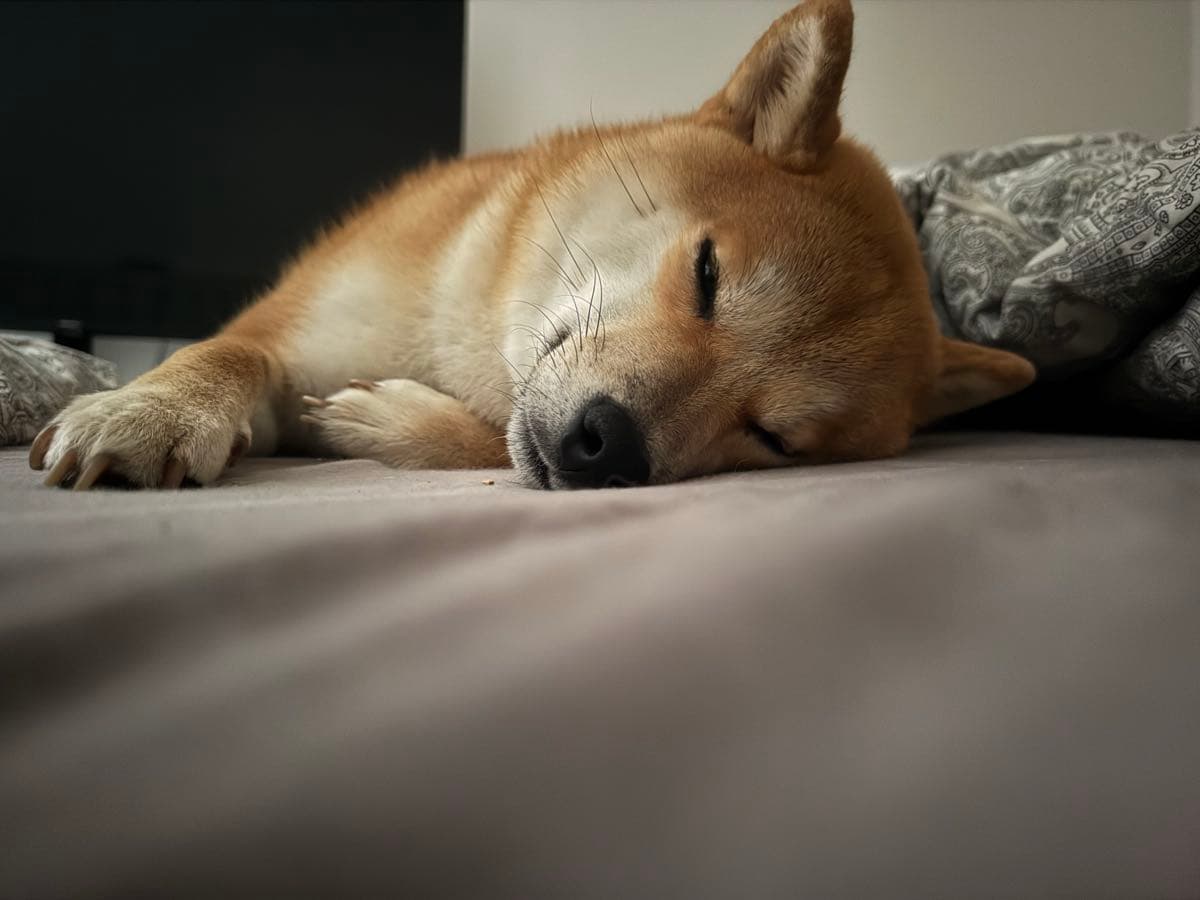
Nami after an 18-hour fasting break – calm, fit, all good again.
For mild diarrhoea or a single bout of vomiting, your dog mainly needs three things: water, a short rest for the stomach and then small portions of a bland diet. Blood in the stool or vomit, listlessness, a bloated belly and persistent vomiting, on the other hand, are cases for the vet – in puppies and senior dogs, even sooner. And because so many people ask: in healthy dogs, it usually takes around one to two days for food to make its way from the bowl back out as poo.
With our Nami, it happened once on a Sunday evening – she'd secretly snapped up something from the ground on a walk (a classic with Shibas) and had soft stools three times during the night. No blood, and she was fit. We gave her a break from food, then two tablespoons of chicken and rice in the morning, and by the evening everything had settled down. This kind of calm, structured plan is exactly what's needed for most mild stomach upsets.
Work it out
Chicken and rice – but how much? For adult dogs without warning signs, you can work out the bland diet amount here: the daily amount with rice or potato by weight, the smaller amount for the first day and the size of the portions. If there's blood in the stool, if your dog is listless or if it's a puppy, call your vet practice first.
Typical symptoms
- Diarrhoea (soft, mushy, watery, sometimes with mucus)
- Vomiting (chunks of food, yellowish and foamy on an empty stomach)
- Tummy noises – loud gurgling, rumbling, bubbling
- Wind, a hunched back, the “prayer position” as a sign of abdominal pain
- Loss of appetite, drooling, eating grass, restlessness
A single symptom is often harmless. Several together, or problems lasting several days, are a signal – your dog has eaten something they shouldn't have, is stressed, or has an infection, parasites or an intolerance.
How long does digestion take in dogs?
Digestion in dogs happens in three stages – and takes longer overall than many people think. The figures come from studies of healthy dogs that mostly weighed around or over 20 kg:
Important for putting this in context: the values vary a lot – between dogs and even in the same dog on different days. Size alone doesn't explain the differences; in one study, it was the lighter dogs that tended to have longer stomach and small intestine times. Fat and large meals tend to slow down stomach emptying, and exercise, stress and the type of food also play a part. With diarrhoea, the passage is considerably faster.
In practice, this means that what your dog eats this evening can turn up in their poo tomorrow or the day after. So diarrhoea on Monday may well come from something they found on Saturday. And if you're waiting for firm stools after a change of food or starting a bland diet, you'll need one to two days of patience.
Step 1: Water and a short rest for the stomach
Water is the most important thing with diarrhoea and vomiting, because dogs lose fluid quickly. Offer fresh water – in small portions if your dog drinks too hastily and then vomits.
A fasting period of 24 to 48 hours used to be standard. Today, many vets recommend not letting healthy adult dogs go hungry for long, but starting early with small portions of easily digestible food. A break of a few hours makes sense while your dog is actively vomiting; for a healthy adult, it shouldn't last longer than 12 to 24 hours.
Don't fast these dogs without talking to your vet first:
- puppies (risk of low blood sugar and dehydration)
- very small dogs under about 5 kg
- senior dogs and chronically ill dogs (for example with diabetes, pancreatitis or kidney disease)
- pregnant or nursing bitches
Step 2: A bland diet in small portions
The classic: cooked skinless chicken and very soft-cooked white rice in a ratio of 1 : 2. This mix has around 140 kcal per 100 g. A 10 kg dog needs about 450 g of it a day – on the first day, give half that amount, split into five small, lukewarm portions, and increase over two to three days. For any other weight, you can work out the daily bland diet amount; preparation and the transition plan are covered under bland diet recipe, duration and home remedies.
Other gentle additions:
- Boiled potato instead of rice, peeled and thoroughly cooked
- Moro's carrot soup: Boil 500 g of carrots in 1 litre of water for 60 to 90 minutes, then purée, without salt. There are hardly any studies on how well it works in dogs, but as a gentle addition it's unproblematic.
- Grated apple without the core, in small amounts
Step 3: Probiotics, healing clay, charcoal – do they help?
Probiotics: Products made specifically for dogs (for example with Enterococcus faecium) are often used after diarrhoea or antibiotics. Which product to use, and for how long, is best discussed with your vet practice. Yoghurt is not a reliable substitute, and many dogs don't tolerate milk sugar well.
Healing clay: Traditionally used for diarrhoea and said to bind substances in the gut. Good studies in dogs are lacking. If you use it, follow the instructions on the pack and keep it two hours apart from any medication, because it can also bind active ingredients.
Activated charcoal: Best left to your vet. It's mainly used for poisoning – the practice decides on the dose and timing. Don't give it on your own initiative.
Home remedies: what makes sense and what doesn't
Many home remedies for stomach and gut problems come from human kitchens. Hardly any of them have been studied in dogs – that doesn't automatically mean “harmful”, but it doesn't mean “helps” either.
- Sensible: fresh water in small portions and an easily digestible bland diet as described above.
- Oral electrolyte solutions are mainly an option for dogs that aren't vomiting, according to a veterinary review. If your dog is clearly dehydrated, they need fluids by drip – and that can only be done at the vet. Your vet will tell you which solution is right.
- Moro's carrot soup: possible as a gentle addition. There's no evidence that it shortens diarrhoea in dogs.
- Fennel tea: Its effect and dosage haven't been studied in dogs. If at all, then unsweetened, cooled and only as a small addition to water.
- Chamomile tea: The ASPCA's animal poison database lists (Roman) chamomile as toxic to dogs, with vomiting and diarrhoea among the possible effects. With an irritated gut, it's better left out.
- Human medicines: only after talking to your vet. Iberogast, for example, is only licensed for humans and, according to the package leaflet, contains alcohol and greater celandine, which has been linked to liver damage. Anti-diarrhoea medicines containing loperamide, such as Imodium, can cause neurological poisoning even at normal doses in dogs with the MDR1 gene defect – according to Washington State University, this affects around 70% of Collies and about half of Australian Shepherds, for example.
Home remedies are no substitute for having your dog checked: if you see any of the warning signs further down, go straight to the vet.
Stress as a trigger
A dog's digestive tract reacts noticeably to stress: moving house, a new member of the household, New Year's Eve, boarding kennels, separation. If the problems keep coming back, pay attention to the circumstances: when exactly do they start? Is there a pattern? Then routine, calm and – if necessary – a chat with your vet practice or a vet who works in behavioural medicine can help.
Changing food too quickly is another common trigger. How to switch slowly is explained in changing food the right way.
When to see a vet straight away
- Blood in the stool or vomit (even just once), black, tarry stools
- Listlessness: your dog just lies around and barely responds
- Vomiting or diarrhoea for longer than 1 to 2 days
- a bloated, hard belly with restlessness and retching without bringing anything up (suspected bloat – an emergency)
- Fever (above 39.5 °C)
- Puppies, senior dogs, very small or chronically ill dogs – after as little as 6 to 12 hours
- Suspected poisoning (for example chocolate, grapes, xylitol, antifreeze, slug pellets) – more on this in our guide to foods that are toxic to dogs
Taking a photo of the poo on your phone may sound unpleasant, but it helps the vet assess the situation.
Back to normal food
Once the stool has been firm for one to two days, mix the normal food back in over two to three days. With the kcal figure for your food, you can work out the food amount for your dog.
If you keep cooking yourself afterwards, you need a complete recipe – a bland diet alone doesn't cover your dog's needs in the long run. Recipes such as Chicken & rice or Turkey & rice are topped up with oil and a mineral and vitamin supplement shortly before feeding.
The DoggoMeal app guides you step by step through bland diet plans and keeps a record of symptoms and progress. That way, you react quickly enough, without panicking. Get the app.
Matching calculators, free in your browser
Frequently asked questions
How long does it take a dog to digest food?
Half of a meal leaves the stomach after about 1.5 to 3 hours; it takes longer until the stomach is completely empty. From eating to passing stool, healthy dogs usually take around one to two days – in studies with measuring capsules, the whole passage took between about 20 and 57 hours, with big differences between individual dogs.
How long can I let my dog fast?
Many vets today recommend not letting healthy adult dogs go hungry for long and starting early with small portions of a bland diet. A break of a few hours can make sense with acute vomiting, but it shouldn't last longer than 12 to 24 hours. Don't fast puppies, small dogs, senior dogs or chronically ill dogs without talking to your vet first.
What's the best bland diet?
The classic is cooked skinless chicken with very soft-cooked white rice in a ratio of 1 : 2. A 10 kg dog needs about 450 g of it a day; on the first day, half that amount in five small portions.
My dog had diarrhoea once – do I need to go to the vet straight away?
Not necessarily. If your dog is otherwise lively, eating and drinking, you can keep an eye on them for 24 hours on a bland diet and water. With blood, listlessness, persistent vomiting, a bloated belly or fever, or if it's a puppy or senior dog, go to the vet straight away.
Sources
This article is based on the following expert sources. You can read how we work under Editorial team & methodology.
- Acute Diarrhea in Dogs: Current Management and Potential Role of Dietary Polyphenols Supplementation – Candellone et al., Antioxidants (2020), PubMed Central
- Variability associated with repeated measurements of gastrointestinal tract motility in dogs obtained by use of a wireless motility capsule system and scintigraphy – Boillat et al., American Journal of Veterinary Research (2010)
- Assessment of the relationship between body weight and gastrointestinal transit times measured by use of a wireless motility capsule system in dogs – Boillat et al., American Journal of Veterinary Research (2010)
- Assessment of the Variation Associated with Repeated Measurement of Gastrointestinal Transit Times … Using a Wireless Motility Capsule System in Dogs – Lidbury et al., Veterinary Medicine International (2012), PubMed Central
- Chamomile (Toxic and Non-Toxic Plant List) – ASPCA Animal Poison Control Center
- Gebrauchsinformation Iberogast Classic (Stand September 2023) – Bayer Vital GmbH, PatientenInfo-Service
- Drug Safety Mail 2018-55: Informationsbrief zu Iberogast (Schöllkraut, Leberschädigung) – Arzneimittelkommission der deutschen Ärzteschaft (AkdÄ)
- Problem medications for dogs (Loperamid bei MDR1-Defekt) – Washington Animal Disease Diagnostic Laboratory, Washington State University
- MDR1 in Dogs (betroffene Rassen und Häufigkeit) – Washington Animal Disease Diagnostic Laboratory, Washington State University
Less maths, more cooking.
The article tells you what matters. The DoggoMeal app turns it into a recipe with gram amounts to suit your dog's weight, age, activity and allergies.
- Dog profile
- Recipes with gram amounts
- Allergy warnings
- Doggopedia
Free · no subscription · every feature included


DoggoMeal editorial team
DoggoMeal is a dog nutrition app, founded and run by Kim Marques. Nami, our Shiba, is part of everyday life – her experiences with food changes, bland diets and the like appear in many articles as personal examples.
Our content follows the recommendations of the NRC, WSAVA and FEDIAF. You'll find the sources for this article above under “Sources”. The articles are no substitute for veterinary advice – if your dog has symptoms, please talk to your vet.