How to switch dog food: a safe 7 to 10 day transition
Switching dog food: change gradually over 7 to 10 days, with a table and gram example, and spot intolerance early. Sensitive dogs need 14 days.
By the DoggoMeal editorial teamPublished Updated 6 min read
In short
Switch to a new food gradually over 7 to 10 days: first 25%, then 50%, then 75% new food, and from around day 10 the new food alone. If the old and new foods differ in calories, work out the proportions by calories – for a 15 kg dog, that's about 180 g of dry food plus 165 g of home-cooked food on day one. Puppies, senior dogs and sensitive dogs need around 14 days; if the stools turn soft, go back one step.

The first time we changed Nami's food, we went too fast – a complete switch within 2 days. The result: soft stools. The second time, we stretched it over 7 to 10 days, and there was no drama at all.
Switch to a new food gradually over 7 to 10 days: first a quarter new food, then half, then three quarters, and from around day 10 the new food alone. Puppies, senior dogs and dogs with a sensitive stomach need around 14 days. If the stools turn soft, go back one step.
A typical case: a Beagle is switched overnight from dry food to home-cooked meals. Three days later: diarrhoea and a rumbling tummy. The new food usually isn't bad at all – the switch was simply too fast.
That's exactly what happens in our community all the time. Yet changing food the right way isn't rocket science – it just takes a little patience.
Why not switch overnight? It's all about the microbiome
Billions of bacteria live in your dog's gut – the microbiome. These little helpers are highly specialised in the food your dog is eating right now. With dry food, different bacterial strains are active than with raw meat or home-cooked turkey and rice.
If you change the food abruptly, the “old” bacteria suddenly have nothing left to feed on and die off. But the “new” ones aren't there in sufficient numbers yet. The result: diarrhoea, wind, stomach ache. Sometimes vomiting, too.
That's not a sign that the new food is bad. It's a sign that the gut is overwhelmed. With patience, you can manage the switch without any drama at all.
The 7 to 10 day table for healthy dogs
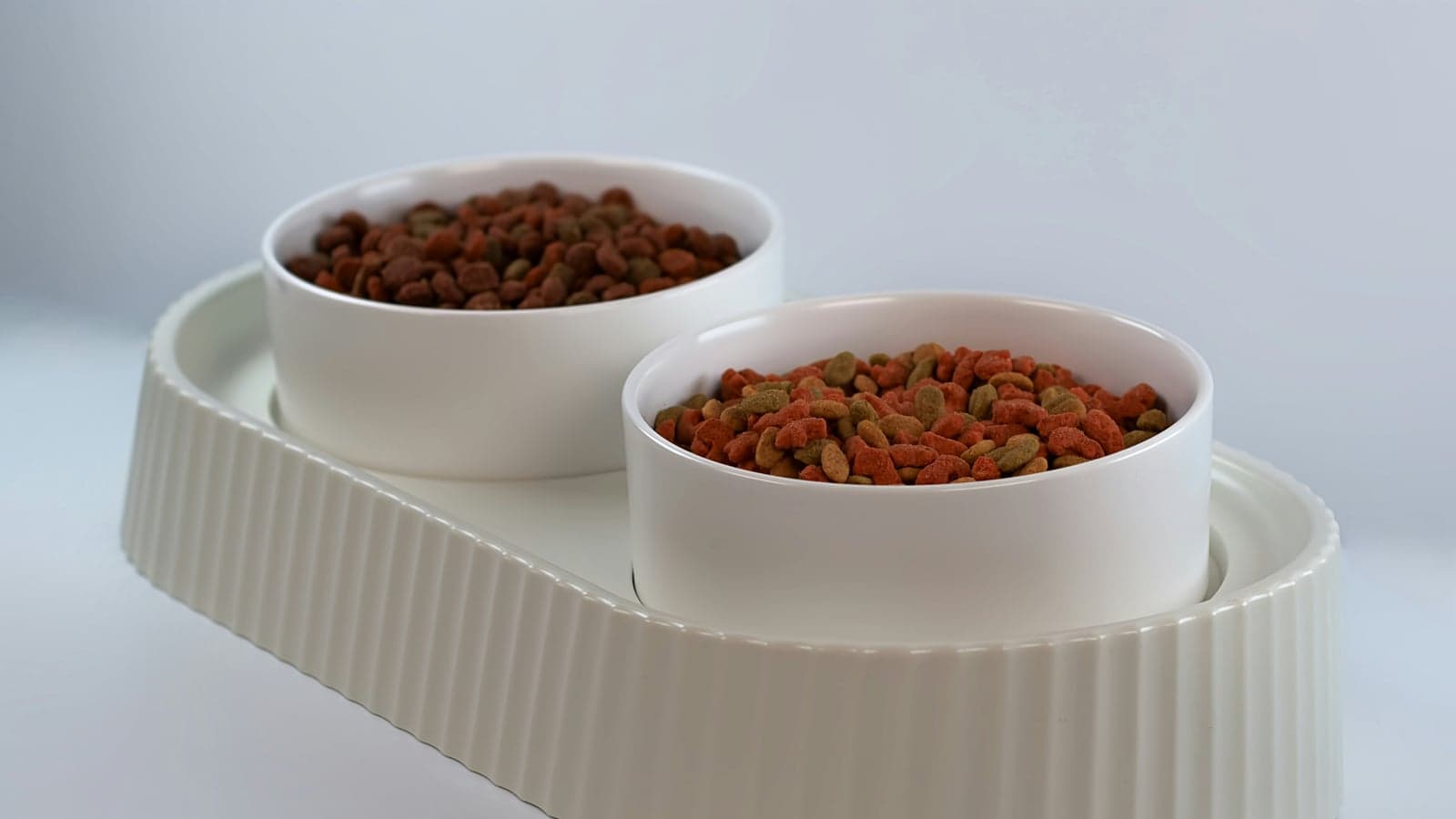
This is the simplest schedule that works. You mix the old and new food in the same bowl – no separate meals.
Important: the percentages refer to calories, not weight – otherwise your dog will get too much or too little when you switch between foods with different energy densities. Here's an example for a neutered, normally active 15 kg dog (around 855 kcal a day) switching from dry food (360 kcal per 100 g, full amount approx. 240 g) to home-cooked food (130 kcal per 100 g, full amount approx. 660 g):
If the type of food stays the same – say, dry food to dry food with similar kcal – you can simply mix by weight. The food amount calculator works out the full amount for your new food.
If you're switching between different varieties of the same dry food (e.g. lamb instead of chicken from the same manufacturer), you can also manage it in 5 days. For a complete change of system – dry to home-cooked, or dry to raw feeding (BARF) – you're better off sticking to 10 days.
When you should allow 14 days
Some dogs need more time. In our community, these are mainly:
- puppies and young dogs, for example when moving on to adult food (when the right time is, you'll find in when to switch to adult food)
- dogs with a known food allergy or intolerance
- senior dogs aged around 9 and over
- dogs with chronic stomach and gut problems (IBD, a sensitive gut)
- breeds known for sensitive stomachs (e.g. French Bulldog, German Shepherd, many sighthounds)
For these dogs, simply extend each stage by a few days. 7 to 10 days become 14, sometimes even 18. That's not a drama – that's care.
Signs that your dog isn't tolerating the new food
During the first two weeks, pay particular attention to these signals:
- Diarrhoea lasting longer than 24 hours or with blood/mucus
- Vomiting several times a day or over several days
- Itching, especially on the paws, ears and belly – often 2 to 4 weeks after the switch
- Red skin or new hot spots
- Lethargy: less interest in play, sleeping more, seeming absent
- Sudden weight loss or weight gain over several weeks
Slightly softer stools in the first 2 to 3 days are normal. Proper runny diarrhoea isn't. And itching is tricky, because it often only appears weeks later – make a note of when you switched, and you'll be able to spot the connection.
If something goes wrong: go back one step
Your dog suddenly has diarrhoea at the 50/50 stage? Go back to 75/25 and stay there for 3 to 4 days. Then try again, more slowly. Oh, and give your dog plenty of water in the meantime – diarrhoea dehydrates quickly.
If problems still occur after the second attempt, the new food may genuinely not be right for your dog. That's nothing to be ashamed of – it's information. Some dogs don't tolerate lamb, others react to rice. With every switch, you get to know your dog a little better.
A practical tip: don't switch during stressful times
Moving house, holidays, a new puppy in the household, New Year's Eve – these are all bad times to change food. Stress has a direct effect on the gut, and you won't know whether a problem comes from the food or from the excitement.
Plan the switch for a calm period: two weeks without major appointments, normal everyday life, nobody ill. That gives you the best chance of success.
Make it easy for your dog
A change of food is a small operation on your dog's digestive system. With the right plan, they'll barely notice it. With the wrong plan, you'll notice it on the carpet for a week.
If the switch stalls because of diarrhoea, go back one step and also read stomach and gut problems in dogs, or work out the short-term amount with the bland diet calculator.
In the DoggoMeal app, you'll find a switching assistant that calculates the exact amount in grams of old and new food per day – based on your dog's weight, activity and sensitivity. Push reminders tell you when to move on to the next stage, and you can log stools, itching and energy as you go. Get the app and your next switch will practically run itself.
Matching calculators, free in your browser
Frequently asked questions
How long does it take to switch a dog to a new food?
For a healthy dog, 7 to 10 days. For sensitive dogs, dogs with allergies or puppies, 14 days is the safer choice. The main thing is to do it gradually – the microbiome needs time to adjust.
My dog has diarrhoea after changing food – what should I do?
First, go back one step: to the previous mix with more of the old food. Let things settle for 2 to 3 days, then carry on more slowly. If the diarrhoea lasts longer than 24 hours, take your dog to the vet.
Can I switch from dry food to home-cooked food in a single day?
Honestly: please don't. It's the most common cause of stomach and gut upsets. Here too, allow 7 to 10 days for the transition – whichever direction you're switching in.
Sources
This article is based on the following expert sources. You can read how we work under Editorial team & methodology.
- Tips and Timelines for Transitioning Your Pet to a New Food – American Animal Hospital Association (AAHA)
- Guidelines on Selecting Pet Foods – WSAVA Global Nutrition Committee
Less maths, more cooking.
The article tells you what matters. The DoggoMeal app turns it into a recipe with gram amounts to suit your dog's weight, age, activity and allergies.
- Dog profile
- Recipes with gram amounts
- Allergy warnings
- Doggopedia
Free · no subscription · every feature included


DoggoMeal editorial team
DoggoMeal is a dog nutrition app, founded and run by Kim Marques. Nami, our Shiba, is part of everyday life – her experiences with food changes, bland diets and the like appear in many articles as personal examples.
Our content follows the recommendations of the NRC, WSAVA and FEDIAF. You'll find the sources for this article above under “Sources”. The articles are no substitute for veterinary advice – if your dog has symptoms, please talk to your vet.