When to switch from puppy food to adult dog food
When to switch to adult food: small breeds usually at 9–12 months, large ones at 12–16. How calorie needs change and how to switch in 7–10 days.
By the DoggoMeal editorial teamPublished Updated 7 min read
In short
Switch to adult food once the skeleton is fully grown: for small and medium-sized breeds, usually at around 9 to 12 months; for large and giant breeds, not until around 12 to 16 months, sometimes even later. After that, energy needs drop considerably – a 25 kg young dog needs around 1,565 kcal as a puppy, but only about 1,250 kcal a day as a neutered adult.
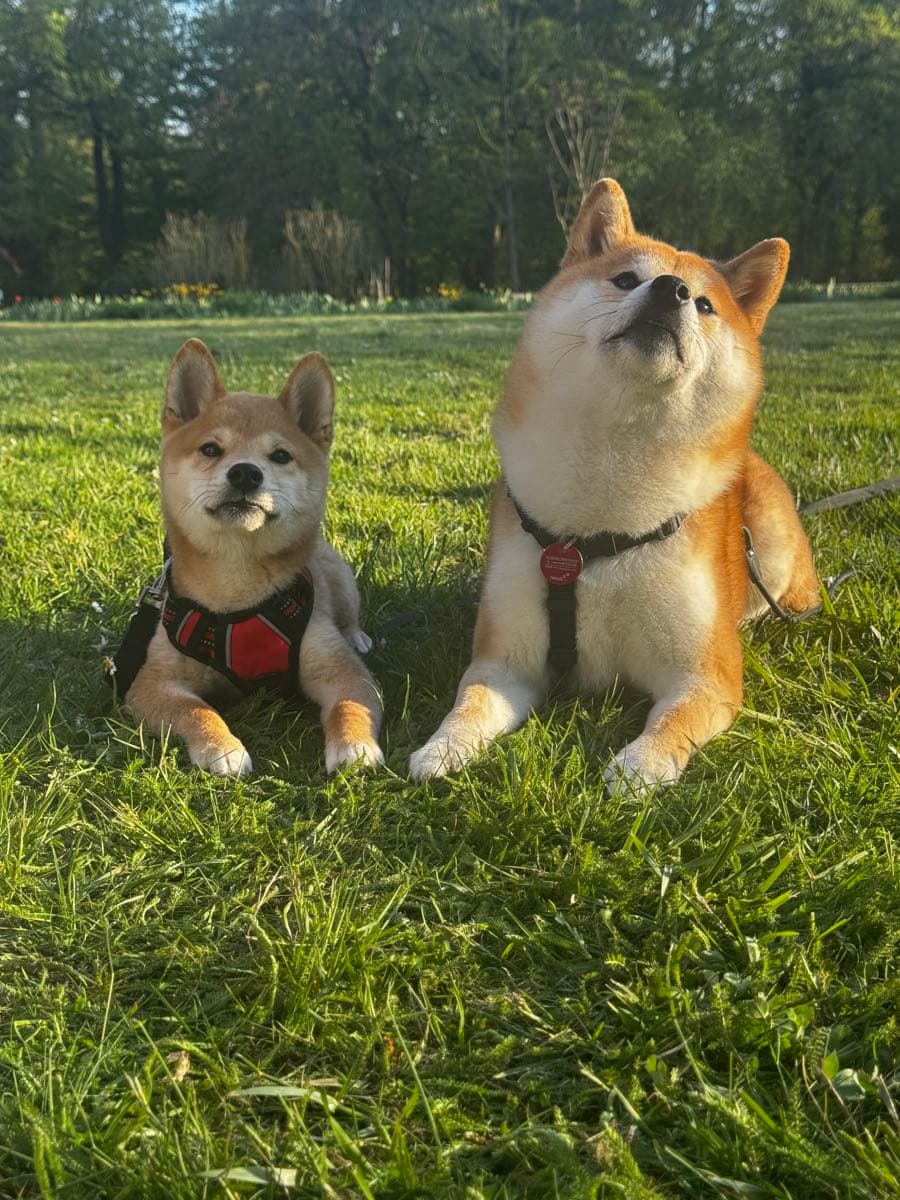
Nami was switched to adult amounts at around 12 months – that was a slow transition over 2 to 3 weeks, otherwise her stomach would have been overwhelmed.
Switch to adult food once your dog's skeleton is fully grown – not as soon as they “look big”. For small and medium-sized breeds, this is usually the case at around 9 to 12 months; for large and giant breeds, often not until 12 to 16 months, sometimes later. At the same time, calorie needs drop considerably: a 25 kg young dog needs around 1,565 kcal as a puppy, but only about 1,250 kcal a day as a neutered adult.
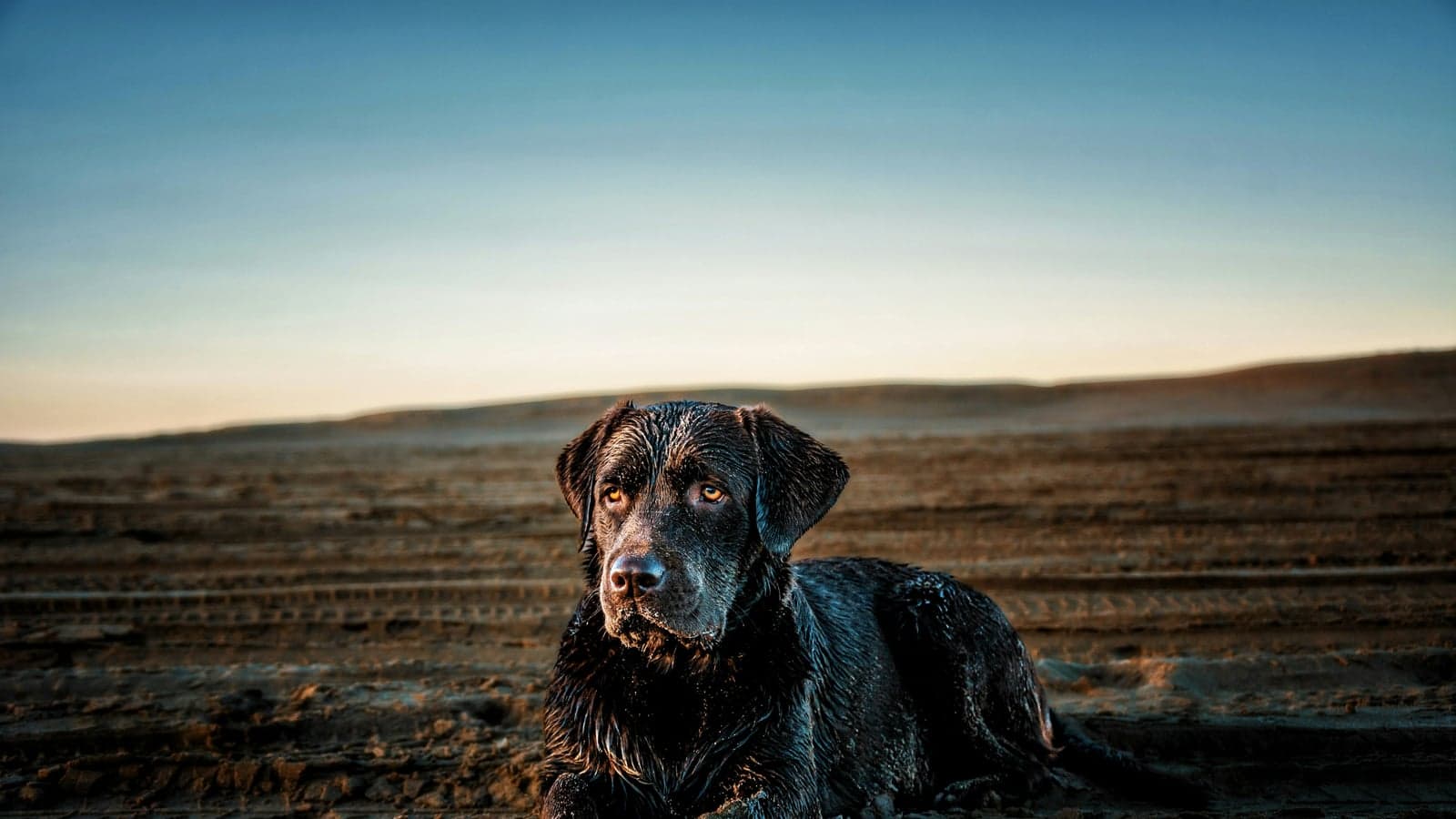
A typical question from the community: “My Labrador is 11 months old, weighs 28 kg and looks like an adult dog. Can I switch?” The honest answer: with large breeds, that's often still too early. In these dogs, growth and skeletal maturity can continue until well after their first birthday. Your dog's size is what decides – and that's what we'll go through now.
Work it out
How much does your dog need right now? As long as they're growing, the puppy food amount calculator shows the grams per day and the number of meals – based on age and current weight. After the switch, carry on with the food amount calculator and the kcal figure of the new food.
Why timing matters
Puppy food provides more energy and protein and is tailored to growth in terms of calcium and phosphorus. That's what a dog needs as long as they're growing. Once the skeleton is fully grown, puppy food becomes too energy-dense – and the result is excess weight.
If you switch too early, a large dog in the last phase of growth gets a food that isn't made for it. With small breeds, this is usually not a problem – they're finished quickly. With large and giant breeds, you should feed puppy food – ideally one made specifically for large breeds – until the skeleton is mature.
The time windows by breed size
These are guide values. Individual dogs differ, and females are often finished a little earlier than males of the same breed. Growth curves from large datasets show that dogs of large breeds keep gaining weight for considerably longer than small ones.
Signs that growth is over
- Their weight has been stable for at least four to six weeks, even though you're not feeding less.
- Their paws look in proportion to their body, no longer “too big”.
- On the same amount of food, your dog tends to get rounder.
- With large breeds, your vet practice confirms that growth is complete.
Just ask at your next vet visit – it hardly takes any time and gives you peace of mind.
How the food amount changes
Energy needs drop noticeably with the switch. Calculated as in our calculators: resting requirement 70 × weight^0.75, multiplied by 2.0 during growth from about four months, and for an adult dog by 1.8 (not neutered) or 1.6 (neutered). Dry food at 360 kcal per 100 g:
If your adult food has a different energy density from the puppy food, the number of grams changes as well – check the kcal figure on the pack. For the puppy months, you can calculate the puppy food amount in grams, and afterwards calculate the food amount for your dog – using the values of the new food. For breeds such as the Labrador, there's a dedicated page: food amount for a Labrador.
Weigh your dog again after two weeks and adjust the amount. Many young dogs put on a little weight, especially after neutering.
The gradual switch in 7 to 10 days
The switch itself always works the same way. An abrupt change often leads to soft stools, wind or diarrhoea.
- Days 1 to 2: 75% old food, 25% new
- Days 3 to 5: 50% old, 50% new
- Days 6 to 8: 25% old, 75% new
- From day 9 to 10: 100% new food
If your dog has a sensitive stomach, stretch this out to up to 14 days. If the stools turn soft, stay at the last stage for two days longer. You'll find more tips in our guide to changing your dog's food properly.
Meals after the switch
Adult dogs usually get on well with two meals a day. For large, deep-chested breeds such as German Shepherds or Great Danes, several smaller portions make sense because of the risk of bloat – a single large meal a day isn't a good idea for them.
The DoggoMeal app reminds you when the switch is due and adjusts amounts, meals and nutrients to your dog's age and weight. Get the app.
Matching calculators, free in your browser
Frequently asked questions
At what age should I switch to adult food?
When growth is complete. Small and medium-sized breeds are usually fully grown at 8 to 12 months, large and giant breeds often not until 10 to 16 months, and some even later. With large breeds, it's best to discuss the timing at your next vet visit.
How long should the transition take?
About 7 to 10 days. You start with around 25% new food and gradually increase the proportion. If your dog has a sensitive stomach, allow up to 14 days.
Do I need to feed less after the switch?
Usually, yes. From about 4 months, during growth, you calculate with 2 times the resting requirement, but for a neutered adult dog only 1.6 times. A 25 kg dog then needs only about 1,250 kcal instead of around 1,565 kcal – that's about 345 g instead of 435 g of dry food.
What happens if I switch too early?
Adult food is designed for grown-up dogs, not for growth. With small breeds, switching a little earlier is usually not a problem. With large breeds, puppy food should be fed until the skeleton is mature, because calcium, phosphorus and energy need to be particularly well balanced at that stage.
Sources
This article is based on the following expert sources. You can read how we work under Editorial team & methodology.
- Feeding Practices in Small Animals – Merck Veterinary Manual
- Growth standard charts for monitoring bodyweight in dogs of different sizes – Salt et al., PLOS ONE (2017)
- Tips and Timelines for Transitioning Your Pet to a New Food – American Animal Hospital Association (AAHA)
Less maths, more cooking.
The article tells you what matters. The DoggoMeal app turns it into a recipe with gram amounts to suit your dog's weight, age, activity and allergies.
- Dog profile
- Recipes with gram amounts
- Allergy warnings
- Doggopedia
Free · no subscription · every feature included


DoggoMeal editorial team
DoggoMeal is a dog nutrition app, founded and run by Kim Marques. Nami, our Shiba, is part of everyday life – her experiences with food changes, bland diets and the like appear in many articles as personal examples.
Our content follows the recommendations of the NRC, WSAVA and FEDIAF. You'll find the sources for this article above under “Sources”. The articles are no substitute for veterinary advice – if your dog has symptoms, please talk to your vet.