Storing and freezing homemade dog food: how long it keeps
Storing homemade dog food: 2–3 days in the fridge, around 3 months in the freezer, daily portions by weight, safe thawing and hygiene with raw meat.
By the DoggoMeal editorial teamPublished Updated 6 min read
In short
Home-cooked dog food keeps for about 2–3 days in the fridge at no more than 4–5 °C, and for around 3 months frozen at −18 °C. It's best to freeze it straight away in daily portions – for a neutered, normally active 15 kg dog, that's about 660 g at around 130 kcal per 100 g – and thaw it overnight in the fridge. Raw meat needs particularly strict kitchen hygiene.

For Nami, we cook 2–3 days' worth in advance and portion it into small plastic tubs – one per meal, taken out of the freezer in the morning.
Home-cooked dog food keeps for about two to three days in the fridge at no more than 4 to 5 °C, and for around three months in the freezer at −18 °C. It's best to freeze it straight away in daily portions and thaw each portion overnight in the fridge.
A typical case: a big pot of turkey with rice and carrots, three kilos, and on the fourth day the dog has diarrhoea. Often the explanation is simple – the food was in the fridge for too long. Home-cooked dog food just isn't dry food from a bag that keeps forever.
The good news: with a few simple steps, you can avoid this completely. And you save time, because you don't have to cook from scratch every day.
How long does freshly cooked dog food keep in the fridge?
Two to three days – tightly closed and at no more than 4 to 5 °C. The German Federal Institute for Risk Assessment (BfR) recommends storing perishable foods as cold as possible; but many fridges are set warmer than you'd think, especially in the door. If yours tends to run at 6 or 7 °C, it's better to plan for two days at most. An inexpensive fridge thermometer brings clarity.
Signs that you'd better throw it away:
- A sour or putrid smell when you open it
- A slimy film on the meat
- Discolouration towards grey or green
With raw meat (that is, classic raw feeding), the window is even shorter: 1 to 2 days in the fridge, then it has to go or be frozen. Mince even sooner, because the large surface area invites bacteria.
Freezing in daily portions – the game changer
The most important tip of all: freeze straight away in portions that will last your dog one day. Not in one big block that you then have to hack away at with a knife.
How big a daily portion is depends on the energy requirement and on your recipe. For a neutered, normally active dog and around 130 kcal per 100 g, it's about:
Entire or very active dogs need more, calm dogs less. The fresh food calculator works out the figure for your dog, and you'll find a suitable basic recipe in the beginner's guide to home cooking.
Frozen, home-cooked food keeps for about 3 months. In theory it can go longer, but the taste and vitamins suffer. Raw meat – well wrapped at −18 °C or colder – can also be stored for longer. For raw feeding, the following also applies: according to the parasitology organisation ESCCAP, freezing for at least a week at −17 to −20 °C kills most parasite stages in the meat. Bacteria such as salmonella, on the other hand, survive freezing.
What to freeze in? Silicone, bags or glass
Silicone muffin moulds have almost achieved cult status in our community. You fill them, freeze them, push the portions out and into a large freezer bag – and the mould is free again. For small dogs, use mini muffin moulds, for large dogs the XL version.
Freezer bags work really well too. Laid flat, they take up hardly any space and thaw faster. Write the date on them, otherwise in two months' time you'll have a mystery in your freezer.
Glass in the freezer is tricky. It can crack if you screw the lid on too tightly and the food expands. If you do use glass, always leave some air at the top and keep the lid loose until the food is frozen through.
Thawing – please not in the microwave
The microwave heats unevenly and can create hot spots where your dog could burn their mouth. If it really does have to be quick for once: stir well and test the temperature with your finger.
The best method is simple: put the daily portion in the fridge in the evening, and by the next morning it's soft. If you've forgotten, you can put the bag or tub in a bowl of lukewarm water – after half an hour, a small portion is ready to use.
What's never OK: thawing at room temperature. Bacteria multiply explosively, especially in summer.
Hygiene when handling raw meat
If you feed raw or prepare raw meat: wash your hands thoroughly, and clean the board and knife with hot water and washing-up liquid after cutting. Salmonella doesn't care that you only had brief contact.
A separate chopping board just for your dog's meat is a smart idea – that way, you avoid germs from the raw meat getting onto foods that are eaten raw. If you feed raw, you'll find more about the hygiene risks in the comparison home cooking vs. raw feeding (BARF). And for trips, there are separate tips in travelling with your dog: organising their food.
Glass containers vs. plastic in everyday use
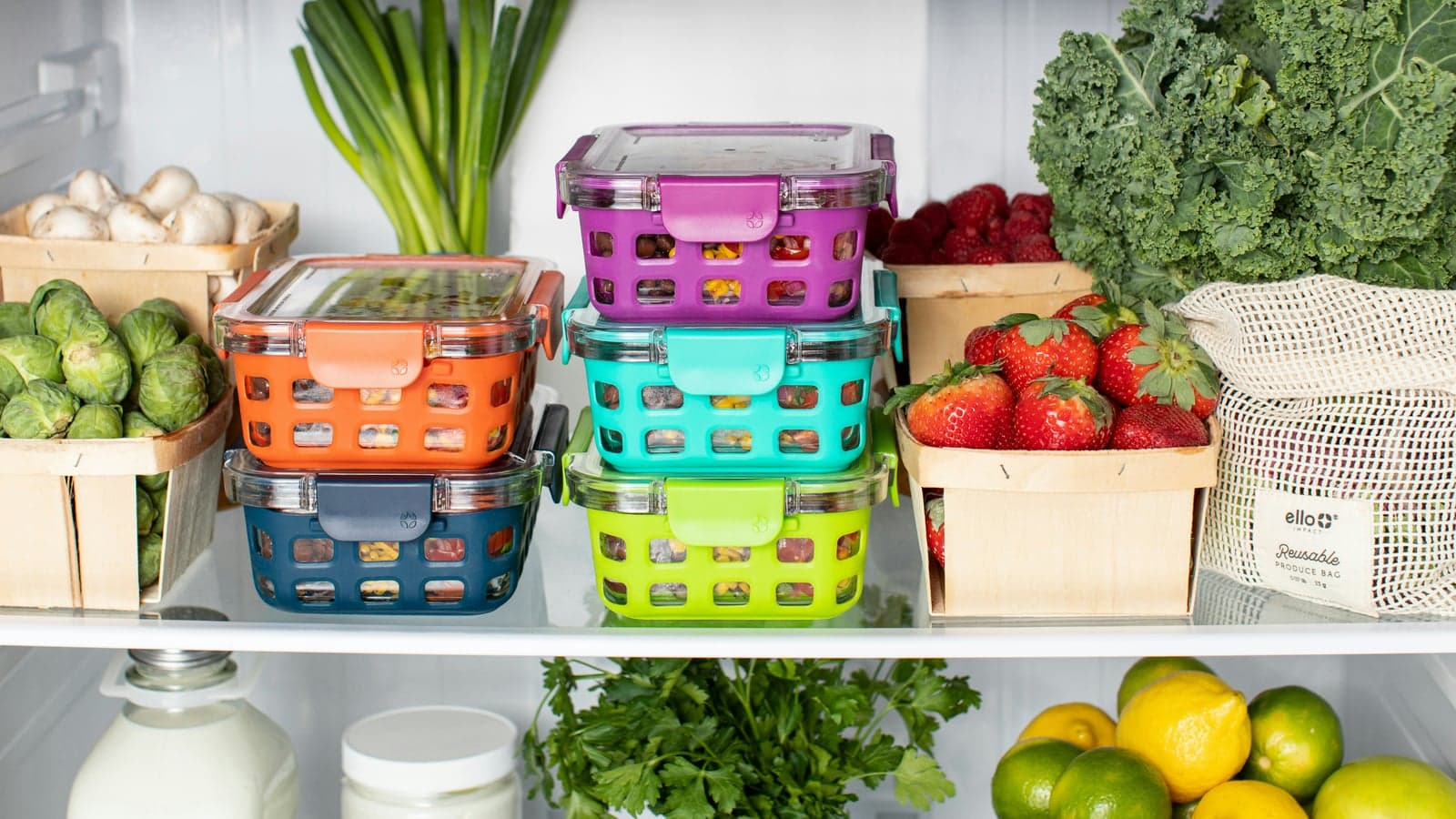
In the fridge for the next 2 to 3 days: glass wins. It doesn't absorb smells, you can put it in the dishwasher and you can see from the outside what's inside. Clip-top preserving jars are ideal.
Plastic tubs are OK, but they should be BPA-free and food-safe. After a year, they become dull and scratched – it's better to replace them then, because bacteria settle in the grooves.
Just give it a try
The next time you cook, make double the amount straight away. One portion goes in the fridge, the rest into silicone moulds in the freezer. After a week, you'll have a supply that gives you time back in the evenings – and gives your dog fresh food without the stress.
In the DoggoMeal app, you can have portions for your dog calculated automatically by weight and activity, and the stock planner tells you when it's time to cook again. That takes the thinking off your hands. Get the app and get going straight away on your next cooking Sunday.
Matching calculators, free in your browser
Frequently asked questions
How long does home-cooked dog food keep in the fridge?
About 2 to 3 days, tightly closed and at no more than 4 to 5 °C. After that, it's better to throw it away – or freeze it in portions as soon as it has cooled, which saves stress and money.
Can I thaw cooked dog food in the microwave?
Better not. The microwave heats very unevenly and can create hot spots where your dog could burn their mouth. Overnight in the fridge is the best method.
Glass or plastic – which is better for storage?
In the fridge, glass, because it doesn't absorb smells and is dishwasher-safe. For freezing, freezer bags or silicone moulds are more practical, because they take up less space and can't crack.
Sources
This article is based on the following expert sources. You can read how we work under Editorial team & methodology.
- Verbrauchertipps: Schutz vor Lebensmittelinfektionen im Privathaushalt – Bundesinstitut für Risikobewertung (BfR)
- Korrektes Kühlen von Lebensmitteln im Privathaushalt – Bundesinstitut für Risikobewertung (BfR)
- Experten-Tipp zur Rohfleischfütterung – ESCCAP Deutschland
Less maths, more cooking.
The article tells you what matters. The DoggoMeal app turns it into a recipe with gram amounts to suit your dog's weight, age, activity and allergies.
- Dog profile
- Recipes with gram amounts
- Allergy warnings
- Doggopedia
Free · no subscription · every feature included


DoggoMeal editorial team
DoggoMeal is a dog nutrition app, founded and run by Kim Marques. Nami, our Shiba, is part of everyday life – her experiences with food changes, bland diets and the like appear in many articles as personal examples.
Our content follows the recommendations of the NRC, WSAVA and FEDIAF. You'll find the sources for this article above under “Sources”. The articles are no substitute for veterinary advice – if your dog has symptoms, please talk to your vet.