Travelling with your dog: how to organise their food
Travelling with your dog: a cool box for the car, food in flight luggage, pre-portioned bags for the hotel – plus an emergency kit, water and heat tips.
By the DoggoMeal editorial teamPublished Updated 6 min read
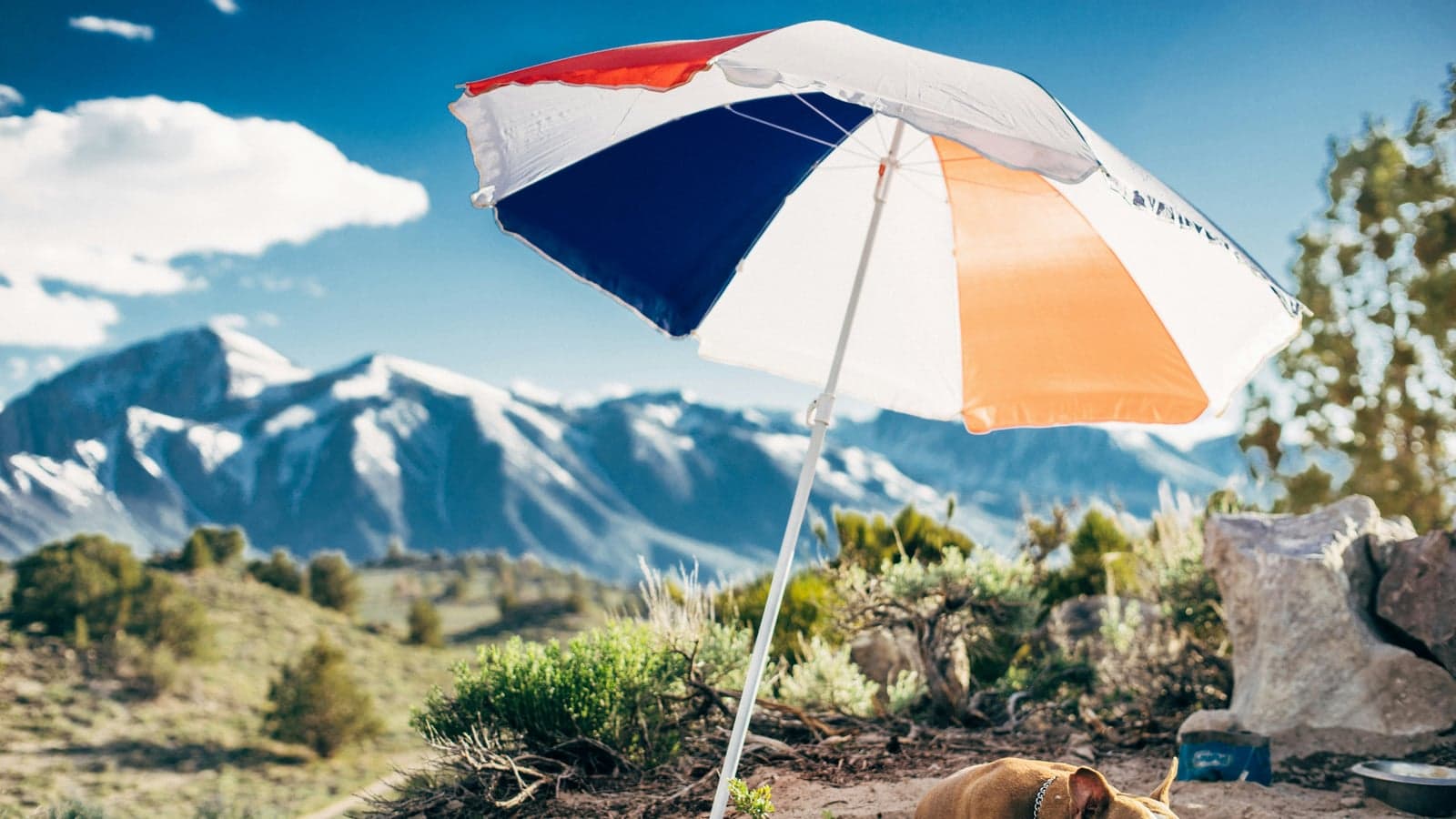
In short
In a good cool box with ice packs, home-cooked food keeps for about 12 to 24 hours – so plan it only for the journey there, and cook at your destination or bring a food your dog already knows. Portion out every meal into bags in advance (around 295 g of dry food a day for a 20 kg dog), pack a small emergency kit for diarrhoea and never leave your dog in a warm car.
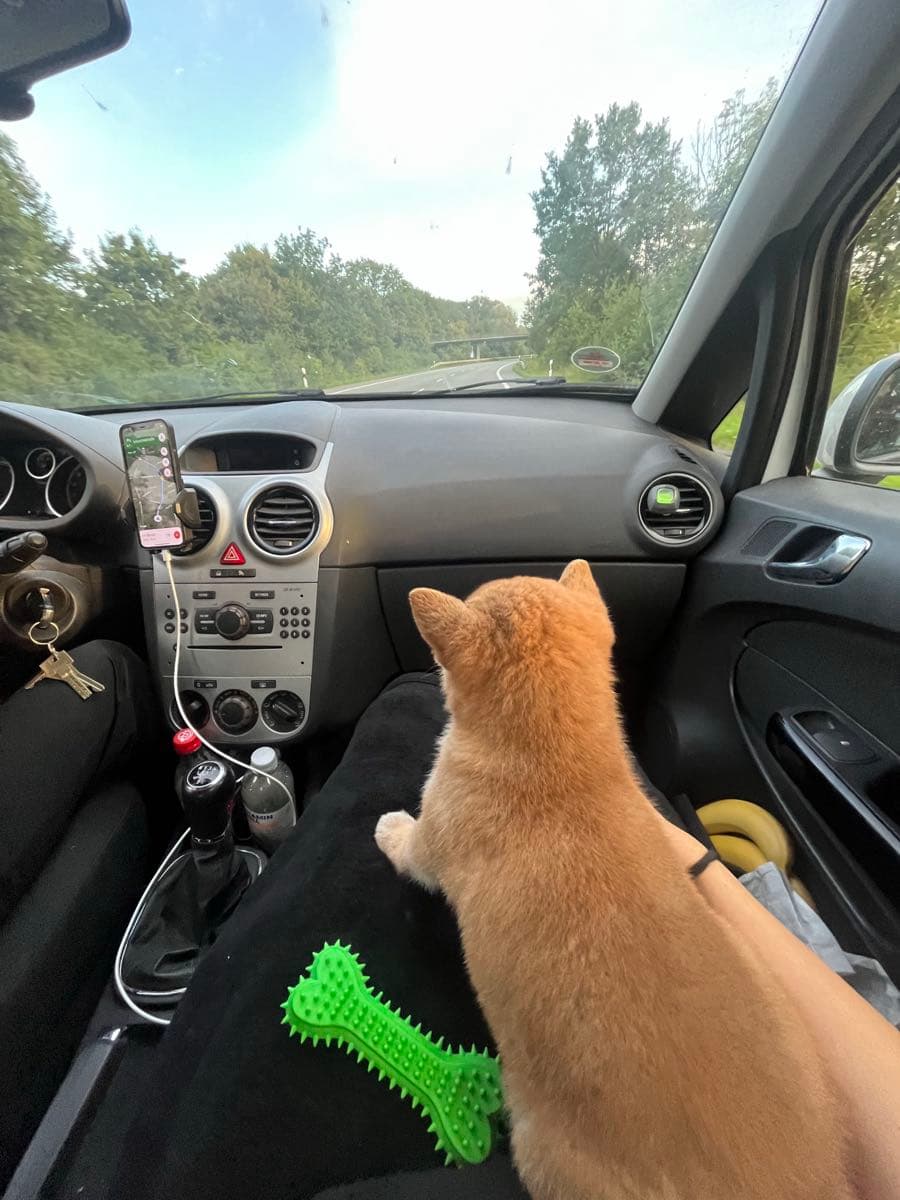
We take Nami everywhere – even to Spain. We cooked on the way with a rice cooker in the boot. Sounds drastic, but routine is routine.
When travelling, the rule is: plan home-cooked food in the cool box only for the first 12 to 24 hours, portion out every meal in advance, pack a small emergency kit for diarrhoea – and never leave your dog in a warm car. At your destination, you either cook yourself or feed a food your dog already knows.
The classic: you fetch the cool box from the cellar, pack it, set off – and after eight hours of driving in summer, the food is borderline despite the ice pack. So it gets thrown away, and at the holiday destination there's suddenly an unfamiliar dry food from the village shop. For your dog's stomach, it's often exactly this sudden change that's the real problem.
Travelling with a dog isn't rocket science, but food is the part most people underestimate. Here's what really works in our community.
Car: plan the first 24 hours with a cool box
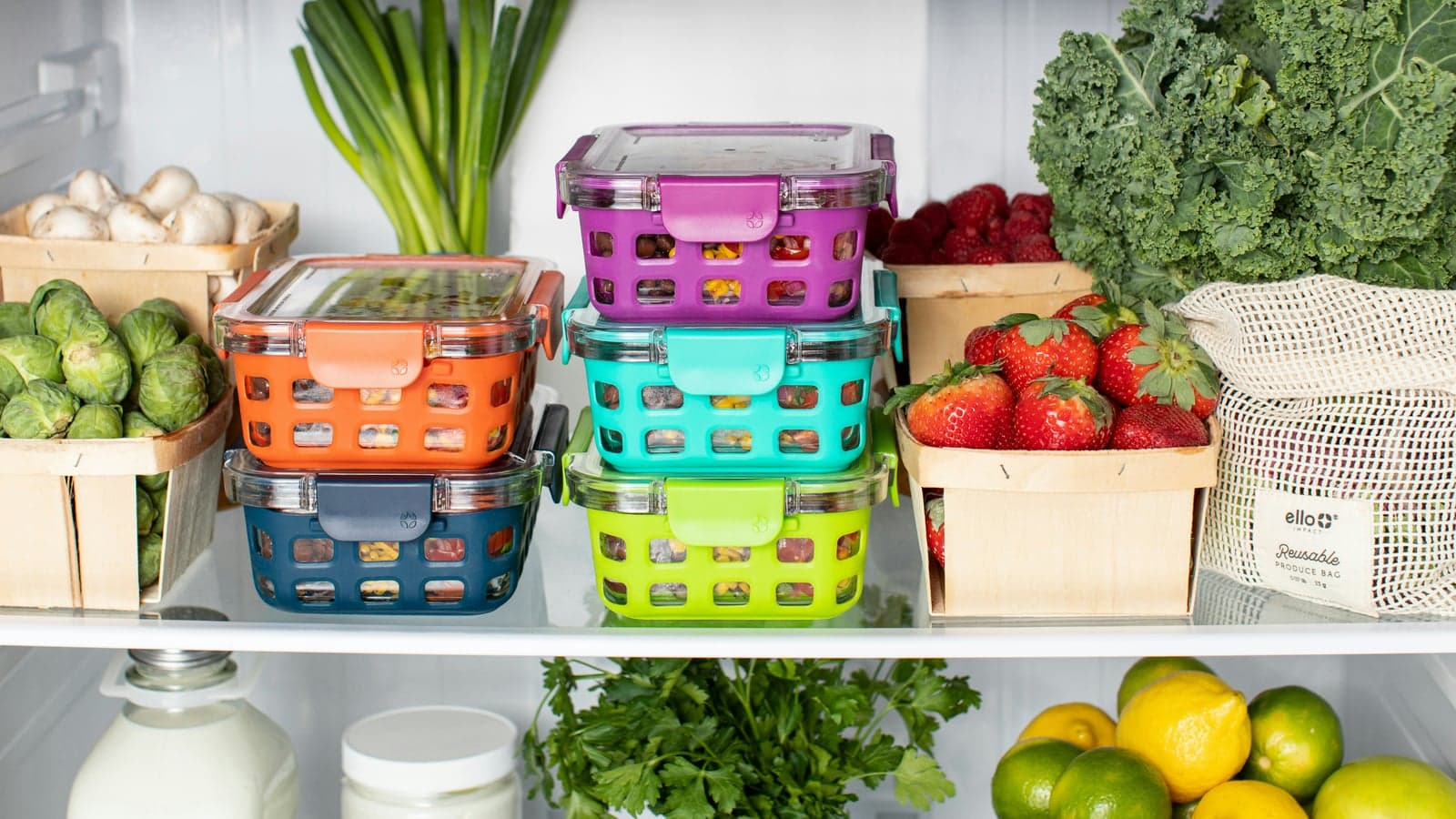
A decent cool box (passive with ice packs or, better, electric via 12 V) keeps cooked or raw dog food fresh for about 24 hours. In high summer, with stops in the sun, more like 12. Put the ice packs in the freezer overnight, otherwise you're starting at half power.
Plan fresh food for the journey there, and from day 2 cook at your destination or feed a food your dog already knows – for example, a dry food you've slowly got them used to before the trip. An abrupt change on holiday often ends in diarrhoea; how to switch gradually is explained in changing your dog's food the right way. If your holiday home has a fridge and freezer, you can of course cook for yourself again – how long the food keeps there is covered in storing dog food properly.
Take breaks every 2 to 3 hours – not just for toilet stops, but also to put the cool box in the shade if you're parking. In a car that has heated up to 40 °C inside, even the best ice pack is quickly used up.
Plane: quantity limits and an anti-spill bag
Air travel is the most complicated when it comes to food. In hand luggage in the EU, there's usually a limit of 100 ml of liquid per container – this can vary depending on the airport and the screening technology. Wet food counts towards this. To enter a country with your dog within the EU, you also need the EU pet passport, a microchip and a valid rabies vaccination. Dry food is usually OK, but check with the airline beforehand – some limit it to 1 or 2 kilos.
In checked luggage: pack the dry food in a sturdy, double zip-lock bag and then in a plastic bag as well (an anti-spill bag). If the suitcase gets wet or a shampoo leaks, the food is protected. It sounds overcautious, but it's based on experience.
For the journey itself: small snack bags with treats in your hand luggage, a collapsible water bowl, a bottle of water (bought after security). Your dog won't need much on the plane – most dogs are too excited to eat anyway.
Hotel and holiday home: pre-portioning saves nerves
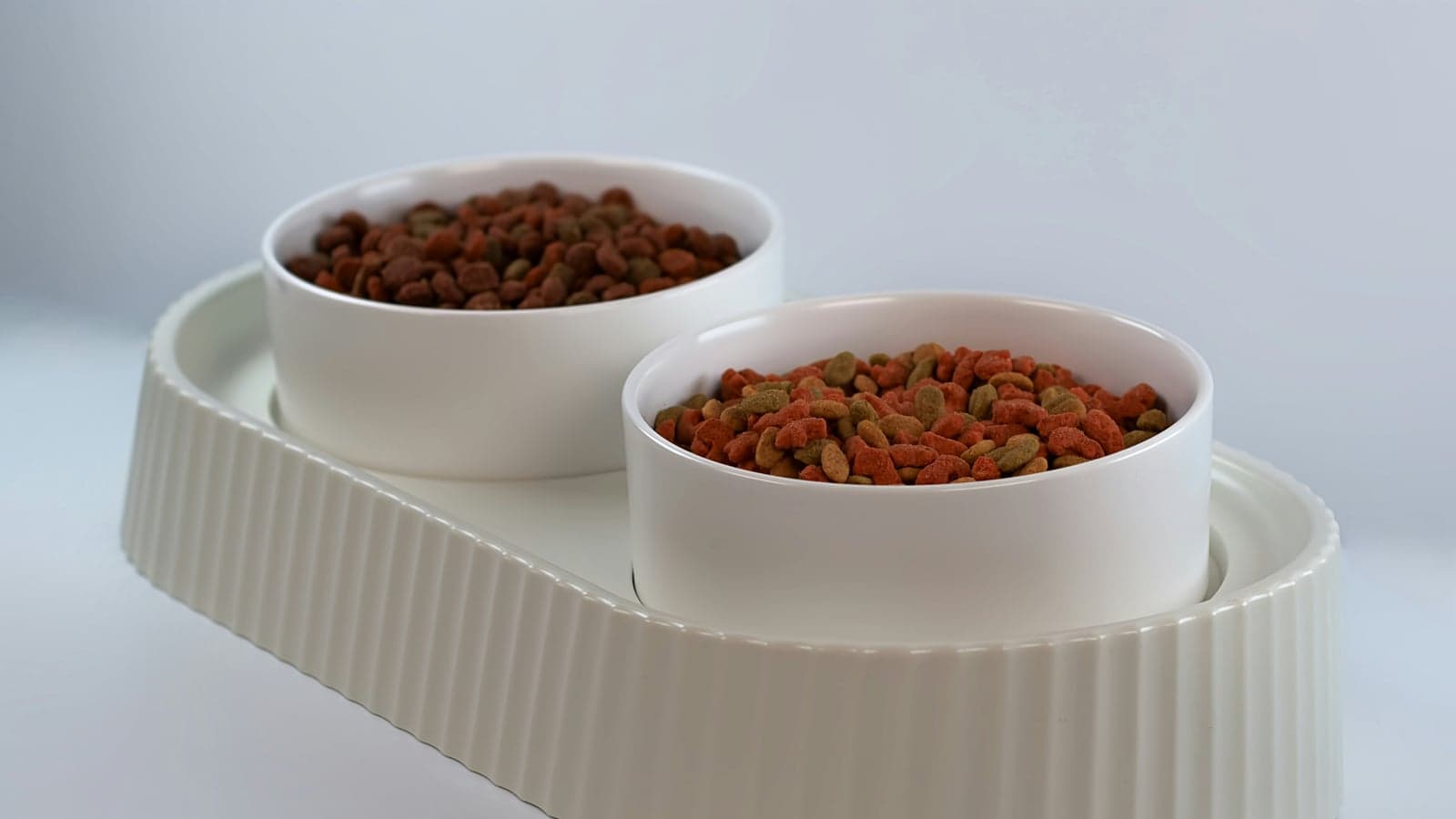
This is the trick that makes everything more relaxed: before you set off, portion out the dry food (or the freeze-dried food) into small bags, one per meal. One for each breakfast, one for each dinner.
At the hotel, you simply open a bag and tip it into the bowl – done. No weighing, no hunting for the measuring cup, no open bag that tastes stale after three days. A neutered, normally active 20 kg dog needs around 1,060 kcal, which is about 295 g of dry food a day (at 360 kcal per 100 g). With two meals, that's 14 bags of just under 150 g each for a week – taking up barely more space in total than the original packaging. The food amount calculator works out the amount for your dog.
In a holiday home with a fridge, you can of course cook again – in that case, take a few glass containers and silicone moulds with you in case your host doesn't have any.
Emergency kit: what goes in it
Before every trip, pack a small box with the basics. In our community, it has already saved many people's holidays:
- A bland diet powder from the pharmacy (e.g. with Moro carrots or healing clay)
- A packet of rice (basmati or short-grain) and a few chicken breast fillets from a freezer at your destination
- A probiotic for dogs if your dog has a sensitive stomach
- The phone number of a vet at your destination – researched beforehand, not only in an emergency
For mild diarrhoea, a simple bland diet of chicken and rice helps while you're away. If it lasts longer than 24 hours, or you see blood in the stool: off to the vet. No heroics on holiday.
Water: not from every puddle
It sounds trivial, but it isn't. Streams, puddles and lakes can contain giardia, leptospira or algal toxins. Especially in high summer, when the water is standing and warms up.
Take a small collapsible bowl with you and regularly offer your dog clean water from your bottle. That way, the temptation to lap up the next murky puddle is smaller.
Summer heat: the biggest risk
Honestly, the most important point of the whole topic. In high summer, a parked car heats up to well over 40 °C in a very short time – even with the window slightly open. Food then spoils very quickly. Much worse: for your dog, it can be life-threatening.
Never leave your dog alone in the car, not even “just for 5 minutes”. Plan journeys for early morning or evening, take longer breaks in the shade and offer plenty of water. On hot days, it's better to feed in the morning and late in the evening – dogs don't eat as well in the heat anyway.
With a plan, travelling is more relaxed
Good preparation makes a holiday with your dog almost as relaxed as a holiday without one. Write a list in advance, pack the day before you leave, and on the day itself just throw everything in.
The DoggoMeal app has a travel mode in which you calculate daily portions in advance, generate packing lists and find vets at your destination. That turns pre-portioning and the emergency kit into a 5-minute job. Get the app and your next road trip with your four-legged friend will be a real holiday – for the tummy too.
Matching calculators, free in your browser
Frequently asked questions
How long does home-cooked food keep in a cool box in the car?
With ice packs, about 24 hours at moderate temperatures. In summer heat above 25 °C, more like 12 hours. After that, you should cook fresh at your destination or switch to a food your dog already knows.
Can dog food go on a plane?
Dry food in checked luggage is usually no problem. Wet food and home-cooked food are trickier – check the quantity limits and make sure nothing can leak. For long-haul flights, ask the airline in advance.
What should I do if my dog gets diarrhoea while we're away?
Put a bland diet powder from the pharmacy in your emergency kit. You'll find rice and chicken in any supermarket. If the diarrhoea lasts more than 24 hours or there's blood in the stool: see a local vet, without hesitation.
Sources
This article is based on the following expert sources. You can read how we work under Editorial team & methodology.
- EU-Vorschriften für Reisen mit Haustieren und anderen Tieren in der EU – Your Europe – Europäische Union
- Verbrauchertipps: Schutz vor Lebensmittelinfektionen im Privathaushalt – Bundesinstitut für Risikobewertung (BfR)
Less maths, more cooking.
The article tells you what matters. The DoggoMeal app turns it into a recipe with gram amounts to suit your dog's weight, age, activity and allergies.
- Dog profile
- Recipes with gram amounts
- Allergy warnings
- Doggopedia
Free · no subscription · every feature included


DoggoMeal editorial team
DoggoMeal is a dog nutrition app, founded and run by Kim Marques. Nami, our Shiba, is part of everyday life – her experiences with food changes, bland diets and the like appear in many articles as personal examples.
Our content follows the recommendations of the NRC, WSAVA and FEDIAF. You'll find the sources for this article above under “Sources”. The articles are no substitute for veterinary advice – if your dog has symptoms, please talk to your vet.