Dog eating too fast? 5 tricks that really help
Dog wolfing down food without chewing? 5 tricks slow them down: a slow feeder bowl, a snuffle mat, tennis balls in the bowl, a baking tray, smaller meals.
By the DoggoMeal editorial teamPublished Updated 6 min read
In short
Eating too fast can usually be slowed down with simple measures: a slow feeder bowl, a snuffle mat, spreading the food out flat, several small meals and peace and quiet at the bowl. This is more than a cosmetic issue – eating quickly and having just one large meal a day are considered risk factors for bloat in large, deep-chested dogs. Retching without bringing anything up, together with a swollen belly, is an emergency.

Nami is more of a picky eater than a gulper – but with her favourite treats (pieces of chicken) she sometimes chokes. A slow feeder bowl has helped.
Eating too fast can usually be slowed down with simple measures: a slow feeder bowl, a snuffle mat, spreading the food out flat, several small meals and peace and quiet at the bowl. This is more than a cosmetic issue – eating quickly is considered one of the risk factors for bloat in large, deep-chested dogs.
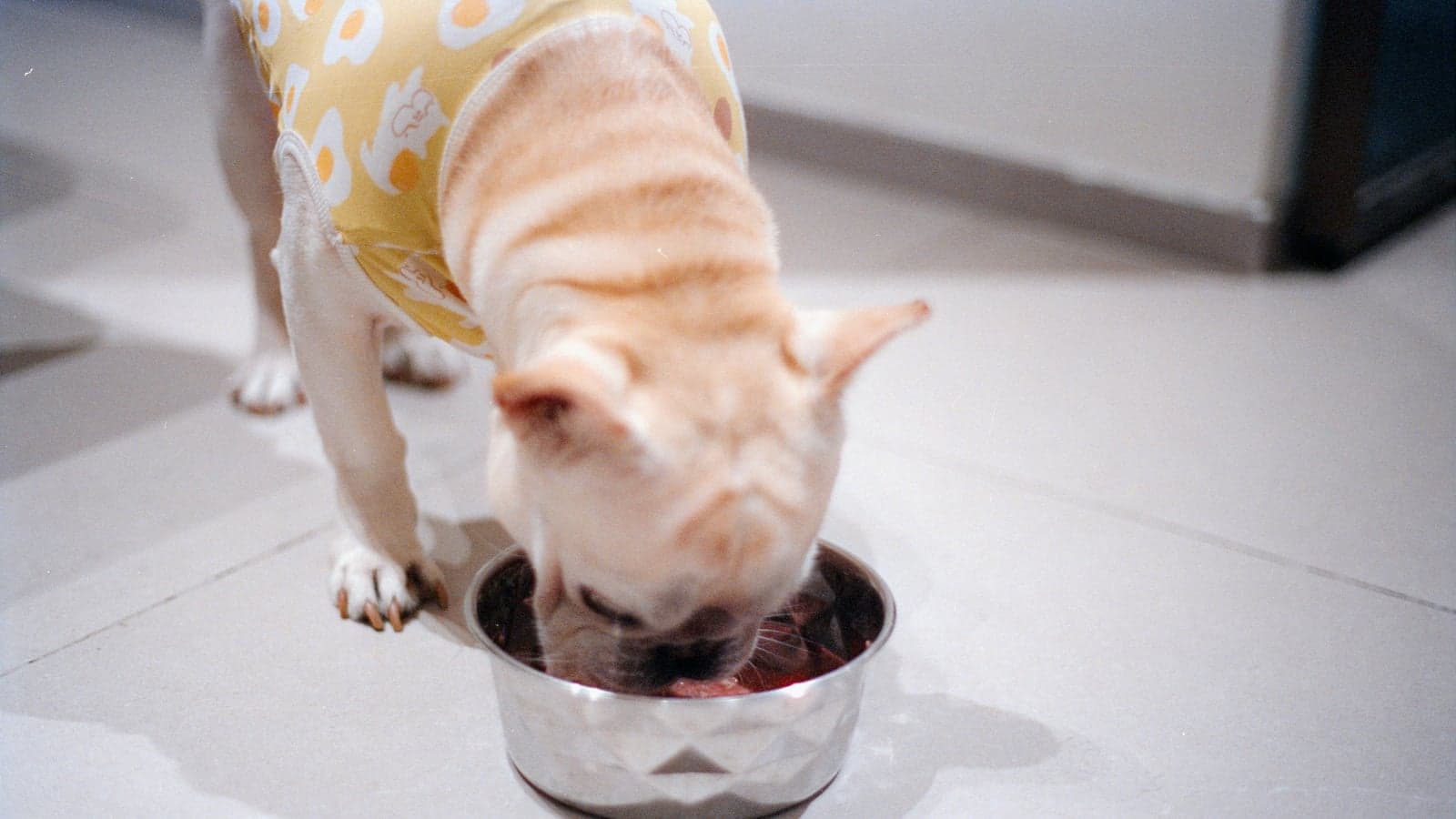
A typical picture: a Boxer empties the bowl in half a minute, followed by burping, a swollen belly and the occasional bout of vomiting. Often a slow feeder bowl alone is enough to turn seconds into minutes and let the stomach settle.
Why eating too fast really is dangerous
It sounds cosmetic, but it's a medical issue. When your dog inhales their food instead of eating it, they swallow air along with it. The air builds up in the stomach, the stomach stretches and, in the worst case, twists on its own axis. This is gastric dilatation-volvulus (GDV), better known as bloat – a life-threatening emergency that needs surgery quickly, especially in large, deep-chested breeds such as Great Danes, German Shepherds, Setters, Weimaraners, St Bernards or Standard Poodles. In a large US study of more than 1,900 dogs from eleven at-risk breeds, 5.7% developed bloat during the observation period, and just under 29% of those dogs died. Besides breed and age, the recognised risk factors include eating quickly and having only one meal a day.
And even without a twist: burping straight after eating, vomiting undigested chunks, stomach ache, wind, heartburn. Honestly – no dog deserves that just for being greedy. If your dog vomits often, our guide to stomach and gut problems in dogs will help you make sense of it.
Trick 1: The slow feeder bowl
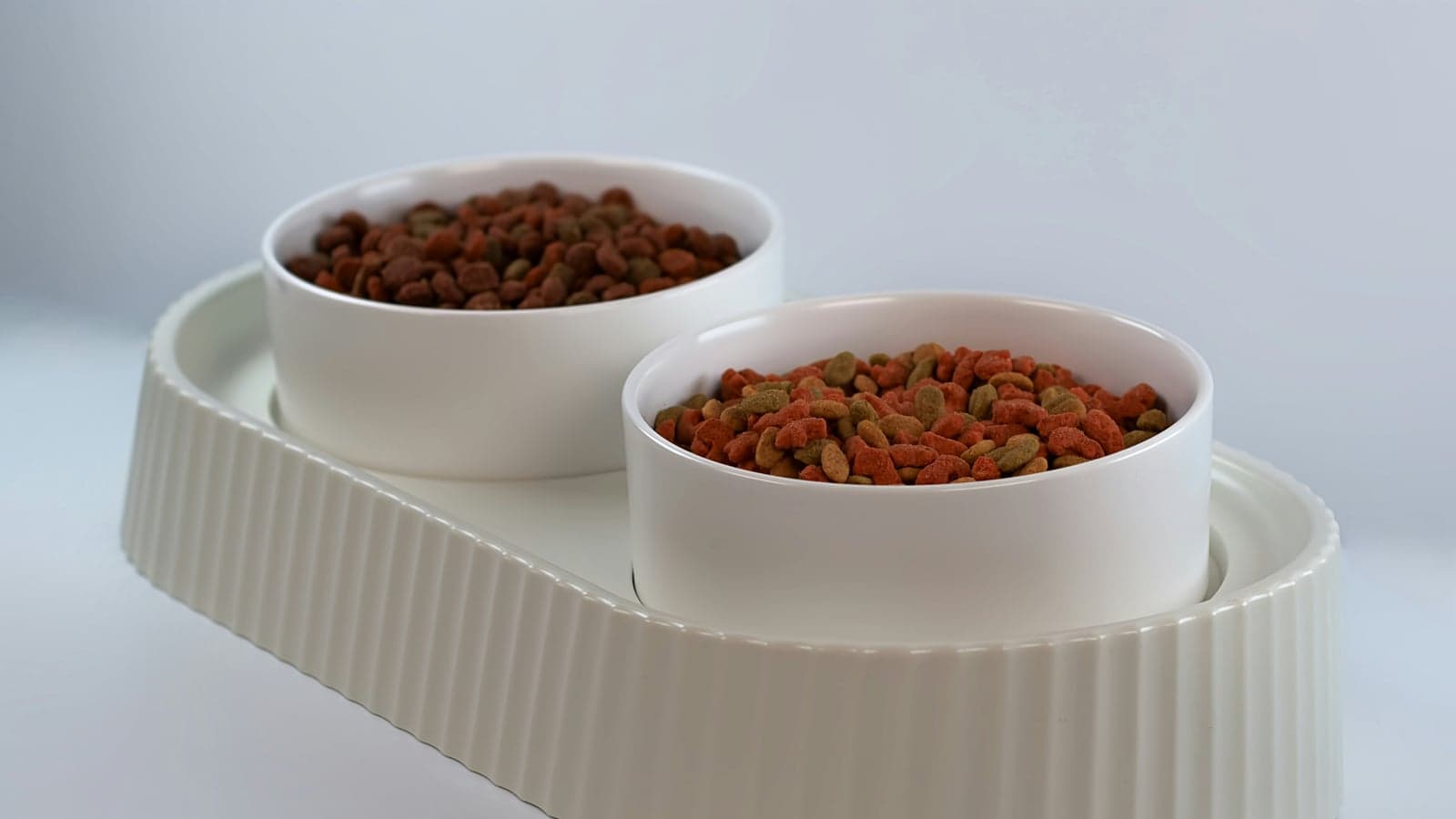
The classic, and for good reason. These bowls have ridges, mazes or pillars in the middle. Your dog has to fish around between them instead of simply diving in.
What to look out for:
- Sturdy and non-slip – a 30 kg dog will push cheap plastic versions right across the room
- Ridges to suit the muzzle: flat-faced dogs (Pug, Frenchie) need shallow hollows, not tall pillars
Many people in our community swear by the stainless steel versions with a rubber base. They last forever and can go in the dishwasher. With a price range of €15 to €25, that's money well spent.
Trick 2: Snuffle mat – sniffing instead of gulping
A snuffle mat is a felt mat with hundreds of fabric strips. You scatter the dry food into it, and your dog has to sniff it out. 30 seconds of eating turn into 10 minutes of searching.
A double benefit: your dog eats slowly and gets mentally tired. For herding dogs (Border Collie, Australian Shepherd) or hunting dogs (Beagle, Hungarian Vizsla) in particular, that's worth its weight in gold. A sniffing meal is a nice bit of brain work for the day.
Be careful with wet food – it ruins the mat. A snuffle mat only works with dry food or dried treats.
Trick 3: Tennis balls in a normal bowl
No slow feeder bowl and no wish to spend money? Put two or three clean tennis balls (or a large, smooth, well-washed stone) in the normal bowl. Your dog has to eat around them and sort through the food.
It works surprisingly well and costs nothing. Important: the balls must be big enough that your dog can't swallow them. No tennis ball for a Miniature Pinscher, no table tennis balls for a Great Dane.
Trick 4: Spread the food on a flat baking tray
My personal insider tip from the community: line a baking tray (size depending on your dog – for a Chihuahua, a plate will do) with baking paper and spread all the food thinly on it. Your dog can't dive in and has to pick it up piece by piece.
30 seconds easily turn into 4 to 6 minutes. It costs nothing extra. It works perfectly with dry food, and with wet food too – in that case on a silicone mat or straight on a freshly washed worktop.
Trick 5: Several small meals
Instead of half the daily ration twice a day, give a smaller portion three or four times a day. A neutered, normally active 20 kg dog, for example, needs around 295 g of dry food a day; split across three meals, that's just under 100 g per portion. The food amount calculator works out the daily amount for your dog. It sounds trivial, but it makes a big difference. The stomach is never overfull, your dog is ravenous less often, and the gulping becomes less frantic.
Especially useful for:
- puppies (3 to 4 meals a day up to 6 months anyway)
- large breeds at risk of bloat – here, experts explicitly recommend several small meals instead of one large one, plus rest before and after eating; more on this in how often you should feed your dog
- former street dogs who are always hungry
If you work and aren't at home during the day, an automatic feeder with a timer can help.
Reducing stress at the bowl – the underestimated factor
Eating too fast is often down to stress. More than one dog in the household? Put the bowls in separate rooms or at least 3 metres apart. Children running around at mealtimes? Set up a quiet zone for eating. Other animals (the cat, a visiting dog)? Close the door.
If your dog feels that someone might take their food away, they switch to “everything in, right now”. That's exactly what you don't want. Peace and quiet at the bowl is the foundation. Only then do the other tricks really work.
Combining tricks works best
Honestly – you'll get the best results by combining several tricks. Slow feeder bowl in the morning, snuffle mat in the evening, and the baking tray now and then for a change. Your dog doesn't get bored, you stay in control and the pace stays down.
Keep track with the DoggoMeal app
The DoggoMeal app automatically splits the daily ration into several small portions, reminds you of feeding times and suggests anti-gulping methods suited to your dog's breed. That way, you make it easy for your dog to eat healthily. Get the app – your fast eater will thank you with a calmer tummy.
Matching calculators, free in your browser
Frequently asked questions
When does a dog count as a fast eater?
When the meal is gone in under a minute and the dog barely chews. A healthy pace is 5 to 15 minutes, depending on the type of food.
Does a slow feeder bowl really help?
For most dogs, it makes mealtimes noticeably longer. What matters: it has to be non-slip and sturdy, otherwise your dog will push it across the kitchen – and it should suit the shape of their muzzle.
My dog retches after eating – is that dangerous?
A single burp is usually harmless. Repeated retching, a bloated belly or restlessness are warning signs of bloat – see a vet straight away.
Sources
This article is based on the following expert sources. You can read how we work under Editorial team & methodology.
- Gastric Dilation and Volvulus in Small Animals – Merck Veterinary Manual
- Incidence of and breed-related risk factors for gastric dilatation-volvulus in dogs – Glickman et al., Journal of the American Veterinary Medical Association (2000)
Less maths, more cooking.
The article tells you what matters. The DoggoMeal app turns it into a recipe with gram amounts to suit your dog's weight, age, activity and allergies.
- Dog profile
- Recipes with gram amounts
- Allergy warnings
- Doggopedia
Free · no subscription · every feature included


DoggoMeal editorial team
DoggoMeal is a dog nutrition app, founded and run by Kim Marques. Nami, our Shiba, is part of everyday life – her experiences with food changes, bland diets and the like appear in many articles as personal examples.
Our content follows the recommendations of the NRC, WSAVA and FEDIAF. You'll find the sources for this article above under “Sources”. The articles are no substitute for veterinary advice – if your dog has symptoms, please talk to your vet.