
Body language: how to understand your dog
By the DoggoMeal editorial team8 min read
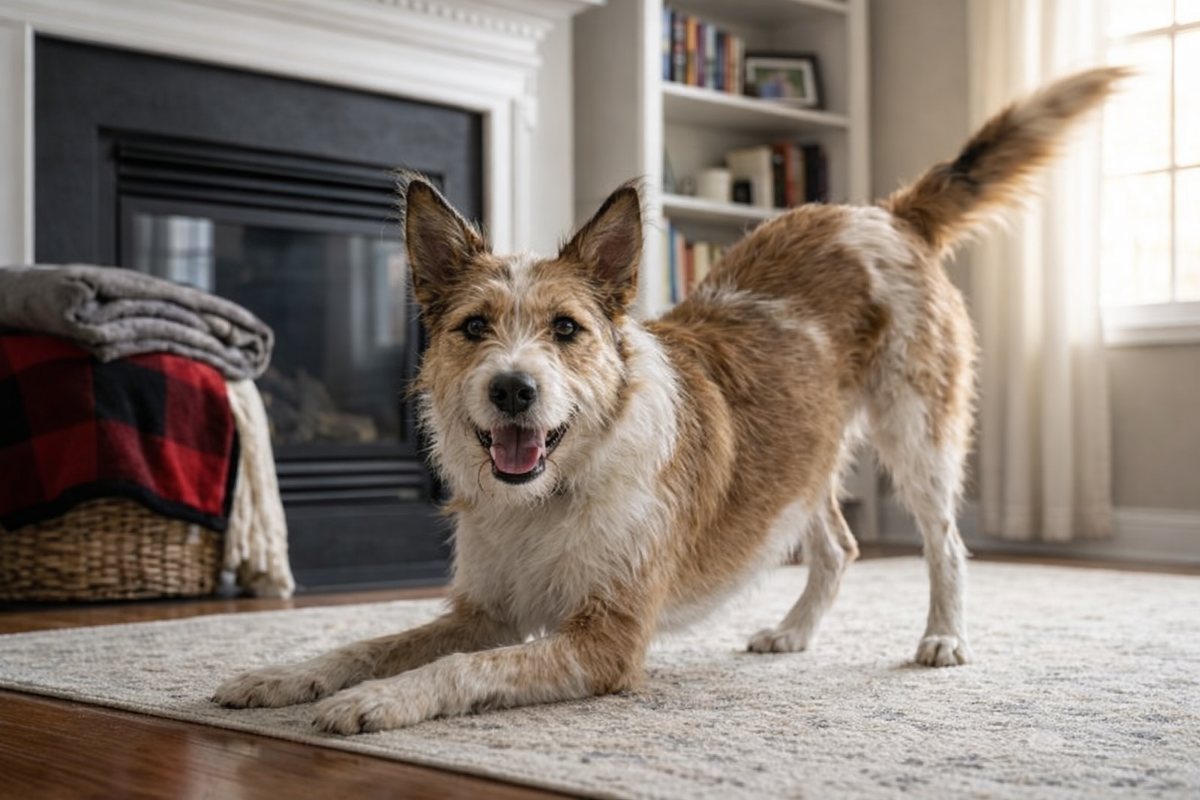
Dogs show how they feel through their tail, ears, gaze, facial expression and posture – wagging on its own doesn’t automatically mean they are happy. Yawning, licking the nose, looking away or showing the whites of the eyes can signal stress or unease. Growling is a warning signal you should take seriously and not punish; always read signals in the context of the situation.
Ever wished your dog could tell you in words what he is thinking and feeling right now? The good news: he talks to you all the time in fact — just in body language 👀. Dogs communicate a great deal through ear position, tail movements, facial expression and posture. If you can read these signals, you understand your dog far better and can avoid misunderstandings. Let us dive into the silent language of our four-legged friends.
A dog yawns out of the blue, licks his nose and wags slowly with a half-tucked tail. What people easily overlook is a clear statement in dog language: this dog feels uncomfortable and is trying to reduce stress.
Why body language matters
Dogs use sounds such as barking or whining, of course — but 80% of communication is non-verbal. Facial expression, gestures and posture reveal mood and intentions . For us owners it is enormously helpful to know these signs: you spot early whether your dog is stressed, anxious, joyfully excited or perhaps unsure. That way you can react properly (comfort, defuse the situation, celebrate and so on). You also avoid dangerous situations: many biting incidents happen because warning signals from the dog were overlooked or misread. Anyone who learns to listen to their dog's quiet notes will rarely experience the loud ones (growling, snapping) — because you notice beforehand when it is getting too much for him.
Let us look at the most important body parts and signals:
Tail
The tail is a mood gauge. Many people think wagging equals friendly, but it is not that simple. How a dog wags is what counts. A relaxed wag (tail in a middle or slightly low position, soft, broad movements) means joy or good humour — the dog is friendly. A stiffly raised tailwhich may only twitch or vibrate slightly, on the other hand shows excitement or a claim to dominance. If the tail is clamped between the legs, that expresses fear or submission — the dog is making himself small. A horizontally extended tail level with the back, possibly moving slightly to and fro, often signals heightened attention or uncertainty — the dog is alert and trying to gather information. Always watch the whole picture: a dog can also wag when he is unsure or even aggressive — the wagging only means "I am aroused", but the mood can still be tense (you can tell then from a stiff posture, the gaze and so on).
Ears
Ear positions vary by breed (floppy versus upright ears), but tendencies are still visible. Ears pointed forward and upright mean attention, interest — the dog is focusing on something. Combined with an offensive posture, ears pricked forward can also indicate a threat ("I am ready"). Ears laid back (flat against the head) usually show uncertainty, fear or submission . Many dogs flatten their ears completely when afraid and you may also see the white of the eye — a sign of stress. If the ears are turned sideways or slightly down and back (with semi-erect ears), that can likewise mean appeasement or discomfort. Shifting ear play (one ear forward, one back) is often seen when the dog is undecided or is taking in various stimuli.
Eyes and gaze
Dogs can express an incredible amount through their gaze. A direct stare — especially with a stiff body — is often threatening or provocative in the dog world. Among dogs a fixed stare says: "do not mess with me". If your dog fixes on another or a strange dog stares at you, caution is called for. Soft blinking or looking away signals relaxation or deference: many dogs avert their gaze to appease, "I mean no harm". Wide-open eyes with a visible white rim (whale eye) show stress: you see the white of the eye when the dog turns his head away, for instance, but keeps his eyes on what is bothering him — a sign of unease. Narrowing the eyes or frequent blinking, by contrast, can be a friendly signal (dogs sometimes smile like this with their eyes). Note the pupils too: large pupils (arousal) can signal excitement or fear, small narrow eyes more likely calm (unless bright light is causing it).
Facial expression (lips, face)
One obvious sign is of course showing teeth. But there are differences here. In a threat display the dog pulls his lips up and bares his teeth — usually the front teeth and canines are clearly visible and the nose is wrinkled. That is unambiguous: "go away, or I might bite". This face often comes with growling. In contrast there is the submissive grin of some dogs — they pull their lips back and show teeth, but without growling, usually combined with a crouched posture and a wagging tail. To us that also looks like baring teeth, but it is more an "I am friendly and submissive" sign — it occurs in some Labradors, for example, who then seem to smile. Panting can be a stress signal when it happens in a calm environment without heat: if your dog pants with his tongue hanging far out although it is not hot and he has not been running, it can mean he is nervous. Yawning — a great signal: dogs often yawn to release tension or to appease. A dog who yawns out of nowhere in an unfamiliar situation is saying: "phew, I feel a bit uneasy, let us calm down". Yawning is also catching; you can smile at your dog and yawn slowly yourself, which some dogs understand as "all is well, calm down". Lip licking (the tongue flicking briefly over the nose) in a calm situation is likewise an appeasement and stress signal ("I do not want trouble"). Dogs do this when their owner stands in front of them with a stern face, for example — they are trying to appease. Many small signals such as blinking, licking, yawningare called calming signals — they serve to show friendliness and to calm others (dog or human).
Posture
Here you look at the whole picture. Is your dog making himself big or small? A confident, possibly threatening dog stands upright, chest out, head high, weight shifted forward onto the front paws. He looks tense, all muscles ready. The tail is often held high (perhaps wagging stiffly), ears forward — in short: "I am in control". A submissive or unsure dog , by contrast, crouches a little, makes himself small, perhaps tucks his tail, turns his body sideways or licks the other party. His message: "I will not hurt you, please do not hurt me". A frightened dog can make himself small, even tremble, tail tight under the belly, ears back — or, with a flight reflex, can also freeze and no longer know whether to go forward or back. The play posture is familiar to almost everyone: the cheerful front-end-down, bottom in the air (play bow). Usually paired with a wagging tail and a bright look, it clearly means "let us play" — you often see this between dogs, but also towards people, combined with barking or bouncing. Lying on the side and showing the belly: a dog who lies down on his side or back completely relaxed in front of you and presents his belly is showing trust and submission. Important: this is not automatically an invitation to a belly rub. Many dogs lie like this to signal "I am peaceful". If you then start patting away roughly, some feel uncomfortable. Consider the context here: if the dog knows you well and is perhaps wagging too, he probably enjoys a belly rub. But a strange dog who only rolls onto his side in a crouch is better left in peace.
Particular signals
A few typical expressions should be known to everyone. Growling is a clear warning signal: "go away" or "stop that". Always take growling seriously and do not punish it. Your dog is telling you that he feels uncomfortable or does not want something. Get to the bottom of the cause (pain? fear? resource guarding?) and work on it instead of punishing the growl — otherwise at some point he might snap straight away without warning. Barking can have any number of meanings — alarm, frustration, an invitation to play, boredom. Only context and your knowledge of your dog help here (a joyful bark during a ball game sounds different from shrill yapping at the fence). Whining and howling often expresses excitement or discomfort — many dogs whine when they want to greet someone and cannot, or when they are in pain. Always look at the whole picture.
Always read body language in context
Important at the end: a single signal can mean different things depending on the situation. You always have to see your dog's whole picture and take the surroundings into account. A tucked tail during New Year fireworks means fear, of course. A tucked tail during a game of fetch, because he is running back full of anticipation? That is more a focused running posture, he is not frightened there. Get to know your dog: many details repeat themselves in him in particular moods.
And watch other dogs too: in a group of dogs in the park you can nicely see how they play with body language. The more you watch, the more you notice. A good tip: take a few minutes every dayto observe your dog deliberately, without distraction . You will quickly discover subtleties that escaped you before.
Knowledge about dogs in one place
Alongside recipes, DoggoMeal has the Doggopedia — compact articles on everyday questions about behaviour, training and care, without you having to switch apps.
In the end, knowing about body language leads to a better life together. You become a real dog whisperer for your own dog and can act with foresight. A dog who feels understood is a happy dog — and we all want our furry friends to be happy.
Written by
DoggoMeal editorial team
DoggoMeal is the editorial team behind the recipes and Doggopedia articles in the app.
Editorial team & methodology22 more articles are waiting in the app
This page is a free sample. You'll find all the other Doggopedia articles and recipes with amounts tailored to your dog in the DoggoMeal app.
- Doggopedia
- Dog profile
- Recipes with gram amounts
- Community
Free · no subscription · every feature included
More free samples
- House-training: how your puppy learns to stay cleanTraining · Handling and training
- Separation anxiety: when your dog won’t stay aloneHealth · Wellbeing
- In season: everything about your female dog’s heatHealth · Wellbeing
- Lead training: walking calmly on the leadTraining · Handling and training
- Shedding: when your dog leaves hair everywhereHealth · Grooming