
Lead training: walking calmly on the lead
By the DoggoMeal editorial team6 min read
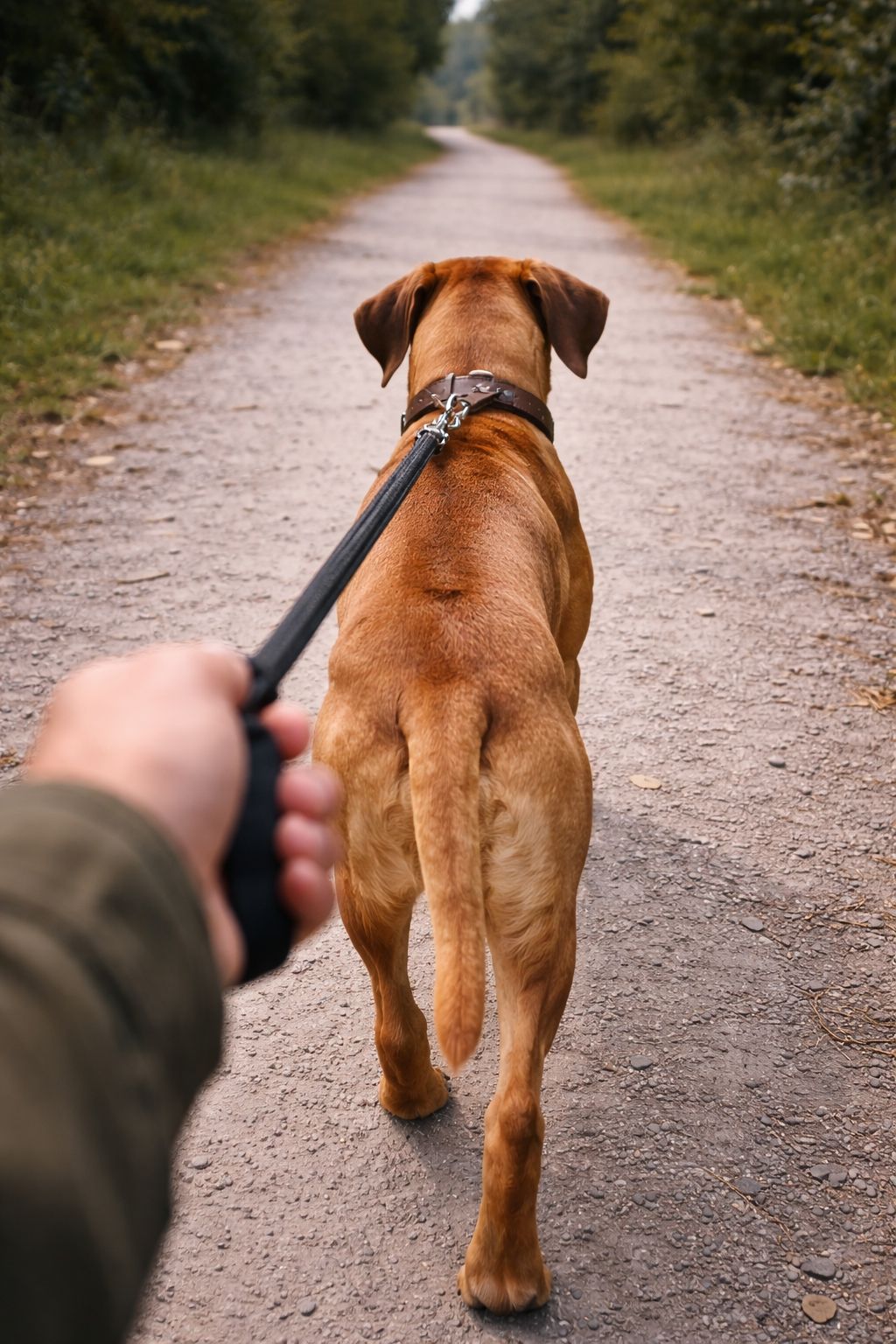
Dogs don’t pull out of disobedience but because pulling gets them where they want to go faster. Start training somewhere quiet: stand still as soon as the lead goes tight and only walk on once it is loose again – or change direction without a word. Reward loose walking straight away; jerking the lead, choke collars and prong collars are off limits.
Does your dog pull on the lead 🦮 and drag you from tree to tree? You are not alone — many dogs have never learned to walk on a loose lead. For owners, the daily walk can turn into a workout. But do not worry: with patience, understanding and consistent training you can turn your four-legged locomotive driver into a relaxed companion. We will show you how.
Why do dogs pull?
Before we start training, it is worth looking at the cause: a dog that pulls on the lead is not badly behaved or dominant, they are simply following natural behaviour at first. Outside there are a thousand exciting smells (reading the dog newspaper), other dogs, interesting trails — your dog naturally wants to get there and forgets that you are attached at the back. Off the lead many dogs walk nicely near you, but on the lead they feel restricted and react with frustration when they cannot go straight to that great smell. On top of that: if pulling works (because it gets them to the goal faster), they learn — consciously or not — that pulling pays off. So the behaviour reinforces itself. Our human tendency to pull back when the lead goes tight leads to a proper tug of war — which the dog wins by strength, or which in the worst case spoils the fun for both. In short: your dog does not mean any harm by pulling. They simply know nothing else. It is up to us owners to teach them an alternative.
Your attitude counts
The first step towards lead manners starts with you. Be clear about it: walks should be a joy and a relaxation for both you and your dog, not a duty full of frustration. Try to stay calm and composed, even when your dog tugs. Scolding or physical punishment only makes the problem worse — your dog does not understand that pulling made you cross, they only feel your stress and get more nervous. Also try to give your dog the chance to live out their natural need to sniff . Many dogs pull less when they know: I am allowed to sniff here and there. You could introduce a cue like go on or sniff, which means you may now sniff on the long lead, and a cue like with me for come along now, we are walking. That way your dog has clear phases: sometimes loose walking, sometimes at heel.
Start training somewhere with few distractions
Practise lead work first in a place with few distractions — the garden, the yard or a quiet side street. Take small, soft treats your dog loves, or a favourite toy for motivation. The lead should hang loosely in your hand (use a normal lead of about two metres for training rather than a retractable one, so you have a feel for the lead). Now off you go: call your dog to you and reward every bit of attention 👀 (them looking at you, for instance) immediately with a word of praise and a treat. You want your dog to notice you and not permanently scan for whatever else is out there.
Step by step to a loose lead
Begin with short sessions. Tip: Let your dog relieve themselves and sniff briefly first, so they are a little more settled. Then take up the lead and walk a few steps. As soon as your dog walks beside you without pulling, praise them and give a treat at knee height by your leg — that way they learn: oh, good things happen near my human's leg. If they walk ahead and want to pull, stand still like a tree. Say nothing, do not move, until the lead loosens by itself because your dog reorients (why are we not going on?). Exactly at the moment the lead is loose, praise — and then walk on. This principle of pulling does not get me forward is laborious at the start and demands patiencefrom you, but it works over time. Your dog only learns through consistency: pulling on the lead stops the fun of the walk, a loose lead moves you forward.
Another method: changing direction ↩️. Whenever your dog overtakes you and pulls, turn without comment in the other direction and carry on. The dog runs into nothing and has to follow. As soon as they are level with you: praise. If they pull ahead again: change direction again. This takes a few repetitions — but dogs are clever and remember that staying near you makes more sense, since you keep deciding the direction anyway.
Reward the right behaviour
Take care to reinforcethe behaviour you want. If your dog walks even two steps loosely beside you — click (if you use a clicker) and reward. Eye contact with you: excellent, give a treat. Many dogs pull less when you interact with them more often on the walk. Talk to your dog, praise them when they are good. You can also build in a little exercise now and then: sit — the dog sits — then walk on. Or slalom around trees. That keeps their focus on you and makes you more interesting than the surroundings.
Allow breaks
No dog has to walk at heel for the whole walk. Plan sniffing breaks where your dog may investigate tufts of grass and lamp posts on a longer lead. You can limit these phases in time at first (you may sniff here for one minute) and then call cheerfully on we go and the loose-heel phase starts again. The dog learns: they get their sniffing time, but in a controlled way and not forced by pulling.
What to avoid
No jerking or yanking on the lead. A hard jerk can injure the cervical spine or the larynx, especially with thin collars. It also destroys trust. Do without choke or prong collars too — such aversive tools are unnecessary and in many cases counterproductive. They may suppress pulling in the short term because it hurts, but they take the joy from your dog and can create aggression or fear. Rely on friendly consistencyinstead. It may take longer, but in the end your dog walks beside you out of conviction and not out of fear of pain. That is worth far more.
Sticking with it pays off
Lead manners do not come overnight. Especially if your dog has been pulling for a long time, you have to be very consistent. It can take weeks before the success really shows — then suddenly you notice that your dog stays beside you of their own accord more and more often and looks up at you as if to say, is this alright? Keep rewarding them now and then for walking to heel, but you can reduce the treats over time once it is solid. Increase the difficulty step by step: practise in places with more distraction, on a longer lead, or with different people (everyone in the household should train the same way, so the dog does not pull with one person and behave with another).
Activity and routine belong together
A well-exercised dog often pulls more calmly than an under-exercised one. In DoggoMeal your dog's activity level feeds into the amount calculation, so the portion size fits their life stage and their exercise — one less thing to think about on the walk.
In short
Lead manners are a matter of training — no dog comes into the world perfect on a lead. Have understanding for your four-legged friend and practise calmly with positive reinforcement. The effort pays off: soon you will enjoy your walks relaxed and without tugging. A dog who knows what you expect and likes working with you is a wonderful companion — and you spare your arms and your nerves a lot of strain. So, lead on, and happy practising — you will manage this.
Written by
DoggoMeal editorial team
DoggoMeal is the editorial team behind the recipes and Doggopedia articles in the app.
Editorial team & methodology22 more articles are waiting in the app
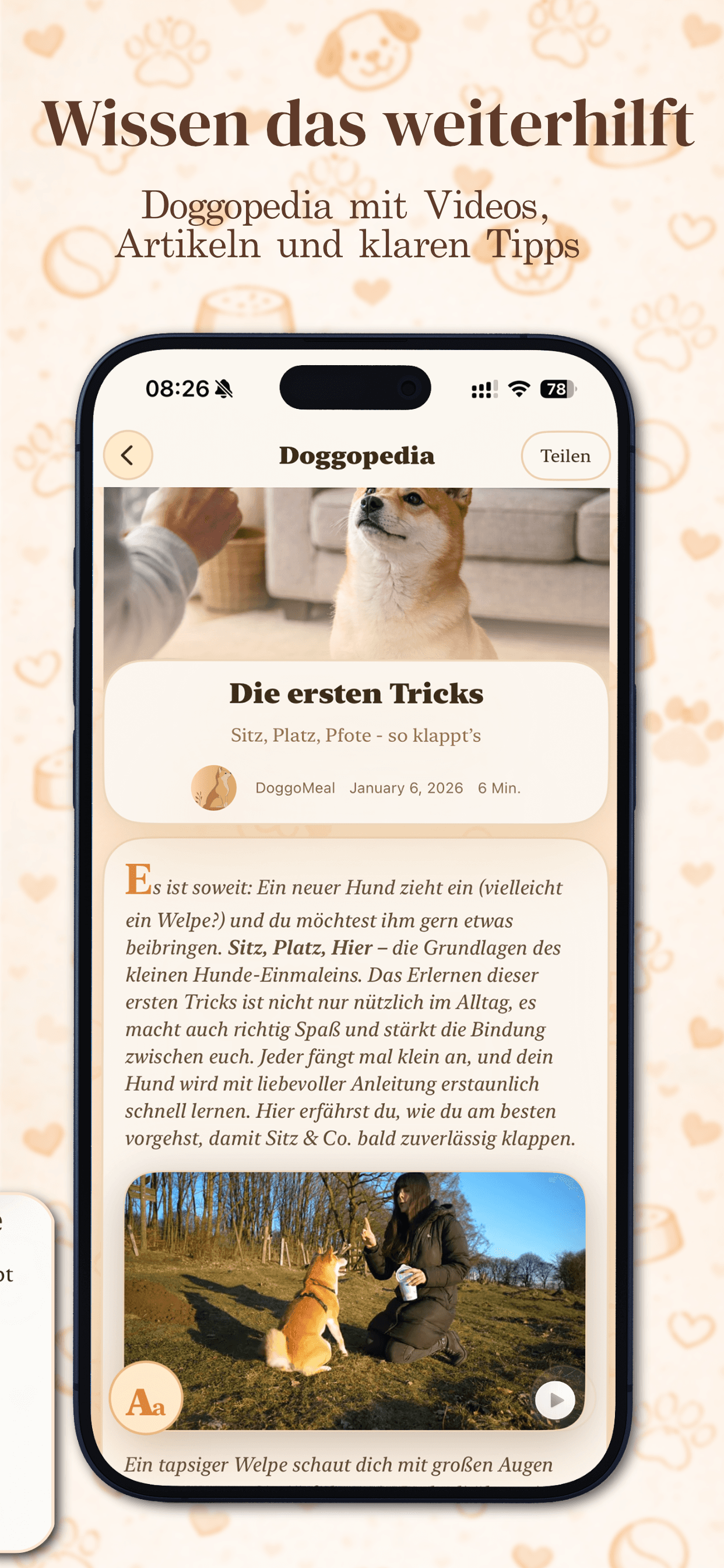
This page is a free sample. You'll find all the other Doggopedia articles and recipes with amounts tailored to your dog in the DoggoMeal app.
- Doggopedia
- Dog profile
- Recipes with gram amounts
- Community
Free · no subscription · every feature included
More free samples
- House-training: how your puppy learns to stay cleanTraining · Handling and training
- Separation anxiety: when your dog won’t stay aloneHealth · Wellbeing
- In season: everything about your female dog’s heatHealth · Wellbeing
- Body language: how to understand your dogHealth · Wellbeing
- Shedding: when your dog leaves hair everywhereHealth · Grooming