Boxer feeding amounts: daily ration and chart
An adult, neutered Boxer at 30 kg needs about 1,435 kcal a day with normal exercise: roughly 400 g dry food or 1,435 g wet food. These are starting points using the table’s typical energy densities. Weigh the food and check weight, ribs and waist after two weeks. Your vet should adapt the plan for unsuitable body condition or illness.
Updated on
Adult weight
- Weight / examples:
- 25–35 kg
- Shoulder height:
- Males 57–63 cm, females 53–59 cm
The range gives calculation examples; the standard defines height, not a universal ideal weight. Suitable weight depends on build and body condition.
Activity type
Boxer: body condition and daily routine determine the portion, not the breed name alone.
Breed watch points
Condition, portions and growth
Calculate how much to feed your Boxer
Enter the weight and choose the type of food – the result updates instantly.
Leave empty = typical value of 360 kcal (usually 330–400 kcal/100 g). If the pack says MJ/kg, calculate MJ/kg × 23.9.
Result
400 g
Dry food per day
≈ 1,435 kcal · 2 meals of 200 g
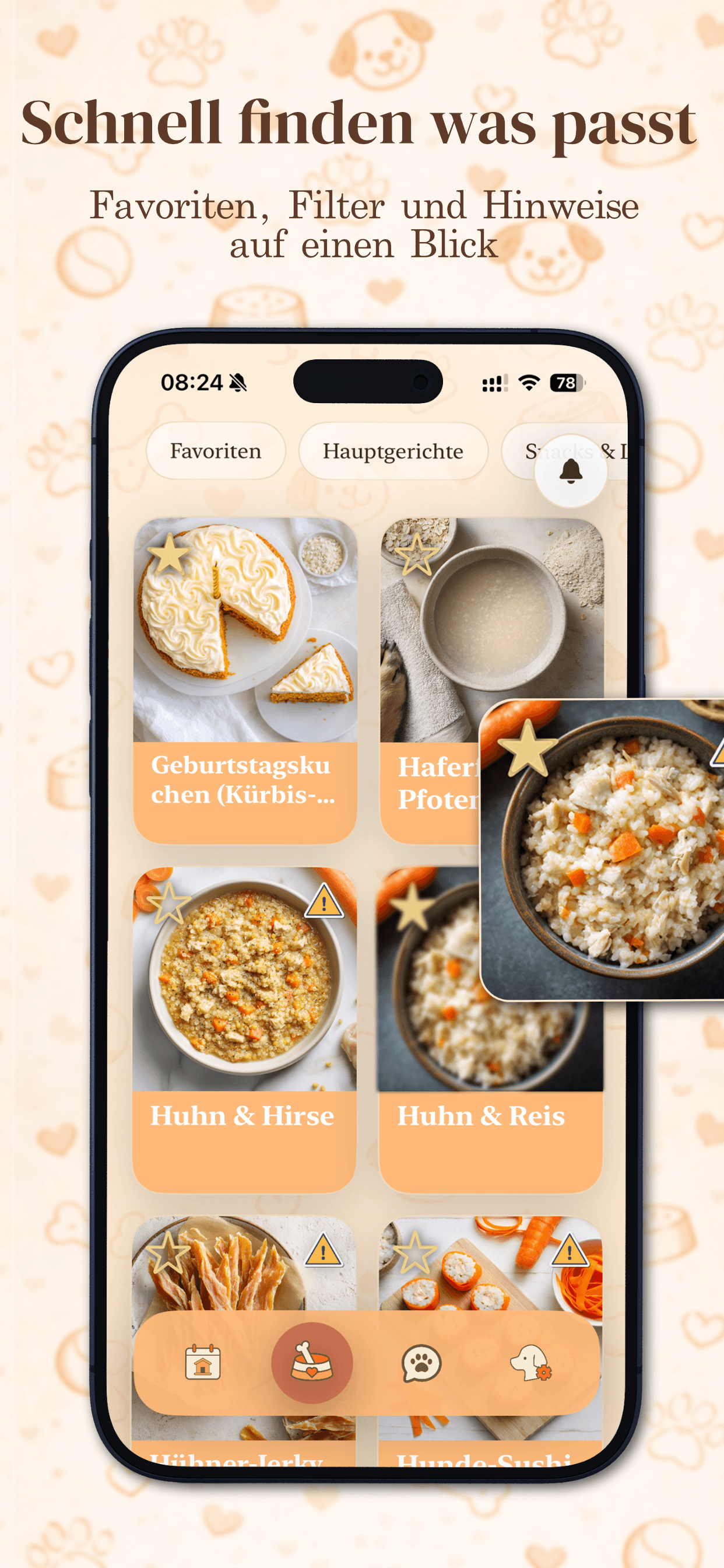
 Get it worked out for your dogRecipes with grams per ingredient in the DoggoMeal app
For comparison: freshly cooked, it would be about 1,105 g a day (at 130 kcal per 100 g).
Fresh food calculator- Range per day
- 360–440 g
- Meals
- 2 per day
- Per meal
- 200 g
- Energy
- 1,435 kcal (1,290–1,580)
How the figure is calculated
Resting energy requirement 70 × 30 kg^0.75 ≈ 897 kcal × factor 1.6 ≈ 1,435 kcal per day.
1,435 kcal ÷ 360 kcal per 100 g (typical dry food) × 100 ≈ 400 g.
- A starting point – check the weight every 1–2 weeks and adjust the amount in small steps. Treats count too.
Boxer feeding chart by weight and activity
Adult, neutered dog. Dry food with 360 kcal, wet food with 100 kcal, freshly cooked food with 130 kcal per 100 g.
| Activity | kcalper day | Dryg per day | Wetg per day | Fresh-cookedg per day |
|---|---|---|---|---|
| 25 kg | ||||
| Calm | 1,095 | 305 | 1,095 | 840 |
| Normal | 1,250 | 345 | 1,250 | 960 |
| Active | 1,565 | 435 | 1,565 | 1,205 |
| 30 kg | ||||
| Calm | 1,255 | 350 | 1,255 | 965 |
| Normal | 1,435 | 400 | 1,435 | 1,105 |
| Active | 1,795 | 500 | 1,795 | 1,380 |
| 35 kg | ||||
| Calm | 1,410 | 390 | 1,410 | 1,085 |
| Normal | 1,610 | 445 | 1,610 | 1,240 |
| Active | 2,015 | 560 | 2,015 | 1,550 |
How it is calculated: Calm = factor 1.4, Normal = 1.6 (neutered, 1–2 hours of walks), Active = 2.0. Entire (unneutered) dogs with normal exercise come out about 12 per cent higher (factor 1.8).
Example for 30 kg: resting energy requirement 70 × 30 kg^0.75 ≈ 897 kcal × factor 1.6 = 1,435 kcal a day, divided by 360 kcal per 100 g = 400 g of dry food. Freshly cooked at 130 kcal per 100 g, it would be about 1,105 g a day. If your pack states a different value, enter it in the calculator above.
Understanding weight and build
The FCI standard distinguishes male and female Boxers. It gives over 30 kg for males at about 60 cm shoulder height and about 25 kg for females at about 56 cm. The full span in our example table is therefore not a single target weight. Feed for the actual lean weight and regular workload.
Daily meals and training rewards
Strong muscle is different from stored fat. Record the waist and how easily the ribs can be felt as well as weight. If weight rises without more exercise, first check snacks and portions. Recurring vomiting, diarrhoea or unintended weight loss needs a veterinary assessment rather than random increases in food.
Dry and wet food differ mainly in energy density. The table’s gram values cannot be applied unchanged to every tin or bag. Enter the label’s kcal per 100 g in the calculator. Mixed feeding splits the energy allowance; do not give a full daily ration of both types.
Feeding a Boxer puppy
Boxer puppy feeding chart by age
Dry food with 360 kcal, freshly cooked food with 130 kcal per 100 g. Energy as per FEDIAF for growing dogs.
| Age | Weightestimated | Dryg per day | Fresh-cookedg per day | Mealsper day |
|---|---|---|---|---|
| 3 monthsfactor 3.0 | 9.4 kg | 315 | 875 | 3 |
| 4 monthsfactor 2.7 | 13.7 kg | 380 | 1,055 | 3 |
| 6 monthsfactor 2.3 | 20.8 kg | 435 | 1,205 | 2 |
| 9 monthsfactor 1.9 | 26.3 kg | 440 | 1,210 | 2 |
| 12 monthsfactor 1.8 | 28 kg | 435 | 1,200 | 2 |
| 15 monthsfactor 1.8 | 28.6 kg | 430 | 1,190 | 2 |
| 18 monthsfactor 1.8 | 29 kg | 430 | 1,190 | 2 |
Estimated weight: based on an adult weight of 30 kg and the typical share of the two-year weight in the “Very large” size class (growth charts by Salt et al. 2017, average of females and males). Your puppy may be well above or below this. Weigh them and use their real weight in the puppy feeding calculator.
Energy as per FEDIAF (2025, Table VII-8b): (254.1 − 135 × share of adult weight) × weight^0.75 kcal. The need per kilo falls steadily as your puppy approaches its adult weight; the factor shows the multiple of the resting energy requirement. Large breeds keep growing after 12 months; the scales and body shape show whether your dog needs more. The growth charts start at 12 weeks; for younger puppies, the real weight is what counts.
The puppy adult weight calculator estimates how heavy your puppy will be from age and current weight.
Sources: Merck Veterinary Manual · VCA · Salt et al. 2017 (PLOS ONE) · FEDIAF 2025
For roughly how much a Boxer puppy weighs at 3, 6 and 12 months, see the Boxer puppy weight chart.
Puppies need their own calculation by age and current weight. Choose an appropriate complete growth food and split it into several small meals. Large breeds should grow steadily; do not add minerals without an agreed plan. Regularly review weight and condition with your vet.
The puppy feeding calculator works out the exact amount by age and current weight.
Recipes with grams per ingredient – for your Boxer
In the DoggoMeal app you create a profile for your Boxer – with weight, age, activity and allergies. From this, the app calculates recipes with grams per ingredient, daily calories and portions.
- Dog profile
- Recipes with gram amounts
- Allergy warnings
- Cooking with video
Free · no subscription · every feature included
Common questions about feeding your Boxer
How much food does a Boxer need each day?
At 30 kg with normal exercise after neutering, about 1,435 kcal is a starting point: roughly 400 g dry food or 1,435 g wet food. The kcal on your food label determine the actual grams.
What should my Boxer weigh?
The range gives calculation examples; the standard defines height, not a universal ideal weight. Suitable weight depends on build and body condition.
How much should a Boxer puppy eat?
Age, current weight, expected adult size and body condition matter. Use the puppy calculator and a suitable complete puppy food; the adult table is not a puppy plan.
How often should I feed my Boxer?
Two meals are usually practical for adults. Puppies need more frequent smaller meals. Dividing food does not change daily calories; follow veterinary instructions for illness.
How many treats can a Boxer have?
All extras together should provide no more than 10% of daily calories, including chews and training rewards. Check permitted extras first with a prescribed diet.
Sources
- FCI-Standard 144 – Fédération Cynologique Internationale (FCI)
- Feeding Practices in Small Animals – MSD Veterinary Manual
- Feeding treats to your dog – WSAVA Global Nutrition Committee
Calculation method
- Nutrient Requirements of Dogs and Cats (2006) – National Research Council (NRC), National Academies Press
- Global Nutrition Guidelines – World Small Animal Veterinary Association (WSAVA)
- Nutritional Guidelines for Complete and Complementary Pet Food – FEDIAF – European Pet Food Industry Federation
Read on
Other breeds, the overview and the calculators for your dog.