DIY advent calendar for dogs: 24 homemade treats
Make a DIY advent calendar for dogs: 24 home-baked treats with kcal per door, storage tips and safe craft ideas. Budget for a 10 kg dog: 63 kcal a day.
By the DoggoMeal editorial teamPublished Updated 11 min read
In short
A dog advent calendar you fill yourself does not need shop-bought treats: homemade biscuits, small pieces of fruit and vegetables, sniffing and brain games and a safe toy add up to 24 doors. All of a day’s treats together should stay under 10% of daily calories, which for an adult 10 kg dog means under about 63 kcal; a Christmas biscuit has about 20 kcal. Hang the calendar out of reach and make it without tinsel, ribbon, string or sticky tape.
A DIY advent calendar for dogs works best with small doors: a homemade biscuit here, a piece of carrot there, and on other days a sniffing game or a new toy. Below you will find 24 ideas, the daily treat budget and a list of materials that keeps the calendar itself from becoming a hazard.
Work it out
Work out the budget first: the calorie needs calculator shows your dog’s daily need. No more than a tenth of it is the budget for all doors and treats of a day.
How much fits into the daily treat budget
According to WSAVA, treats should make up less than 10% of daily calories. That includes chews and training treats. According to our calorie needs calculator, an adult, neutered, normally active 10 kg dog needs about 630 kcal a day, so their budget is about 63 kcal for everything together. At 5 kg it is about 38 kcal, at 20 kg about 106 kcal and at 30 kg about 144 kcal.
The biscuit figures come from our recipes, and the fruit and vegetable amounts from the individual food pages. If your dog gets training treats every day, use fewer of them on biscuit days. The calculator on our dog biscuits page shows how many biscuits suit larger or smaller dogs.
Treats are an extra, not a meal. Biscuits made with flour, cheese, cake and rusks are only for now and then, in small amounts or on special occasions such as Advent. Sugar, honey, syrup, salt and spices never belong in them.
24 doors, 24 homemade treats
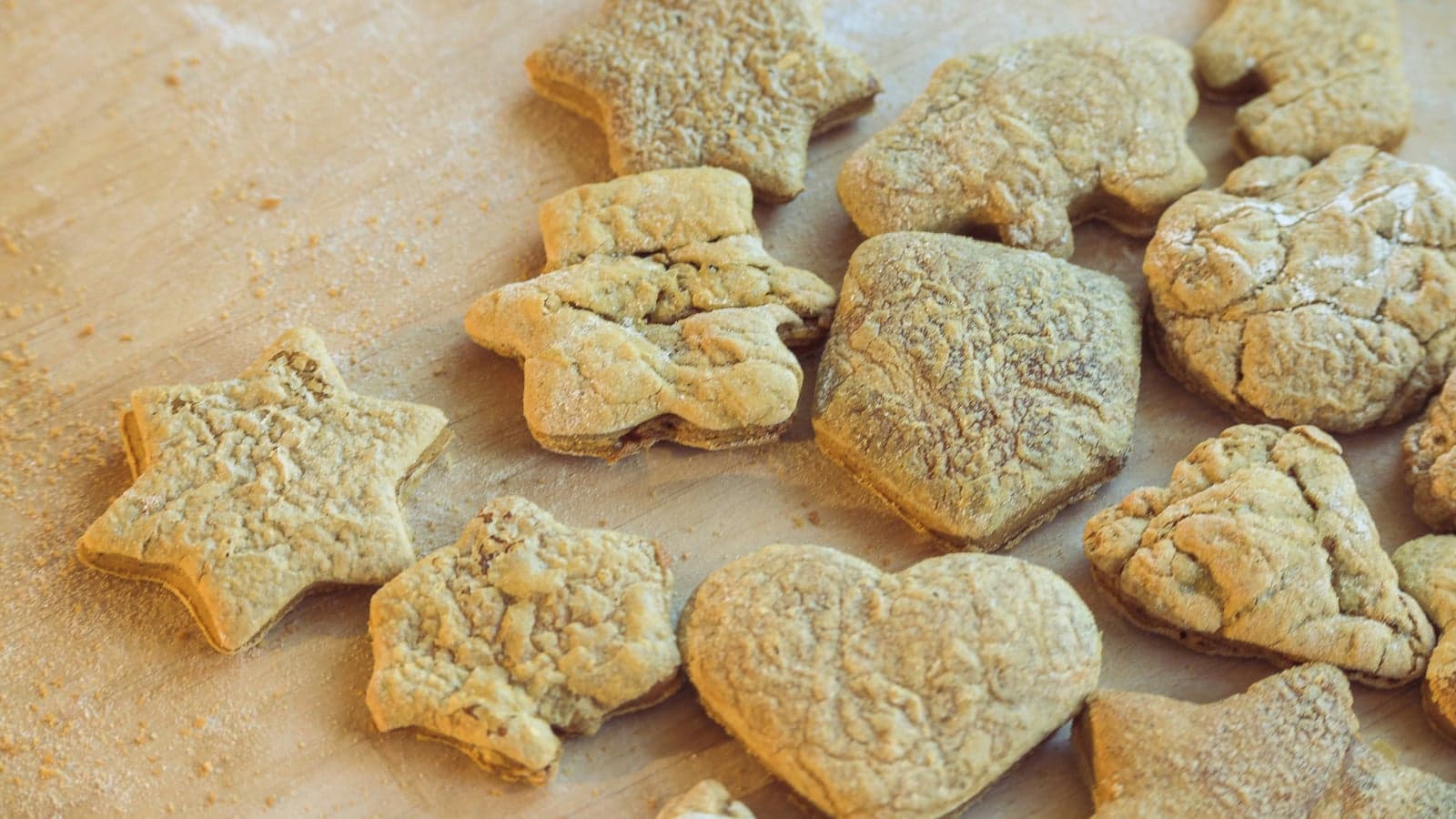
Behind each door goes a small treat from one of our biscuit recipes, a different one every day. None of the 24 recipes lists sugar, salt or spices as an ingredient. The calories come from each recipe and apply per piece, or to a portion of five for the mini biscuits.
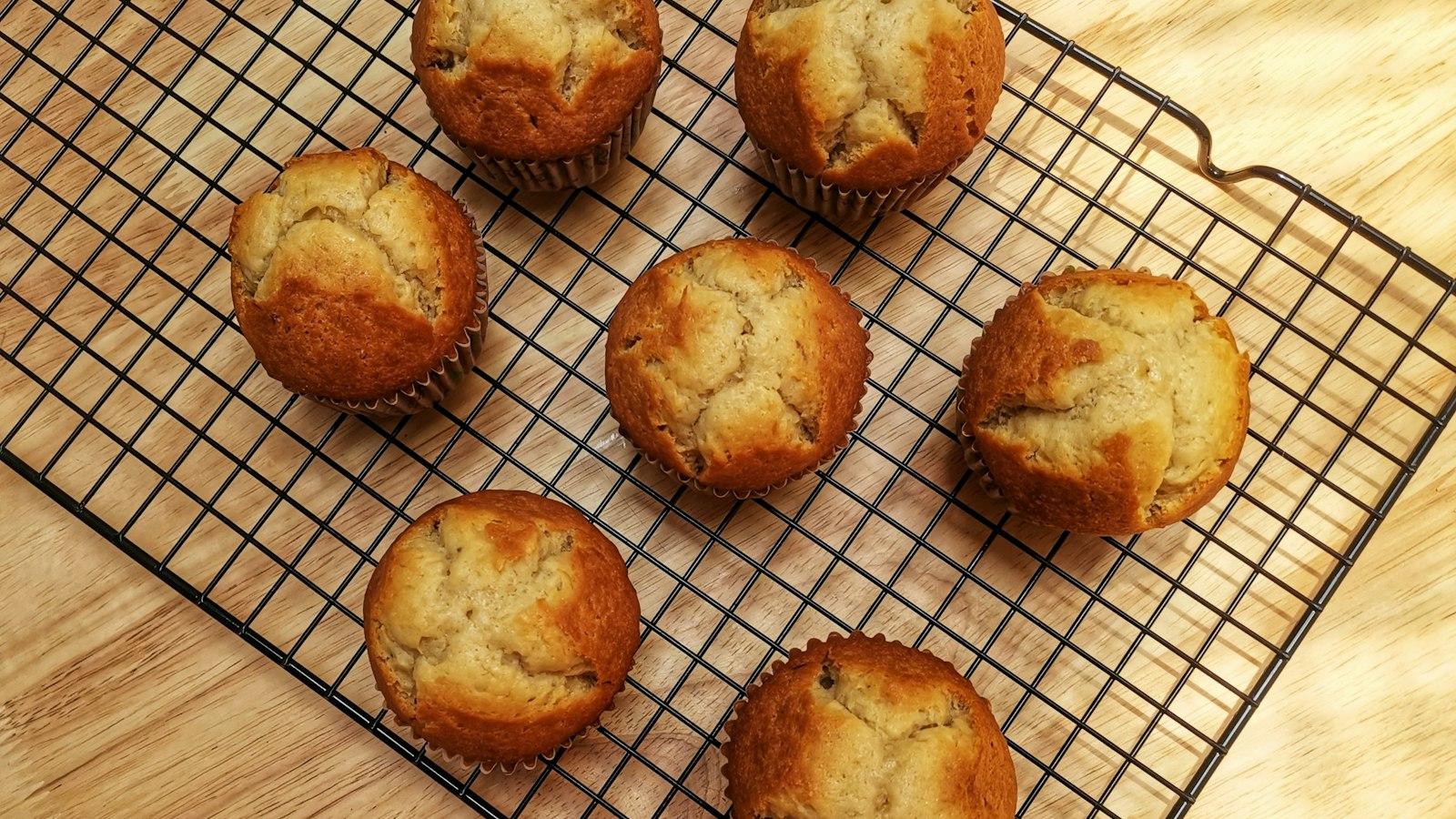
One recipe makes 35 to 230 pieces, so you don't need to bake all 24. Pick two to four recipes that agree with your dog and alternate them; the kcal column shows what to plan for the day. Recipes without flour, cheese or dairy make a good basis, such as the oat and egg biscuits, the carrot and apple biscuits, the mini biscuits without flour and the Christmas minis.
Where it says “with flour”, “with cheese”, “with quark”, “with cottage cheese”, “with yoghurt” or “with peanut butter”, the treat is only for now and then, in small amounts. Your dog doesn't need wheat or spelt flour, and some dogs don't tolerate it well. Cheese is salty and often high in fat, and not every dog digests lactose. If your dog has diarrhoea, leave out the doors with cheese, quark, cottage cheese and yoghurt. For the peanut butter biscuits, only use peanut butter made from 100% peanuts, without sugar, salt or xylitol. Xylitol is found in some peanut butters and is toxic to dogs (Merck Veterinary Manual).
How much room is left next to the door
Most treats in the table have about 20 kcal. This is what remains in the treat budget afterwards, based on the daily need from our calorie needs calculator for adult, neutered, normally active dogs:
For small dogs, break the large biscuits in half and put the other half back in the tin. A whole 20 kcal biscuit would already be more than half of a 5 kg dog's budget. Give mini biscuits, cubes and drops whole; five mini biscuits at about 13 kcal suit small dogs too.
Instead of a biscuit: fruit, vegetables, games and toys
You can swap any treat from the table for one of these ideas, for example if your dog already gets a lot of training treats that day or doesn't tolerate a recipe. A game also works on top: with the treat from the door as the reward, no extra calories are added.
Six fruit and vegetable doors
These foods have the verdict “Yes” or “In moderation” on our food pages. The amount applies to a 10 kg dog.
For apple and pear, remove the core, seeds and stem; in apples, the stem, leaves and seeds contain cyanogenic glycosides (ASPCA). Fresh fruit and vegetables belong in the fridge, not in a paper bag. Put a note in the door instead and cut the piece fresh.
Six sniffing and brain games
For these doors, there is a note in the calendar. The reward is the treat from the door or a piece of vegetable; anything you give on top counts towards the budget.
- Treat search: hide the treat from the door in your home, first in plain sight, then under a cushion. When you say “Find it”, your dog can go.
- Cup game: turn three sturdy cups upside down with a piece of carrot under one of them. Your dog shows you with nose or paw where it is.
- Towel roll: scatter a few mini biscuits on an old towel, roll it up loosely and let your dog unroll it.
- Muffin tin: put a mini biscuit into some of the hollows and cover them with balls that are too big to swallow. Your dog takes the balls out.
- New trick: practise a small trick such as “Paw” or “Spin”, with mini biscuits as a reward.
- Sniffing walk: take a new route and give your dog time to sniff.
Six doors with toys, chewing and time together
- New toy: it must be too big to swallow and must not have a string attached; remove bells and squeakers first, because they can be swallowed too (Penn Vet).
- Chew toy with pumpkin: spread a teaspoon of cooked, puréed pumpkin into a fillable rubber chew toy and freeze it overnight.
- A chew: only in a suitable size and under supervision; the rules are in the next section.
- Rummage box: a cardboard box with crumpled wrapping paper and a few mini biscuits inside. Only under supervision, and clear the paper away afterwards: dogs often swallow paper, and not everything passes through the gut without problems (VCA). If your dog eats paper, skip this game.
- Time together: a long walk or a quiet afternoon just for the two of you. The veterinary hospital of the University of Pennsylvania calls play and time together the best gift for dogs.
- Christmas Eve: the Christmas star behind door 24 comes with the festive plate for dogs, which replaces one meal.
Chews only with these rules
According to WSAVA, chews count as treats and go into the budget. The WSAVA guide sets out clear rules:
- Only let your dog chew under supervision.
- Size and shape must suit the dog so that they do not choke. According to the Merck Veterinary Manual, rawhide chews and dental chews can get stuck in the gullet, so take the rest away as soon as it is small enough to swallow whole.
- No bones, neither cooked nor raw.
- No very hard chews such as antlers or hooves, and nothing with sharp edges.
- Unprocessed, raw animal-based chews such as pigs’ ears can transmit pathogens. They don't belong in the calendar.
- If there is no calorie information on the pack, ask the manufacturer.
The calories are the catch: according to WSAVA, a dried pig’s ear (56 g) has 242 kcal, a tripe stick (28 g) 217 kcal and a rawhide bone (190 g) 700 kcal. A whole piece of any of these exceeds a 10 kg dog’s budget several times over, and even that of a 30 kg dog at about 144 kcal. So whole chews like these don't belong behind a door, and we leave out a pig’s ear anyway. For most doors, the chew toy with pumpkin is the better choice.
Crafting without hazards
The most important tip first: the calendar is for you, not for your dog. Hang or place it high enough that your dog cannot reach it, and hand over the contents yourself. Dogs like to steal Christmas tree decorations and eat chocolate decorations together with the foil and wire (German Federal Chamber of Veterinarians). A calendar full of biscuits is no different.
Paper bags or small cardboard boxes work well: number them with a pen, fold them shut and put them in a basket on top of a cupboard. Leave out these materials:
- Tinsel and angel hair. If swallowed, they can cause a life-threatening intestinal blockage (German Federal Chamber of Veterinarians), and plastic tinsel can also cut the intestines (Penn Vet).
- Ribbon, string and cord. Ribbons and anything with a string attached can be swallowed (Penn Vet). Long, thin foreign bodies such as string or thread cause more damage in the gut than other foreign bodies (Merck Veterinary Manual).
- Sticky tape, foil and packaging scraps. Dogs often swallow paper and packaging; some of it passes through, some blocks the gut and needs surgery (VCA). Vetmeduni Vienna advises storing packaging scraps where animals cannot reach them. So fold the bags shut instead of taping them.
- Salt-dough decorations. Because of their high salt content, they can cause vomiting, diarrhoea and, in severe cases, seizures (Penn Vet), even when dry (ASPCA).
- A chocolate advent calendar at dog height. Chocolate contains theobromine, and the darker it is, the more it contains (German Federal Chamber of Veterinarians). Possible effects are vomiting, restlessness, a racing heart and, in severe cases, seizures (Merck Veterinary Manual). The family calendar therefore belongs out of reach as well.
Raisins, stollen and other Christmas sweets do not go into the dog’s calendar either; raisins can damage dogs’ kidneys (Merck Veterinary Manual).
Shelf life and storage
According to the recipes, none of them keeps for more than three weeks in a biscuit tin, but Advent lasts 24 days. Well-dried biscuits keep for about one to three weeks in a biscuit tin, soft and savoury ones for three days to about a week in the fridge. Frozen, almost all recipes keep for around three months.
- Cool completely, then seal airtight. Packed while warm, the container steams up and the biscuits go soft. A screw-top jar or a tin works well.
- Soft ones go in the fridge. Biscuits with fish, meat, liver or cottage cheese go into a closed container in the fridge, as does any biscuit that is still soft inside when you break it.
- Extra drying for the biscuit tin. You can dry banana, carrot and banana and Lebkuchen biscuits for another 1–2 hours at 80 °C after baking; then they can go in the biscuit tin too. The details are in each recipe.
- Freeze in portions. Freeze half straight after baking and thaw it after about two weeks. Of the fridge biscuits, only thaw enough for a few days, and of the chicken cubes only enough for one day. Mini biscuits thaw in a few minutes. Don't refreeze thawed yoghurt drops.
- If there is mould, throw it out. If a biscuit smells musty or sour or shows any mould, throw out the whole tin: mould toxins can cause tremors and seizures in dogs (Merck Veterinary Manual).
How to prepare the 24 doors
The easiest way is to bake the biscuit-tin recipes at the end of November and freeze half of them straight away, or to bake a second time around 12 December. Freeze fridge biscuits in portions as soon as they have cooled.
Biscuits from the tin only go behind the door the evening before. Biscuits from the fridge, yoghurt drops and fresh fruit or vegetables don't go in the paper bag: put a note in the door and take the treat out on the day itself. And if a door contains a biscuit, give fewer training treats that day.
More for the festive season
For Christmas Eve, there is the Christmas dinner for dogs recipe with gram amounts for a 10 kg dog. All our biscuit recipes are on our dog biscuits page, and what can dogs eat at Christmas? shows what is allowed from the festive table. The free DoggoMeal app calculates recipes in grams to match your dog’s profile. If your dog has swallowed something from the calendar or the craft materials and is vomiting, has diarrhoea or abdominal pain, or stops eating, call your vet practice.
Matching calculators, free in your browser
- Dog treat calculatorHow many treats a day, in pieces and grams.
- Calorie needs calculatorkcal per day by weight, activity and life stage.
- Food amount calculatorGrams per day for dry, wet or fresh food.
How well is your dog's bowl put together overall? Free Food Check
Frequently asked questions
What can you put in an advent calendar for dogs?
Homemade dog biscuits, small pieces of fruit and vegetables such as carrot, cucumber or apple without the core, notes with sniffing and brain games, and a toy that is too big to swallow. Chocolate, raisins, xylitol and spiced Christmas baking do not belong in it.
How many treats can a dog have from the advent calendar each day?
All of a day’s treats together should stay under 10% of daily calories (WSAVA). For an adult, neutered, normally active 10 kg dog, that is about 63 kcal. On biscuit days, a Christmas biscuit with about 20 kcal and four carrot slices with about 5 kcal still leave room for a few training treats. At 5 kg the budget is about 38 kcal, at 20 kg about 106 kcal and at 30 kg about 144 kcal; give small dogs just half a biscuit.
What materials should I use to make a dog advent calendar?
Paper bags or small cardboard boxes and a pen for the numbers. Leave out tinsel, ribbon, string, sticky tape and salt-dough decorations. Hang or place the finished calendar high enough that your dog cannot reach it, and hand over the contents yourself.
Is an advent calendar with toys safe?
Yes, if the toy is too big to swallow, has no string attached and you remove bells or squeakers first; that is the advice of the veterinary hospital of the University of Pennsylvania. Give new toys and chews only under supervision (WSAVA).
How long do homemade dog biscuits keep for an advent calendar?
That depends on the recipe. Well dried, our biscuits keep for about one to three weeks in a biscuit tin; soft biscuits and biscuits with fish, meat, liver or cottage cheese keep for three days to about a week in the fridge. Frozen, almost all of them keep for around three months. For 24 doors, freeze some of them in portions straight after baking.
Which treats suit an advent calendar for small dogs?
Mini biscuits from the baking mat at about 2 to 3 kcal each, small cubes and large biscuits broken in half. An adult, neutered, normally active 5 kg dog has a treat budget of about 38 kcal a day. Half a biscuit at about 10 kcal or five mini biscuits at about 13 kcal still leave room for training treats.
Sources
This article is based on the following expert sources. You can read how we work under Editorial team & methodology.
- Feeding treats to your dog – WSAVA Global Nutrition Committee
- Keeping Pets Healthy During Holidays – Penn Veterinary Medicine, University of Pennsylvania (Almanac)
- Holiday Safety Tips – ASPCA
- Gefahr erkannt – Gefahr gebannt (Presseinformation 28/2013) – Bundestierärztekammer
- Gefahren unterm Weihnachtsbaum (Presseinformation 26/2016) – Bundestierärztekammer
- Feiertagstipps der Vetmeduni Vienna: Gesund über die Festtage kommen – Veterinärmedizinische Universität Wien
- Ingestion of Foreign Bodies in Dogs – VCA Animal Hospitals
- Disorders of the Stomach and Intestines in Dogs – Merck Veterinary Manual
- Chocolate Toxicosis in Animals – Merck Veterinary Manual
- Xylitol Toxicosis in Dogs – Merck Veterinary Manual
- Grape, Raisin, and Tamarind (Vitis spp, Tamarindus spp) Toxicosis in Dogs – Merck Veterinary Manual
- Esophageal Foreign Bodies in Small Animals – Merck Veterinary Manual
- Toxic and Non-Toxic Plants: Apple – ASPCA Animal Poison Control Center
- Tremorgenic Neuromycotoxicosis in Dogs – Merck Veterinary Manual
Less maths, more cooking.
The article tells you what matters. The DoggoMeal app turns it into a recipe with gram amounts to suit your dog's weight, age, activity and allergies.
- Dog profile
- Recipes with gram amounts
- Allergy warnings
- Doggopedia
Free · no subscription · every feature included

DoggoMeal editorial team
DoggoMeal is a dog nutrition app, founded and run by Kim Marques. Nami, our Shiba, is part of everyday life – her experiences with food changes, bland diets and the like appear in many articles as personal examples.
Our content follows the recommendations of the NRC, WSAVA and FEDIAF. You'll find the sources for this article above under “Sources”. The articles are no substitute for veterinary advice – if your dog has symptoms, please talk to your vet.