
Can dogs eat pumpkin?
Can my dog eat pumpkin?Yes
Cooked and peeled, without seasoning; never bitter or ornamental gourds.
Yes, dogs can eat pumpkin, cooked, peeled and without salt or seasoning. Cooked pumpkin has just 20 kcal per 100 g and provides beta-carotene, vitamins C and E, potassium and fibre. Raw pumpkin is hard to digest. Never feed ornamental or bitter gourds: their cucurbitacins cause vomiting and diarrhoea in humans and survive cooking. Depending on size, one to five teaspoons a day are enough.
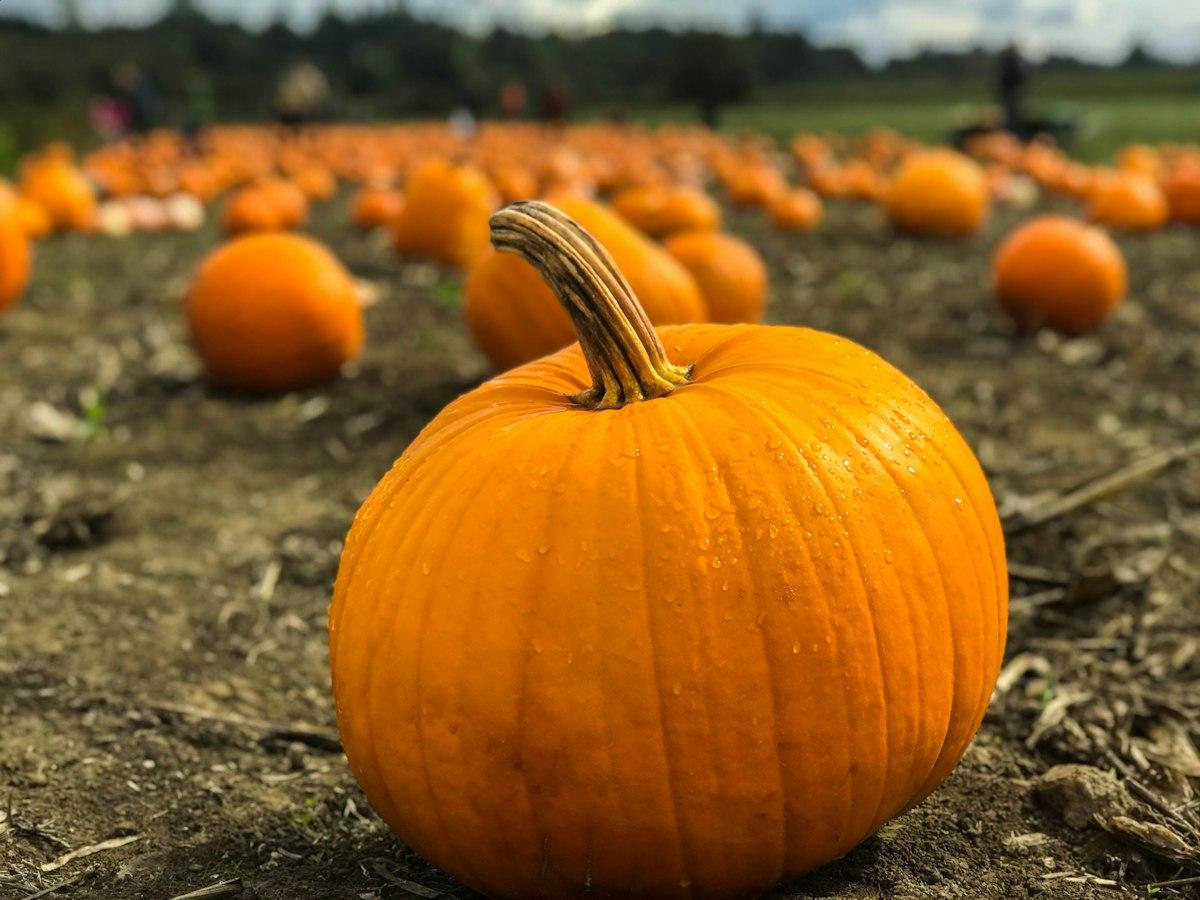
How much pumpkin can your dog eat?
Enter the weight – the amount updates straight away. You can adjust age, activity and neutering below.
How the calculator works
- Daily requirement: Resting energy requirement 70 × 15 kg^0.75 ≈ 534 kcal × factor 1.6 ≈ 855 kcal.
- Treat allowance: at most 10% of that = 86 kcal for all treats combined.
- Calorie limit: 86 kcal ÷ 20 kcal/100 g = 430 g of pumpkin.
- Guide value for dogs 10–25 kg: 2 × teaspoon of pumpkin (cooked, mashed) at 5 g each = 10 g (guide value from the source).
- Recommendation: the smaller of the two, rounded down to half portions → 2 × 5 g = 10 g ≈ 2 kcal.
Sources: 10% rule from the WSAVA guide to treats · kcal value: USDA FoodData Central. Daily requirement as in the dog calorie calculator.
Result · 15 kg · Adult
Up to 2
× teaspoon of pumpkin (cooked, mashed) on a snack day
(≈ 10 g, 2 kcal)
Treat allowance 86 kcal (10% of 855 kcal) · 1 teaspoon of pumpkin (cooked, mashed) ≈ 5 g
Limited by: guide value
Here the guide value for dogs 10–25 kg sets the limit (guide value from the source): at most 2 × teaspoon of pumpkin (cooked, mashed). In terms of calories, up to 430 g would be possible.
Chewy’s daily guide: ½–1 tsp up to about 4.5 kg, 1–2 tsp up to 9 kg, 2–5 tsp up to 23 kg, 1½–3 tbsp (4.5–9 tsp) up to 41 kg. The lower end is used for each weight group.
This applies if it's the only snack that day – if your dog gets other treats too, give correspondingly less.
 The app calculates recipes in grams, kcal and portions to suit your dog's weight, age, activity and allergies.
Pumpkin for dogs: amount by weight
| Weight | Maximum per snack day | kcal |
|---|---|---|
| 5 kg | 1 teaspoon of pumpkin (cooked, mashed)≈ 5 g | ≈ 1 |
| 10 kg | 1 teaspoon of pumpkin (cooked, mashed)≈ 5 g | ≈ 1 |
| 20 kg | 2 × teaspoon of pumpkin (cooked, mashed)≈ 10 g | ≈ 2 |
| 30 kg | 5 × teaspoon of pumpkin (cooked, mashed)≈ 25 g | ≈ 5 |
| 40 kg | 5 × teaspoon of pumpkin (cooked, mashed)≈ 25 g | ≈ 5 |
- All snacks together no more than 10% of daily calories (WSAVA recommendation). If your dog gets other treats too, give correspondingly less.
- Guide value per weight class – small up to 10 kg, medium 10–25 kg, large over 25 kg: Chewy’s daily guide: ½–1 tsp up to about 4.5 kg, 1–2 tsp up to 9 kg, 2–5 tsp up to 23 kg, 1½–3 tbsp (4.5–9 tsp) up to 41 kg. The lower end is used for each weight group.
Emergency note
Eaten ornamental or bitter pumpkin?
Ornamental and bitter gourds may contain cucurbitacins that survive cooking. The sources do not give dog-specific signs or a threshold amount. In humans, these compounds mainly cause digestive symptoms, sometimes bloody diarrhoea and severe dehydration. Note what your dog ate, how much and when, and keep a sample.
Possible symptoms
- Vomiting
- Diarrhoea, sometimes bloody
- Abdominal pain
- Severe dehydration
When to see a vet?
Call your vet as soon as your dog has eaten ornamental or bitter pumpkin and explain how much and when. Bloody diarrhoea, severe abdominal pain or signs of dehydration require an immediate visit to a vet or emergency clinic.
In an emergency: call your vet or an animal hospital
Outside opening hours, an emergency vet service or an animal hospital can help. Note down the amount, the time and the packaging, and don't try to make your dog vomit yourself. Poison information centres mainly advise on poisoning in people and only help with animals when they have capacity – the first point of contact for your dog is your vet.
What's in it
- Very low in calories and almost fat-free: cooked pumpkin has 20 kcal and 0.07 g fat per 100 g, with about 94% water.
- Provides beta-carotene, which dogs can convert into vitamin A, plus vitamins C and E, potassium and iron.
- Contains soluble and insoluble fibre: 1.1 g per 100 g cooked. Canned purée is more concentrated and contains more fibre.
- Water and fibre add bulk without many calories.
- Mashed pumpkin can be mixed into food, spread on a lick mat or put in a chew toy.
What to watch out for
- Ornamental and bitter edible gourds may contain high levels of cucurbitacins. In humans, these bitter compounds cause nausea, vomiting, abdominal pain and sometimes bloody diarrhoea. Cooking does not destroy them.
- Edible gourds can also become bitter, for example when grown from saved seeds or crossed with ornamental gourds in a garden. Their appearance does not reveal this. Almost half the bitter gourds reported to French poison centres came from shops.
- Raw pumpkin is hard to digest. Hard chunks and skin may cause choking or obstruct the gut.
- Too much at once can cause gas, bloating, diarrhoea or vomiting.
- Pumpkin is rich in beta-carotene. PetMD and Chewy warn that excessive pumpkin over a long period may provide too much vitamin A, with loss of appetite, vomiting and lethargy.
- Canned pumpkin pie filling and seasoned products can contain sugar, nutmeg, cloves and xylitol, which is highly toxic to dogs.
- Pumpkin soup and dishes from the table often contain onions, garlic, salt and cream. Onions and garlic can damage red blood cells.
- Whole pumpkin seeds can cause choking, particularly in small dogs. Large amounts of raw seeds may upset the stomach.
How to prepare pumpkin
How to do it
- Use only varieties sold as edible squash, such as Hokkaido or butternut.
- Taste a small raw piece before cooking. If it is bitter, discard the whole pumpkin.
- Wash, peel and remove the seeds and stringy centre.
- Boil in water without salt, steam or bake until soft.
- Let it cool, then mash or purée.
- Start with a little and watch how your dog tolerates it.
Better not
- No raw pumpkin or skin.
- No ornamental or bitter gourds, even after cooking.
- No salt, butter, sugar or seasoning.
- No pumpkin pie filling or canned pumpkin with added sugar or seasoning.
- No pumpkin soup or seasoned pumpkin dishes from the table.
- No salted or seasoned pumpkin seeds.
How often?
Cooked and plain, a small amount can be given daily. Chewy explicitly lists its weight-based amounts as daily portions. All treats together should provide no more than 10% of daily calories.
Frequently asked questions about pumpkin
Can dogs eat raw pumpkin?
It is better avoided. Raw pumpkin is not toxic, but it is hard to chew and digest and may upset the stomach. Hard pieces can cause choking or obstruct the gut. Serve pumpkin boiled, steamed or baked.
Can my dog eat Hokkaido pumpkin with its skin?
Hokkaido and butternut are edible varieties bred to reduce bitter compounds. You can feed them cooked and plain. Remove the skin: PetMD and Chewy recommend peeling pumpkin because its skin is difficult to chew and digest.
Can dogs eat pumpkin seeds?
Yes, a few, roasted without salt. PetMD considers seeds with or without their shells suitable and suggests grinding them after roasting before sprinkling over food. Whole seeds can cause choking, especially in small dogs, and large amounts of raw seeds may upset the stomach. Never use seeds from bitter or ornamental gourds.
Can dogs eat canned pumpkin purée?
Yes, if the only ingredient is pumpkin, without sugar, salt or seasoning. Canned purée is more concentrated than fresh pumpkin and contains more fibre. Pumpkin pie filling is unsuitable: it can contain sugar, nutmeg, cloves and xylitol, which is highly toxic to dogs.
Can dogs eat pumpkin soup?
No soup from the family table. It often contains onions, garlic, stock, salt and cream. Onions and garlic can damage red blood cells, excess salt can cause thirst, vomiting and diarrhoea, and dairy products give many dogs diarrhoea. Cook a small separate portion of plain pumpkin.
Can dogs eat ornamental gourds?
No. They often contain cucurbitacins: bitter compounds that cause nausea, vomiting, diarrhoea and cramps in humans and are not reliably destroyed by heat. Keep ornamental gourds and autumn decorations away from your dog. If any are eaten, call your vet.
Can puppies eat pumpkin?
A little cooked, unseasoned pumpkin is possible, but discuss it with your vet first. PetMD notes that tolerance also depends on age and health. Pumpkin does not replace veterinary care for a puppy with diarrhoea. The AKC advises treating puppy diarrhoea as a potential emergency.
Can my dog eat pumpkin every day?
Yes, in small amounts. Chewy explicitly gives its weight-based amounts as daily portions. All treats together should stay below 10% of daily calories, and too much pumpkin can cause gas or diarrhoea. When pumpkin is part of a home-cooked recipe, the DoggoMeal app calculates the amount for that recipe.
Does pumpkin help with diarrhoea or constipation?
Vets often suggest a little pumpkin for mild diarrhoea or constipation because of its fibre. It does not replace treatment. Persistent or bloody diarrhoea, vomiting, fever or lethargy, or diarrhoea in a puppy, requires a vet. For mild digestive problems, doggomeal.de/en/schonkost-hund-rechner calculates a daily bland-food portion.
How many calories does pumpkin contain?
Cooked pumpkin has 20 kcal per 100 g, so a teaspoon of purée (5 g) has 1 kcal. A cup of mashed pumpkin weighs 245 g and contains 49 kcal. Tolerance rather than calories limits the portion: too much at once can cause gas or diarrhoea.
My dog ate too much pumpkin. What should I do?
Possible signs include diarrhoea, vomiting, bloating, loss of appetite and lethargy. Chewy notes that mild symptoms usually settle on their own. If symptoms are severe or last more than a day, call your vet. Call immediately if the pumpkin was seasoned, sweetened or ornamental.
How can I recognise a bitter pumpkin?
Only by taste: a bitter pumpkin looks like an ordinary edible one. Taste a small raw piece before cooking. If noticeably bitter, spit it out and discard the entire pumpkin. Shop-bought pumpkins can also be affected, although it is more common with home-grown gourds near ornamental varieties or grown from saved seeds. The same applies to courgettes: doggomeal.de/en/darf-mein-hund/zucchini.
Can my dog eat pumpkin cake or pumpkin bread?
No. Pumpkin baking contains sugar, fat and often spices such as nutmeg and cloves that may be dangerous to dogs. Some recipes contain xylitol, which can cause low blood sugar and, depending on the amount, liver damage. Find pumpkin dog biscuits without added sugar at doggomeal.de/en/hundekekse/getreidefreie-hundekekse.
Recipes with pumpkin
Ingredients and method are on the website; the app works out the amounts for your dog.
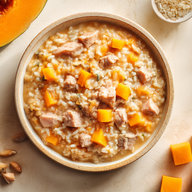 Main DishesTurkey & Rice
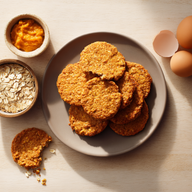 Snacks & TreatsPumpkin Oat Bites
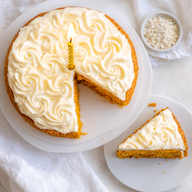 Special OccasionsBirthday Cake
- Dog biscuitsDog biscuits on a baking mat with baby food≈ 2.2 kcal per biscuit
- Dog biscuitsGrain-free dog biscuits for dogs with allergies≈ 19 kcal per biscuit
- Dog biscuitsCut-out dog biscuits with baby food≈ 20 kcal per biscuit
- Dog biscuitsChristmas dog biscuits on a baking mat with pumpkin≈ 2.6 kcal per biscuit
 MagazineFestive plate for dogs with turkey, potato, pumpkin and carrotFrom “Christmas dinner for dogs”
Similar foods
- YesVegetablesCourgetteRaw or cooked, without salt or seasoning; never feed courgettes that taste bitter.See the answer
- YesVegetablesSweet potatoCooked and peeled; raw sweet potato and the skin are hard to digest.See the answer
- YesVegetablesCarrotRaw or cooked, without salt, butter or seasoning, in small pieces; not carrot cake.See the answer
- In moderationVegetablesPotatoOnly cooked and peeled; raw, green and sprouting potatoes contain solanine.See the answer
- YesVegetablesCucumberRaw in thin slices, unseasoned; not bitter-tasting cucumbers or pickled gherkins.See the answer
- YesGrains & sidesRiceOnly cooked and without salt, stock or seasoning, as a small extra portion with the food.See the answer
Sources
- Can Dogs Eat Pumpkin? Benefits, Risks, and Feeding Tips – PetMD
- Can Dogs Eat Pumpkin? – Chewy
- Can Pumpkin Help Dogs With Diarrhea? Benefits, Dosage, & Tips – American Kennel Club (AKC)
- People Foods to Avoid Feeding Your Pets – ASPCA Animal Poison Control Center
- Vorsicht beim Verzehr von bitteren Zucchini (Mitteilung Nr. 027/2015) – Bundesinstitut für Risikobewertung (BfR)
- Beware of inedible gourds – ANSES (French food safety agency)
- Verbraucherschützer: Zierkürbisse nicht zum Verzehr geeignet (Verbraucherzentrale Bremen, epd) – evangelisch.de
- Pumpkin, cooked, boiled, drained, without salt (SR Legacy, FDC 168449) – USDA FoodData Central
- Feeding treats to your dog – WSAVA Global Nutrition Committee (10% rule in the calculator)
Updated: · DoggoMeal editorial team
This page is no substitute for veterinary advice. Dogs with pre-existing conditions – for example of the kidneys, liver or pancreas, or with diabetes – and dogs with allergies often need their own rules. If your dog has symptoms or you're unsure, ask your vet.
Recipes that fit your dog
DoggoMeal is an app for iPhone and Android: you create a profile for your dog, choose a recipe, and the app calculates grams, kcal and portions to suit your dog's weight, age, activity and allergies.
- Dog profile
- Recipes with gram amounts
- Allergy warnings
- Cooking with video
Free · no subscription · every feature included