Christmas dinner for dogs: recipe and what's off the table
Festive plate of turkey, potato, pumpkin and carrot, unseasoned: about 316 kcal for 10 kg, replacing a meal. Off limits: gravy, red cabbage, skin, bones.
By the DoggoMeal editorial teamPublished Updated 7 min read
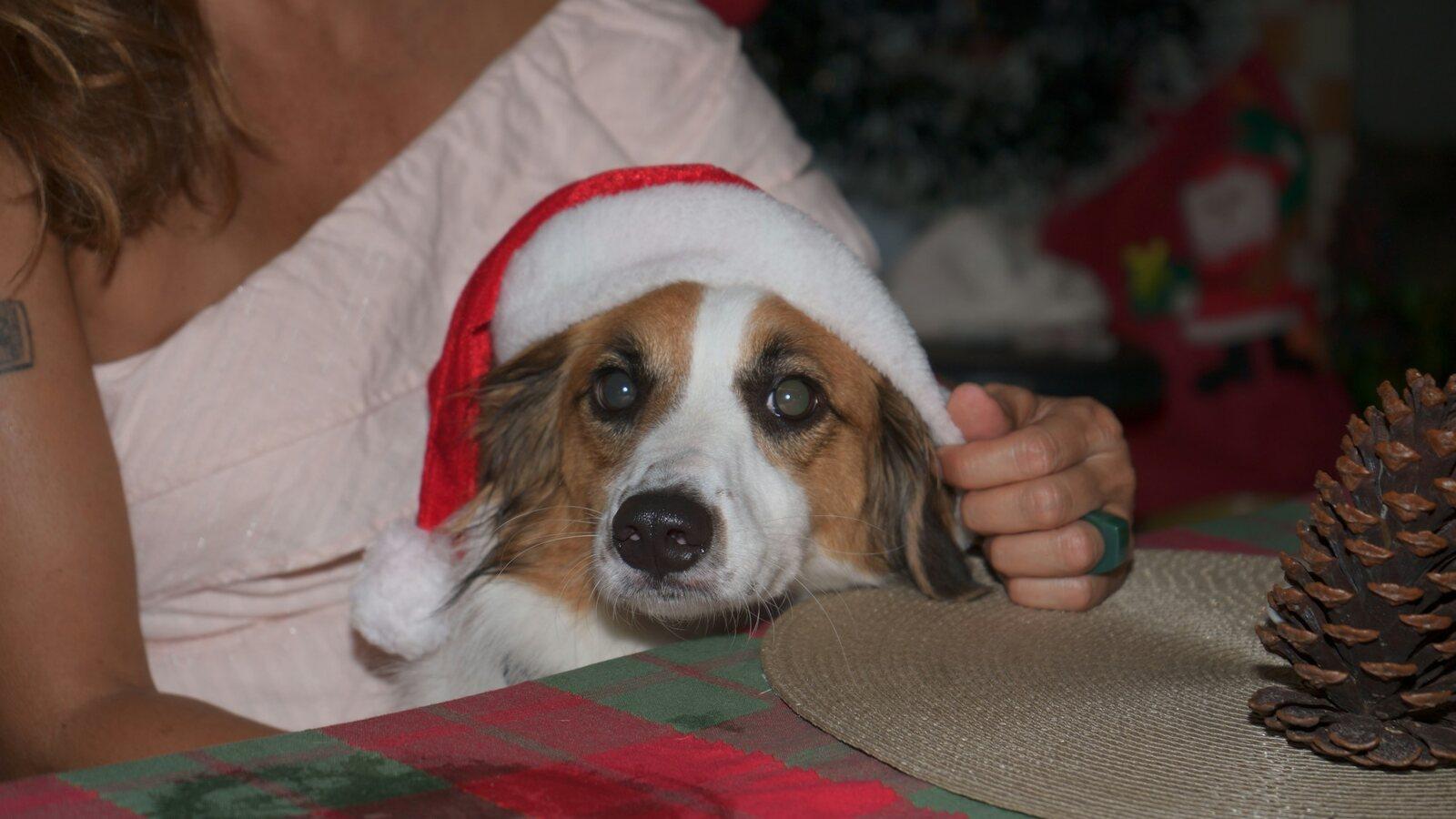
In short
A Christmas dinner for dogs is made from turkey breast without skin, cooked without seasoning, boiled potato, pumpkin, carrot and a little raw apple. For an adult 10 kg dog, 170 g turkey, 100 g potato, 60 g pumpkin, 40 g carrot and 20 g apple come to about 316 kcal, roughly half of their daily need of 630 kcal. The plate replaces a meal and is not added to the bowl on top. Skin, roasting fat, bones, gravy and seasonings stay off it.
A Christmas dinner for your dog is quick to make: turkey breast, potato, pumpkin and carrot, cooked in unsalted water, with a little grated apple. The exact amounts for an adult 10 kg dog and all the steps are in the recipe card below. One thing matters most: the plate replaces a meal and is not given on top.
First, the honest answer
Vets advise keeping to your dog’s usual food over the holidays. Vetmeduni Vienna, the veterinary hospital of the University of Pennsylvania and the ASPCA all say the same. Festive food such as goose, carp, gravy or Christmas biscuits can cause diarrhoea and vomiting. For a sensitive dog, the normal bowl on Christmas Eve is therefore the best choice.
If you still want to make a plate for your healthy adult dog, make it so that it leaves out exactly what causes problems in a festive kitchen: skin, fat, bones, gravy, salt and seasonings. Use ingredients your dog already knows. According to AAHA, a sudden change of food can upset the stomach, so try any new ingredient on its own in small amounts in the days before. If your dog has an illness, a sensitive stomach or eats a veterinary diet, stick to the usual food. If in doubt, ask your vet practice.
Work it out
Work it out for your dog: the calorie needs calculator shows your dog’s daily need. Half of it matches a festive plate that replaces one of two meals.
Ingredients and amounts for a 10 kg dog
According to our calorie needs calculator, an adult, neutered, normally active 10 kg dog needs about 630 kcal a day (resting need 70 × 10 kg^0.75 ≈ 394 kcal × factor 1.6). With two meals, that is about 315 kcal per meal. The plate is designed for exactly this size. Weigh the turkey raw and the vegetables cooked, just as they go on the plate.
At about 316 kcal, the plate provides roughly half of the daily need. There is hardly any fat in it: according to USDA, raw turkey breast has 1.5 g of fat per 100 g, and the whole plate has just under 3 g. The calculation is an estimate from database values, not a laboratory analysis; your turkey and vegetables may differ a little.
How to prepare the plate
The individual steps are in the recipe card. Three things decide whether the plate is safe.
Cook the turkey through. Raw poultry can carry bacteria such as Salmonella that harm dogs and people (ASPCA). The BfR recommends cooking poultry until it is white even at the thickest point and, if in doubt, checking with a meat thermometer: at least 70 °C for 2 minutes in every part. Cook it in water, without frying fat, butter, salt or stock cubes.
Prepare the vegetables properly. Potatoes only peeled and cooked, without green patches or sprouts. Solanine sits mainly in the skin, the eyes and green patches, and some of it passes into the cooking water, so pour the water away (BfR). For the pumpkin, use an eating pumpkin and taste a small raw piece first: if it tastes bitter, do not use it. According to the BfR, the bitter substances it contains, cucurbitacins, can cause vomiting, diarrhoea and stomach pain. There is more on the pages about potatoes, pumpkin and carrots.
Apple without the core. The stem, leaves and seeds contain cyanogenic glycosides (ASPCA). Grate only the flesh and add it once the food has cooled; the BfR recommends this order for dishes that combine cooked and raw ingredients. There is more on the page about apples.
Serve the plate no warmer than lukewarm and cut everything into pieces that suit your dog’s size.
Replace a meal, don’t add one
The festive plate does not come on top of the normal food. If your dog has two meals a day, the plate replaces one of them; the second stays the usual food in the usual amount. If your dog eats only once a day, give half the usual amount of food that day plus the plate.
Treats, chews and biscuits count extra at Christmas, as on any other day. Together they should stay under 10% of daily calories, which for a 10 kg dog means under about 63 kcal (WSAVA). A Christmas dinner is an exception for one day. The plate is not suitable as everyday food, because every dog needs a complete and balanced diet (WSAVA). If you cook for your dog regularly, start with our guide to home-cooking for dogs.
Scaling for other sizes
For other dogs, multiply all the ingredients by the same factor. As above, the figures apply to adult, neutered, normally active dogs.
The factors are rounded to one decimal place. For a 20 kg dog, that means for example about 290 g turkey breast and 170 g potato. If your dog is younger, older, not neutered or much more active, use the figure from the calorie needs calculator.
Duck or goose instead of turkey
Turkey is the leanest poultry in this group. According to USDA, raw turkey breast without skin has 1.5 g of fat per 100 g, duck meat without skin 6.0 g and goose meat without skin 7.1 g. With the skin, it is 39.3 g for duck and 33.6 g for goose per 100 g.
For the same roughly 194 kcal as 170 g turkey, use 145 g duck meat or 120 g goose meat, each weighed raw and without skin. Even so, this puts well over three times as much fat on the plate (about 8.6 g instead of 2.5 g). For dogs with a sensitive stomach, turkey therefore remains the better choice.
Set the piece aside raw before the roast is seasoned, remove the skin and cook it separately in water. Duck breast too should only be given fully cooked: the BfR explicitly names pink duck breast as an example of poultry that is not cooked through.
What doesn’t belong on your dog’s plate
The German Federal Chamber of Veterinarians is clear: no leftovers from the festive roast in the bowl. These things stay on the family table or go straight in the bin.
- Goose and duck skin and roasting fat. According to USDA, 170 g of raw goose with skin contains about 631 kcal, as much as a 10 kg dog needs in a whole day; for duck it is about 687 kcal. Table scraps with gravy or poultry skin can cause severe stomach and gut upset (Penn Vet), and a fatty meal can trigger pancreatitis (VCA). More under goose and duck.
- Bones and fish bones. Cooked goose and duck bones are sharp and splinter easily, and carp bones can seriously injure a dog’s stomach (German Federal Chamber of Veterinarians). Dispose of bones straight away so that your dog cannot get to the bin.
- Gravy. Gravy can contain onions. Raw, cooked and dried onions damage red blood cells (Merck Veterinary Manual), and there is salt and fat on top. More under onions.
- Red cabbage and dumplings from the family table. Depending on the recipe, they contain salt, sugar, onions, cloves or nutmeg. For the dog’s plate, there is potato and pumpkin with nothing added. More under red cabbage and dumplings.
- Christmas biscuits, stollen and chocolate. Christmas baking contains too much sugar and fat, raisins can damage the kidneys, and chocolate is toxic because of its theobromine (German Federal Chamber of Veterinarians). More under chocolate and grapes. As an alternative, there are Christmas biscuits for dogs without sugar or spices – but because of the flour, only occasionally and in small amounts.
- Alcohol. Mulled wine, egg liqueur and food containing alcohol can cause vomiting, diarrhoea, loss of coordination and, at worst, death (ASPCA). Do not leave glasses unattended.
- Salt and seasonings. A lot of salt can cause vomiting, diarrhoea, tremors and seizures (ASPCA). The dog’s plate does without salt, stock and seasonings.
You will find a longer list in our guide to toxic foods for dogs.
If something disappears from the table
Vomiting, diarrhoea, abdominal pain, fever, lethargy or loss of appetite after a fatty meal can be signs of pancreatitis (VCA). Call your vet practice. If your dog has got hold of bones, chocolate, raisins, onions or alcohol, contact your practice or the emergency vet service straight away and do not wait to see whether symptoms appear.
More for the festive season
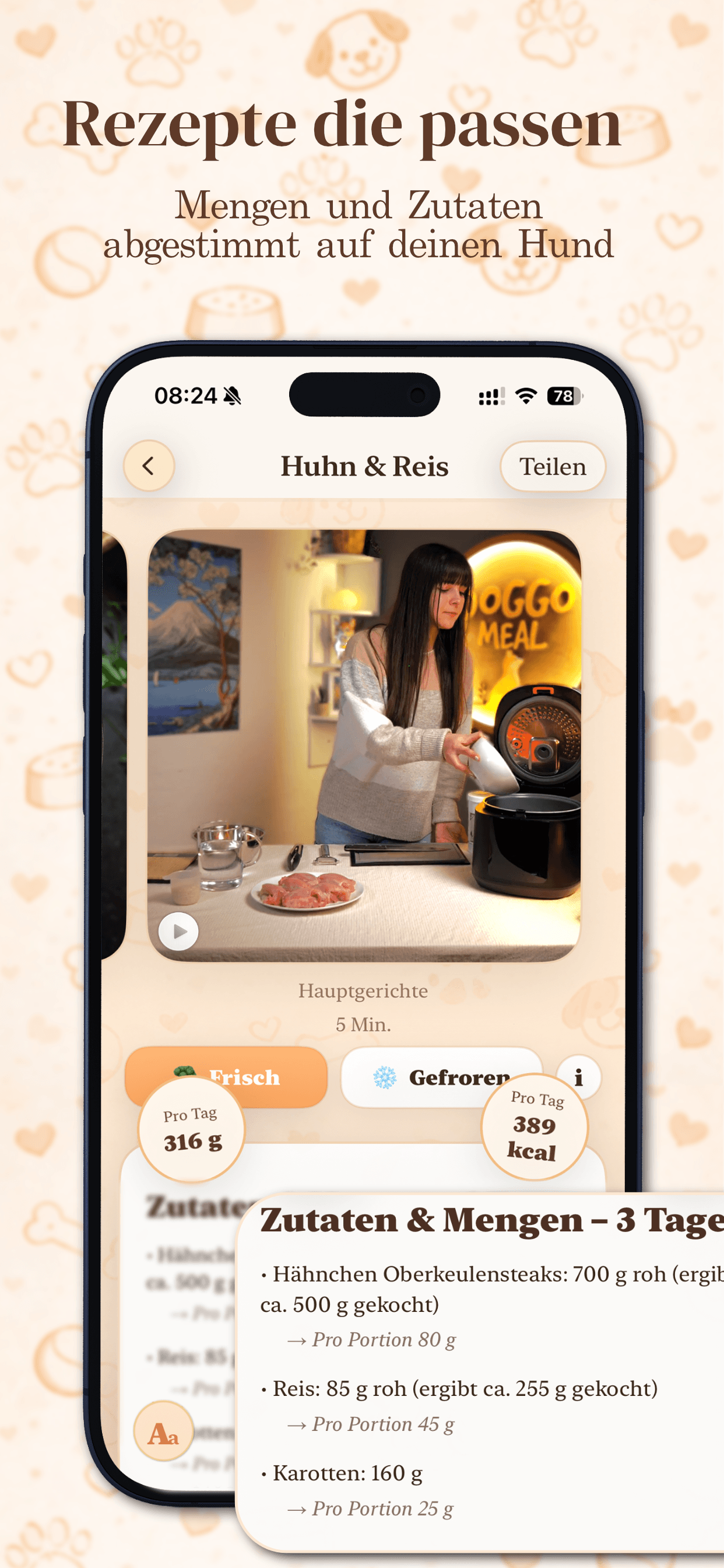
For the weeks before, there is the homemade advent calendar for dogs with 24 ideas, our dog biscuits page has all our biscuit recipes with gram amounts, and what can dogs eat at Christmas? rates the whole festive table. The free DoggoMeal app calculates home-cooked recipes to match your dog’s profile. For symptoms or questions about a special diet, your vet practice is the right place to go.
Festive plate for dogs with turkey, potato, pumpkin and carrot
An unseasoned Christmas plate for an adult 10 kg dog. An estimated 316 kcal, about half of the daily need of 630 kcal. It replaces a meal and is not given on top.
- Prep time
- 15 min
- Cooking time
- 25 min
- Total time
- 50 min
- Makes
- 1 plate for an adult 10 kg dog, in place of one of two meals
Ingredients
- 170 g turkey breast without skin or bone, weighed raw Can dogs eat turkey?
- 100 g potato, peeled and boiled in unsalted water (weighed cooked) Can dogs eat potatoes?
- 60 g eating pumpkin, peeled and boiled in unsalted water (weighed cooked)
- 40 g carrot, boiled in unsalted water (weighed cooked) Can dogs eat carrots?
- 20 g apple, raw, core and seeds removed Can dogs eat apples?
- Water for cooking, without salt
0 of 6 ingredients ready – tick off what you have.
Method
6 steps
- Peel the potato and pumpkin and cut them into cubes; slice the carrot. Taste a small raw piece of pumpkin first: if it tastes bitter, do not use the pumpkin.
- Cook the vegetables in unsalted water for about 20 minutes until soft. Pour away the cooking water.
- Cut the turkey breast into small cubes and cook it in a second pan of water without salt, frying fat or seasoning for about 15 minutes. It must be white inside; if in doubt, check with a meat thermometer that every part reaches at least 70 °C for 2 minutes.
- Wash your hands, board and knife thoroughly after handling the raw meat. Let the meat and vegetables cool until no more than lukewarm, then weigh out 100 g potato, 60 g pumpkin and 40 g carrot.
- Finely grate the apple without core or seeds and add it only once the food has cooled.
- Mash the potato and pumpkin with a fork, top with the turkey, carrot and apple and serve the plate in place of a meal. Cover leftovers, refrigerate and use within 2 days.
Did your dog enjoy it?
No ratings yet – how did your dog like it?
No sign-up needed. We only store the stars and a checksum against double votes, never your IP address. Privacy
Matching calculators, free in your browser
- Fresh food calculatorDaily amount of home-cooked food.
- Food amount calculatorGrams per day for dry, wet or fresh food.
- Calorie needs calculatorkcal per day by weight, activity and life stage.
How well is your dog's bowl put together overall? Free Food Check
Frequently asked questions
What can dogs eat at Christmas?
Ideally their usual food. If you want a festive meal, choose turkey breast without skin cooked without seasoning, boiled peeled potato, cooked pumpkin, carrot and a little apple without the core, as a replacement for one meal. Skin, roasting fat, bones, gravy, red cabbage, dumplings, Christmas biscuits and anything with onions or alcohol do not belong in the bowl.
How much Christmas dinner can a 10 kg dog have?
An adult, neutered, normally active 10 kg dog needs about 630 kcal a day according to our calorie calculator. The plate in this recipe has an estimated 316 kcal, about half of that. It therefore replaces one of two meals; the other meal stays their usual food.
Can my dog eat roast goose?
Not from the festive roast: the German Federal Chamber of Veterinarians warns that the meat is often far too fatty and heavily seasoned, and cooked goose bones splinter. According to USDA, 170 g of raw goose with skin contains about 631 kcal, as much as a 10 kg dog needs in a whole day. A piece of goose meat without skin, set aside before seasoning and cooked through separately, can replace the turkey.
Can I prepare the festive plate in advance?
Yes. Cool the meat and vegetables promptly after cooking, cover and refrigerate them and use them within 2 days; the BfR gives two to three days for leftovers of cooked food. Grate the apple just before feeding.
Sources
This article is based on the following expert sources. You can read how we work under Editorial team & methodology.
- Turkey, whole, breast, meat only, raw (FDC 171098) – USDA FoodData Central, SR Legacy
- Potatoes, boiled, cooked without skin, flesh, without salt (FDC 170440) – USDA FoodData Central, SR Legacy
- Pumpkin, cooked, boiled, drained, without salt (FDC 168449) – USDA FoodData Central, SR Legacy
- Carrots, cooked, boiled, drained, without salt (FDC 170394) – USDA FoodData Central, SR Legacy
- Apples, raw, with skin (FDC 171688) – USDA FoodData Central, SR Legacy
- Duck, domesticated, meat only, raw (FDC 172410) – USDA FoodData Central, SR Legacy
- Duck, domesticated, meat and skin, raw (FDC 172408) – USDA FoodData Central, SR Legacy
- Goose, domesticated, meat only, raw (FDC 172413) – USDA FoodData Central, SR Legacy
- Goose, domesticated, meat and skin, raw (FDC 174470) – USDA FoodData Central, SR Legacy
- Gefahren unterm Weihnachtsbaum (Presseinformation 26/2016) – Bundestierärztekammer
- O du – gefährliche Advents- und Weihnachtszeit! (Presseinformation 44/2012) – Bundestierärztekammer
- Gefahr erkannt – Gefahr gebannt (Presseinformation 28/2013) – Bundestierärztekammer
- Feiertagstipps der Vetmeduni Vienna: Gesund über die Festtage kommen – Veterinärmedizinische Universität Wien
- Keeping Pets Healthy During Holidays – Penn Veterinary Medicine, University of Pennsylvania (Almanac)
- Holiday Safety Tips – ASPCA
- People Foods to Avoid Feeding Your Pets – ASPCA Animal Poison Control Center
- Pancreatitis in Dogs – VCA Animal Hospitals
- Garlic and Onion (Allium spp) Toxicosis in Animals – Merck Veterinary Manual
- Lebensmittelinfektionen im Privathaushalt – Quellen erkennen, Risiken vermeiden – Bundesinstitut für Risikobewertung
- Fragen und Antworten zu Solanin (Glykoalkaloiden) in Kartoffeln – Bundesinstitut für Risikobewertung
- Vorsicht beim Verzehr von bitteren Zucchini (Mitteilung Nr. 027/2015) – Bundesinstitut für Risikobewertung
- Toxic and Non-Toxic Plants: Apple – ASPCA Animal Poison Control Center
- Tips and Timelines for Transitioning Your Pet to a New Food – American Animal Hospital Association (AAHA)
- Feeding treats to your dog – WSAVA Global Nutrition Committee
Less maths, more cooking.
The article tells you what matters. The DoggoMeal app turns it into a recipe with gram amounts to suit your dog's weight, age, activity and allergies.
- Dog profile
- Recipes with gram amounts
- Allergy warnings
- Doggopedia
Free · no subscription · every feature included

DoggoMeal editorial team
DoggoMeal is a dog nutrition app, founded and run by Kim Marques. Nami, our Shiba, is part of everyday life – her experiences with food changes, bland diets and the like appear in many articles as personal examples.
Our content follows the recommendations of the NRC, WSAVA and FEDIAF. You'll find the sources for this article above under “Sources”. The articles are no substitute for veterinary advice – if your dog has symptoms, please talk to your vet.