
Can dogs eat chocolate?
Can my dog eat chocolate?No
The theobromine and caffeine in chocolate can cause vomiting, a racing heart and seizures.
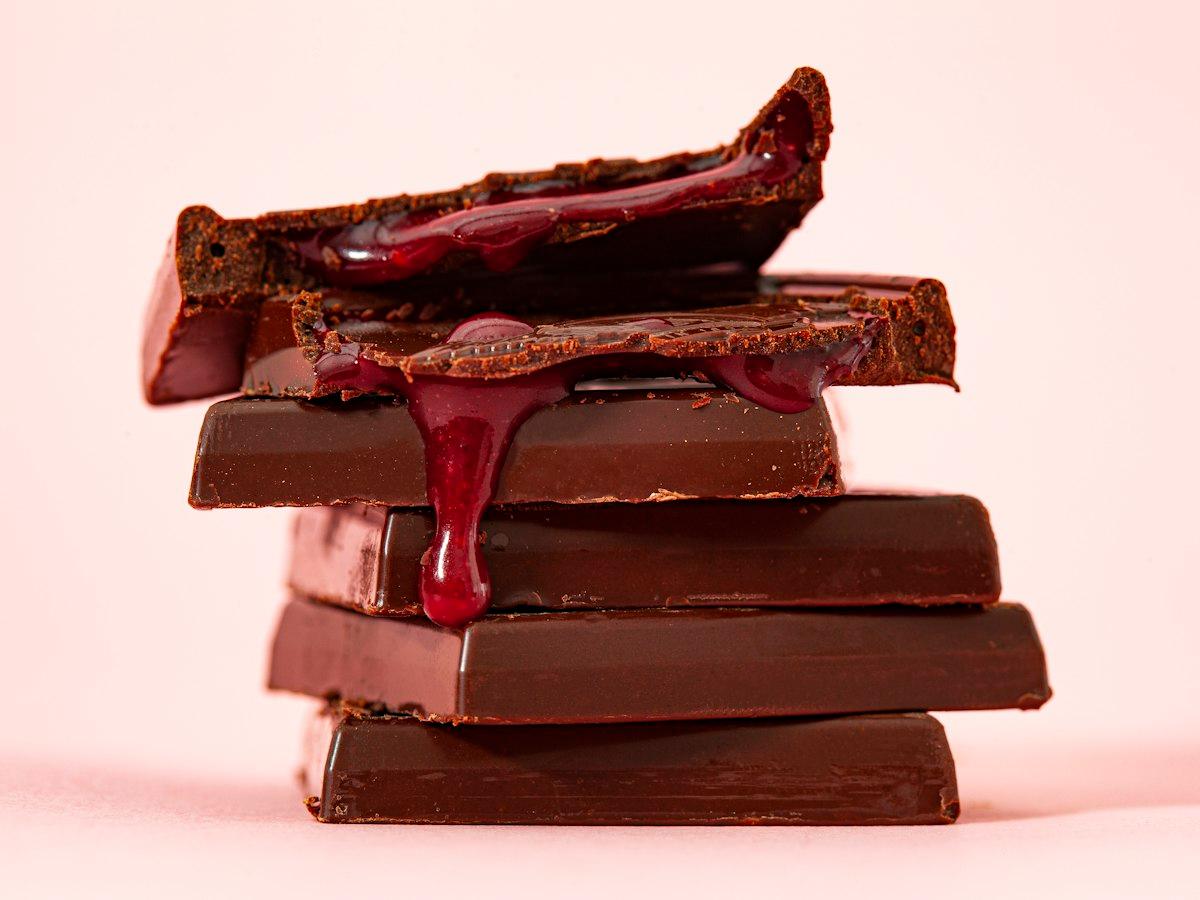
No, chocolate is toxic to dogs. It contains theobromine and caffeine, which dogs are more sensitive to than people: vomiting, restlessness, a racing heart and seizures are possible. The darker the chocolate, the less it takes, and cocoa powder and baking chocolate are the most dangerous. If your dog has eaten chocolate, call your vet immediately, even if it still seems fine.
Emergency
Has your dog eaten chocolate?
Call your vet, the emergency vet service or an animal hospital immediately, even if your dog still seems fine. Say which type it ate, how much, when, and how heavy your dog is, and take the packaging with you. The vet will work out whether watching your dog is enough or whether you should come in. If your dog ate it less than two hours ago, the vet can deliberately induce vomiting. Don't try to make your dog vomit yourself, and don't give any home remedies.
Possible symptoms
- Excessive thirst, vomiting and diarrhoea, usually within 6 to 12 hours
- Bloated abdomen
- Restlessness, panting and hyperactivity
- Frequent urination
- Racing or irregular heartbeat
- Trembling, muscle stiffness and a wobbly gait
- Raised body temperature
- Seizures and collapse; in severe cases, symptoms last up to 72 hours
When to see a vet?
Immediately – don't wait for symptoms. The first signs often only appear after 6 to 12 hours, but the vet can induce vomiting mainly within the first two hours. The earlier treatment begins, the better the outlook. If your vet can't be reached, call the emergency vet service or an animal hospital. The Bonn poison information centre (Giftnotruf Bonn, 0228 19240) also advises on animals, but only as a lower priority, because poisonings in people come first.
From what amount?
According to the Merck Veterinary Manual, mild symptoms such as vomiting, diarrhoea and excessive thirst are possible from about 20 mg of theobromine and caffeine per kg of body weight, heart problems from 40 to 50 mg/kg and seizures from 60 mg/kg. A 10 kg dog reaches 20 mg/kg, which is 200 mg, with roughly 87 g of milk chocolate, 36 to 38 g of dark chocolate with around 50% cocoa, 20 g of chocolate with 65% cocoa, 13 g of baking chocolate or 7 g of cocoa powder. A 100 g bar of dark chocolate with around 50% cocoa takes it to 53 to 56 mg/kg, above the threshold for heart problems, and a bar with 70% cocoa to around 108 mg/kg, far above the threshold for seizures. The content varies with the cocoa bean and the brand, and dogs differ in how sensitive they are. This calculation is therefore not an all-clear: call your vet, the emergency vet service or a poison information centre immediately, even if the amount is below it.
In an emergency: call your vet or an animal hospital
Outside opening hours, an emergency vet service or an animal hospital can help. Note down the amount, the time and the packaging, and don't try to make your dog vomit yourself. Poison information centres mainly advise on poisoning in people and only help with animals when they have capacity – the first point of contact for your dog is your vet.
What to watch out for
- Chocolate contains theobromine and caffeine. Dogs process these substances differently from people and are more sensitive to them. Theobromine stays in the body for a long time: its half-life in dogs is 17.5 hours.
- The darker, the more dangerous. Theobromine and caffeine per gram according to the Merck Veterinary Manual: cocoa powder 28.5 mg, baking chocolate 15.5 mg, dark chocolate with around 50% cocoa 5.3 to 5.6 mg, milk chocolate 2.3 mg, white chocolate 0.04 mg.
- The cocoa percentage on the packet helps with estimating. Merck works with the cocoa percentage times 15.5 mg, so a chocolate with 65% cocoa contains about 10.1 mg per gram and one with 70% about 11 mg. The higher the cocoa percentage, the less it takes to cause poisoning.
- Mild symptoms are possible from about 20 mg per kg of body weight, heart problems from 40 to 50 mg/kg and seizures from 60 mg/kg. How sensitive a dog is varies from dog to dog.
- The fat and sugar in chocolate can cause vomiting, diarrhoea or pancreatitis, even if the amount of theobromine is not toxic. This also applies to white chocolate.
- Small dogs reach a toxic amount quickly. Older dogs and dogs with heart disease are at greater risk.
- Symptoms usually only start 6 to 12 hours after eating and can last up to 72 hours in severe cases. Waiting costs time for treatment.
- Chocolate is found in cakes, biscuits, puddings, ice cream, pralines and hot chocolate. Some products also contain raisins or xylitol, which are toxic to dogs as well.
How to protect your dog from chocolate
How to prevent it
- Store chocolate, cocoa powder and hot chocolate high up in closed cupboards
- Ask children and guests not to share chocolate and not to leave any on the table or in open bags
- At Easter, Christmas and Halloween, keep Easter baskets, Christmas stockings, Advent calendars and sweet bags out of reach
- Practise the cue "leave it" so your dog leaves dropped food alone
- Check the ingredients of sugar-free sweets for xylitol
- If your dog has got hold of some: keep the packaging and note the type, cocoa percentage and how much is missing
Never
- Chocolate, pralines or cocoa as treats, not even a small piece
- Waiting after your dog has eaten it to see whether symptoms appear
- Making your dog vomit yourself, for example with a finger down the throat
- Charcoal tablets, milk, oil or other home remedies on your own initiative
- Cocoa shell mulch in flower beds your dog can reach
How often?
Never – not even a piece of chocolate, a chocolate biscuit or a spoonful of cocoa.
Frequently asked questions about chocolate
Is white chocolate toxic to dogs?
As far as theobromine goes, hardly: according to Merck, white chocolate contains only 0.04 mg of theobromine and caffeine per gram, a negligible amount. However, the fat and sugar can cause vomiting, diarrhoea or pancreatitis. So don't give it, and ask your vet if your dog has eaten a larger amount.
Is dark chocolate more dangerous than milk chocolate?
Yes, considerably. According to Merck, dark chocolate with around 50% cocoa contains 5.3 to 5.6 mg of theobromine and caffeine per gram, milk chocolate 2.3 mg. With a high cocoa percentage it is even more: 65% cocoa equals about 10.1 mg per gram. A 5 kg dog reaches the threshold for first symptoms with only about 10 g of it.
Is cocoa powder toxic to dogs?
Yes, cocoa powder is the most dangerous form. According to Merck, it contains around 28.5 mg of theobromine and caffeine per gram, more than twelve times as much as milk chocolate. With hot chocolate and baking mixes, the amount depends on the cocoa percentage. Take the packet with you when you call your vet.
My dog ate a piece of milk chocolate – is that bad?
That depends on the amount and on your dog's weight. Milk chocolate contains around 2.3 mg of theobromine and caffeine per gram. A 5 kg dog reaches the threshold for first symptoms (20 mg/kg) with just over 40 g, a 30 kg dog with just over 260 g. Call your vet anyway and give the type, amount and weight. Your vet will tell you whether watching your dog is enough.
Can dogs eat chocolate biscuits, chocolate cake or chocolate ice cream?
No. They contain cocoa plus a lot of fat and sugar, which can cause vomiting, diarrhoea or pancreatitis even without a toxic amount of theobromine. How dangerous a piece is depends on the type and share of chocolate: cake with dark chocolate or cocoa powder is more critical than a biscuit with a few milk chocolate chips. If in doubt, call your vet.
Is Nutella toxic to dogs?
Chocolate hazelnut spread doesn't belong in your dog. According to the manufacturer, Nutella contains 7.4% low-fat cocoa, plus 56.3 g of sugar and 30.9 g of fat per 100 g. As a rough calculation, that means it contains a similar amount of theobromine to milk chocolate. If your dog has eaten bread with Nutella or licked out the jar, call your vet and give the amount.
What about chocolate with raisins or sugar-free chocolate?
Then it is doubly dangerous. Raisins can damage the kidneys, more on this at doggomeal.de/en/darf-mein-hund/weintrauben. Sugar-free chocolate can be sweetened with xylitol (birch sugar): according to Merck, more than about 0.1 g of xylitol per kg of body weight leads to low blood sugar, and symptoms can start within 30 minutes. In both cases, call immediately.
Is there chocolate for dogs?
What is sold as dog chocolate is often made from carob, not cocoa. However, some dog bakeries use small amounts of real milk chocolate. So check the ingredients. Most vets advise against chocolate in any form.
How long should I watch my dog after it has eaten chocolate?
The first symptoms usually appear 6 to 12 hours after eating, and in severe cases they last up to 72 hours. Watching is no substitute for calling, though: phone your vet straight away. Your vet will tell you whether you can watch your dog at home or whether it needs to come in.
Can I give my dog charcoal tablets or make it vomit?
No, not on your own initiative. The German Federal Chamber of Veterinarians advises against making a dog vomit yourself and warns against giving milk or oil. Whether activated charcoal makes sense is for your vet to decide: according to Merck, with chocolate it can cause electrolyte disturbances, such as too much sodium in the blood, and it is only considered for life-threatening amounts.
Why is chocolate toxic to dogs but not to people?
Dogs process theobromine and caffeine differently from people and are therefore more sensitive to them. Theobromine stays in a dog's body for a long time: its half-life is 17.5 hours. It stimulates the heart and nervous system, which can lead to a racing heart, trembling and seizures. Which other foods are toxic is covered at doggomeal.de/en/magazin/giftige-lebensmittel-fuer-hunde.
How is chocolate poisoning treated?
If your dog ate the chocolate less than two hours ago and is still showing no signs, the vet can induce vomiting. After that, treatment depends on the symptoms: intravenous fluids, medication for vomiting, trembling, seizures or heart rhythm problems, and monitoring of the heart. Dogs with seizures sometimes have to stay at the clinic overnight.
Are small or older dogs at greater risk?
Yes. Small dogs reach a toxic amount much faster: according to the AKC, even a single bar of milk chocolate can have serious consequences, especially for small dogs. Older dogs and dogs with heart disease are at higher risk of dying suddenly from chocolate poisoning.
Is cocoa mulch in the garden dangerous for dogs?
Yes, it can be. According to Merck, cocoa shells contain about 9 mg of theobromine and caffeine per gram, although some mulch products have had these substances removed. Deaths have been reported in animals that ate cocoa shell mulch. If your dog likes to eat mulch, don't use it.
Similar foods
- NoFruitGrapesGrapes and raisins can cause acute kidney failure in dogs.See the answer
- NoVegetablesOnionOnions destroy red blood cells, whether raw, cooked or as a powder.See the answer
- NoVegetablesGarlicGarlic damages red blood cells, whether raw, cooked or as a powder.See the answer
- Not neededNuts & seedsNutsMany are fatty and some toxic; never macadamias or mouldy nuts.See the answer
- Not neededSweetsHoneyNot toxic, but high in sugar and not a home remedy for illness.See the answer
- In moderationFruitBananaPeeled, sliced and, because of the sugar, only as a small snack.See the answer
Sources
- Chocolate Toxicosis in Animals – Merck Veterinary Manual
- Chocolate Poisoning in Dogs – VCA Animal Hospitals
- What to Do if Your Dog Eats Chocolate – American Kennel Club (AKC)
- People Foods to Avoid Feeding Your Pets – ASPCA Animal Poison Control Center
- Xylitol Toxicosis in Dogs – Merck Veterinary Manual
- Vergiftung beim Hund: Richtig helfen – aber wie? (Presseinformation 30/2012) – Bundestierärztekammer
- Giftzentrale Bonn: Telefonische Hilfe rund um die Uhr – Informationszentrale gegen Vergiftungen, Universitätsklinikum Bonn
- nutella®: Zutaten und Nährwerte – Ferrero (nutella.com)
Updated: · DoggoMeal editorial team
This page is no substitute for veterinary advice. Dogs with pre-existing conditions – for example of the kidneys, liver or pancreas, or with diabetes – and dogs with allergies often need their own rules. If your dog has symptoms or you're unsure, ask your vet.
Recipes that fit your dog
DoggoMeal is an app for iPhone and Android: you create a profile for your dog, choose a recipe, and the app calculates grams, kcal and portions to suit your dog's weight, age, activity and allergies.
- Dog profile
- Recipes with gram amounts
- Allergy warnings
- Cooking with video
Free · no subscription · every feature included