Dog cake with minced beef and carrot: recipe without salt
A savoury dog cake from 200 g minced beef, egg, oats and carrot, without salt or seasoning. Cooked through, 16 pieces with about 41 kcal each.
By the DoggoMeal editorial teamPublished Updated 6 min read
In short
For a small savoury dog cake, mix 200 g minced beef, 50 g egg, 50 g oats and 100 g carrot. Cook thoroughly, cool and divide into 16 small pieces. Each piece has an estimated 41 kcal. This is an occasional snack, not a complete diet.
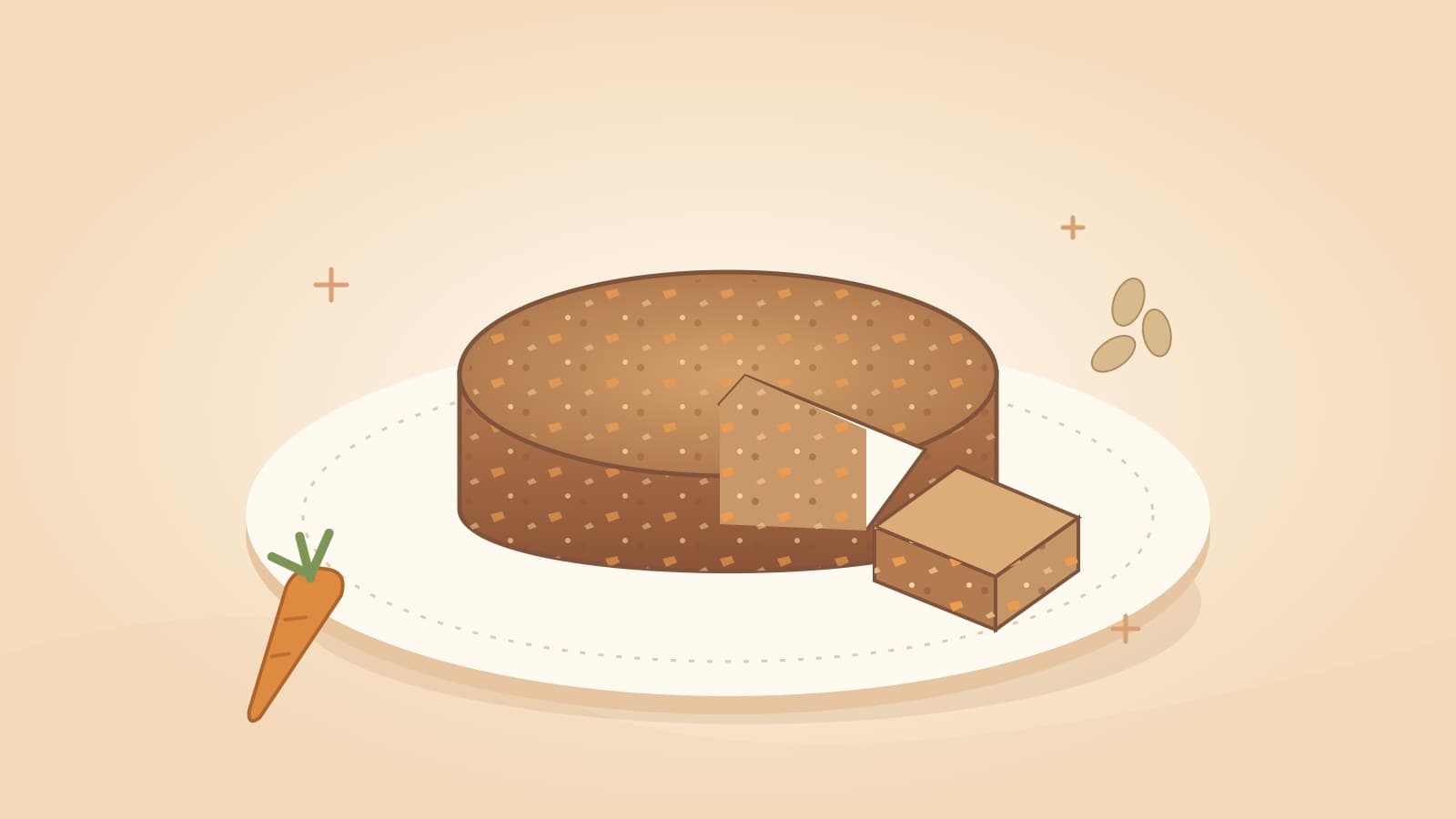
A dog cake does not need to be sweet. This savoury version uses four simple ingredients without icing. The recipe card below gives weighed amounts and all the steps. The cover image is an illustration, not a photograph of a baking trial.
What goes into the cake
Plain minced beef, egg, oats and finely grated carrot form the mixture. Avoid seasoned mince, sausage meat and ready-made burger mixtures: they may contain salt, onions and other unsuitable additions. Cheese icing, bacon, stock and baking powder are not needed either.
Treats are an extra, not a meal: all snacks together stay at no more than 10% of the daily calories. Biscuits made with flour, cheese, cakes and rusks are only for now and then, in small amounts or on special occasions. Sugar, honey, syrup, salt and spices never belong in them.
The recipe contains beef, egg and oats. It is unsuitable as an experiment during a known intolerance or a veterinary elimination diet. Puppies and dogs with illness need individually planned feeding. A cake cannot replace it.
Thorough cooking matters more than colour
Use 180 °C conventional heat; about 30–35 minutes is a guide. The tin, actual oven temperature and depth of mixture affect the cooking time. Check with a meat thermometer that every part, including the centre, reaches at least 70 °C for 2 minutes. This follows BfR advice on adequate heating. A firm surface or brown colour does not prove safe cooking.
Keep raw ingredients away from finished food. Clean hands, bowl, board and utensils after handling raw meat and egg. Never reserve raw mince for decoration; remove candles and skewers before feeding too.
A small piece rather than a whole meal
USDA values for the four raw ingredients give the following estimate. The fat content of your beef and egg size may differ.
Divided into 16 equal pieces, this is about 41 kcal per piece. Baking removes water: there are still 16 pieces, but each is not automatically 25 g of baked cake. This is not a laboratory analysis and assumes the ingredients remain in the cake.
The calorie calculator gives around 630 kcal daily for an adult, neutered, normally active 10-kg dog. All extras together should provide less than 10%, about 63 kcal. A small 41-kcal piece fits mathematically if there are no other treats. Smaller dogs need smaller pieces; offer much less on first tasting. This cake is not a balanced complete diet.
Refrigerate and freeze individual portions
Do not leave the cake on the worktop for hours. Use shallow containers for cooling and refrigerate within 2 hours at the latest, sooner in hot conditions. Use clean, covered containers and keep at no more than 4 °C.
For this moist meat recipe, our cautious advice is to use within 2 days and freeze extra portions early. USDA gives a general 3–4 days for correctly handled cooked leftovers; our shorter advice is not shelf-life testing. Thaw portions in the refrigerator. Discard food with an uncertain cold chain, mould or other concerns; normal smell does not guarantee safety.
Savoury or banana?
Find the other version under birthday cake for dogs, or small crunchy alternatives among our dog biscuits. Without grain it works with turkey and potato: grain-free dog cake. Even quicker is the dog cake with three ingredients, and with no oven at all there is the no-bake dog cake. Either way, the snack counts towards daily intake.
The free DoggoMeal app connects your dog’s profile with tailored recipes, Doggopedia and the community. Your vet is the right contact for symptoms or medical diets.
Savoury dog cake with minced beef and carrot
A small meat cake without salt or seasoning. Using beef with 10% fat gives an estimated 654 kcal in total, around 41 kcal for each of 16 equal pieces. Not a complete diet.
- Prep time
- 15 min
- Cooking time
- 35 min
- Total time
- 50 min
- Makes
- 1 small cake (12 cm), divided into 16 snack pieces
Ingredients
- 200 g plain minced beef (10% fat for the calorie estimate) Can dogs eat beef?
- 50 g egg without shell (about 1 medium egg) Can dogs eat eggs?
- 50 g fine rolled oats Can dogs eat oats?
- 100 g carrot, washed and finely grated Can dogs eat carrots?
0 of 4 ingredients ready – tick off what you have.
Method
6 steps
- Preheat the oven to 180 °C conventional heat. Line a small 12-cm tin with baking paper.
- Mix the beef, weighed egg, oats and grated carrot. Do not add salt, oil, seasonings or onions.
- Spread the mixture evenly in the tin and press gently. Wash hands and utensils after handling raw meat and egg.
- Bake for about 30–35 minutes. Thorough cooking is essential: every part, including the centre, must reach at least 70 °C for 2 minutes; check with a meat thermometer. Bake longer if needed.
- Allow to cool and divide into 16 equal pieces. Do not feed the whole cake.
- Cool leftovers promptly in shallow containers, refrigerating within 2 hours at the latest. Cover and keep at no more than 4 °C; use within 2 days or freeze small portions.
Did your dog enjoy it?
No ratings yet – how did your dog like it?
No sign-up needed. We only store the stars and a checksum against double votes, never your IP address. Privacy
Matching calculators, free in your browser
- Dog treat calculatorHow many treats a day, in pieces and grams.
- Calorie needs calculatorkcal per day by weight, activity and life stage.
- Fresh food calculatorDaily amount of home-cooked food.
How well is your dog's bowl put together overall? Free Food Check
Frequently asked questions
Can dogs eat a minced-beef cake?
A healthy adult dog can have a small piece if all ingredients are tolerated. Meat and egg must be cooked thoroughly. Ask your vet first for illness, an elimination diet or prescribed special food.
How much cake suits a 10-kg dog?
At a daily need of 630 kcal, all extras together would have a budget of about 63 kcal at most. One sixteenth of this cake contains an estimated 41 kcal. This is an example, not a guaranteed tolerated amount; start with much less.
Can I use mixed minced meat?
This recipe and estimate use beef containing 10% fat. Other mince changes the fat, calories and tolerance. Do not use a seasoned meat mixture or raw meat as decoration.
How long does the meat cake keep?
Cool promptly, cover and refrigerate at no more than 4 °C, using within 2 days. This is our cautious household rule, not measured shelf life. Freeze extra portions and thaw in the refrigerator.
Sources
This article is based on the following expert sources. You can read how we work under Editorial team & methodology.
- Beef, ground, 90% lean meat / 10% fat, raw (FDC 174030) – USDA FoodData Central, SR Legacy
- Egg, whole, raw, fresh (FDC 171287) – USDA FoodData Central, SR Legacy
- Cereals, oats, regular and quick, not fortified, dry (FDC 173904) – USDA FoodData Central, SR Legacy
- Carrots, raw (FDC 170393) – USDA FoodData Central, SR Legacy
- Lebensmittelinfektionen im Privathaushalt – Quellen erkennen, Risiken vermeiden – Bundesinstitut für Risikobewertung
- Leftovers and Food Safety – USDA Food Safety and Inspection Service
- Feeding treats to your dog – WSAVA Global Nutrition Committee
Less maths, more cooking.
The article tells you what matters. The DoggoMeal app turns it into a recipe with gram amounts to suit your dog's weight, age, activity and allergies.
- Dog profile
- Recipes with gram amounts
- Allergy warnings
- Doggopedia
Free · no subscription · every feature included


DoggoMeal editorial team
DoggoMeal is a dog nutrition app, founded and run by Kim Marques. Nami, our Shiba, is part of everyday life – her experiences with food changes, bland diets and the like appear in many articles as personal examples.
Our content follows the recommendations of the NRC, WSAVA and FEDIAF. You'll find the sources for this article above under “Sources”. The articles are no substitute for veterinary advice – if your dog has symptoms, please talk to your vet.