
Can dogs eat sweetcorn?
Can my dog eat sweetcorn?In moderation
Only the kernels, cooked and without salt or butter; never the cob.
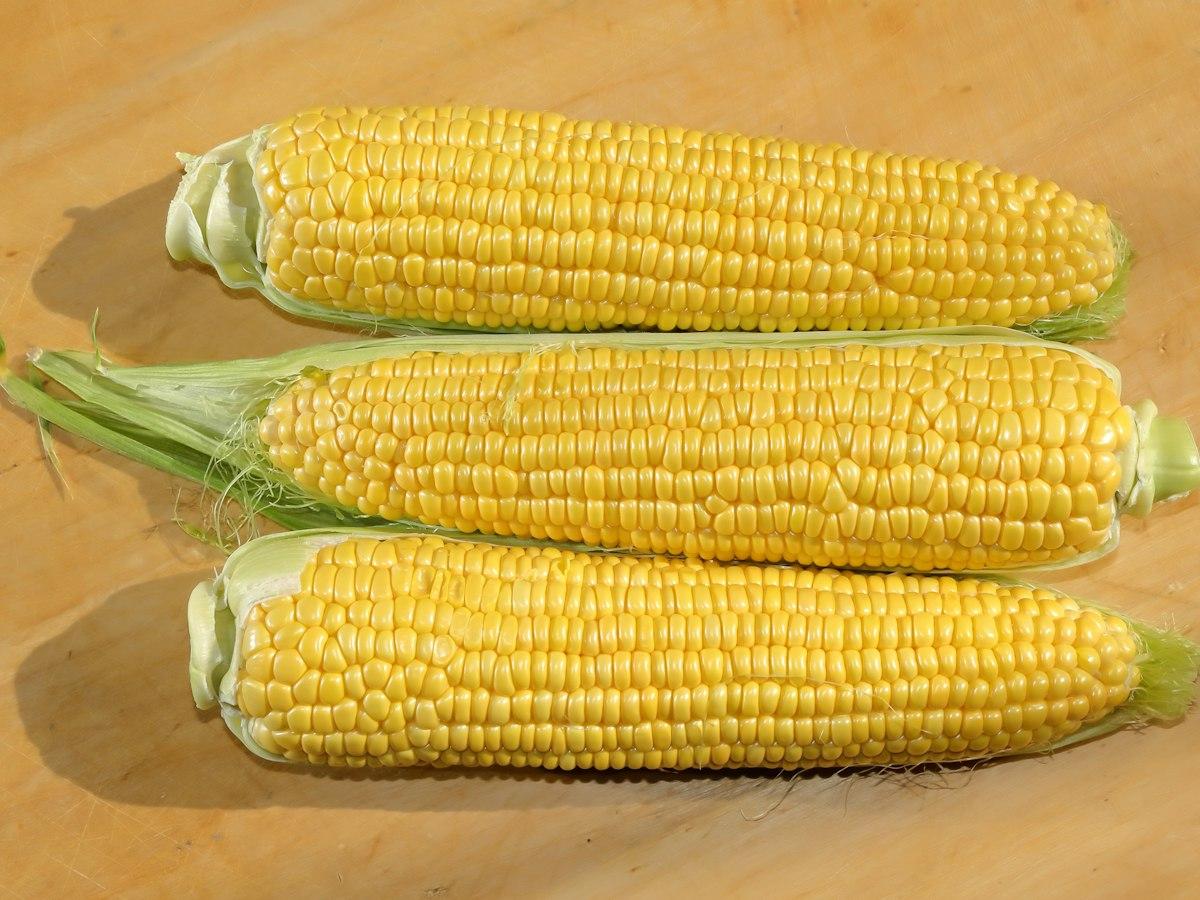
Yes, in moderation: cooked sweetcorn kernels without salt, butter or seasoning are safe for dogs in small amounts, and cooked they're easier to digest than raw. Never give your dog the cob. It's indigestible, dogs quickly swallow large pieces of it, and these can cause an intestinal blockage that usually needs surgery. Depending on size, half a tablespoon to two tablespoons of kernels are enough as an extra.
How much sweetcorn can your dog eat?
Enter the weight – the amount updates straight away. You can adjust age, activity and neutering below.
How the calculator works
- Daily requirement: Resting energy requirement 70 × 15 kg^0.75 ≈ 534 kcal × factor 1.6 ≈ 855 kcal.
- Treat allowance: at most 10% of that = 86 kcal for all treats combined.
- Calorie limit: 86 kcal ÷ 96 kcal/100 g = 90 g of sweetcorn.
- Guide value for dogs 10–25 kg: 1 × tablespoon of sweetcorn kernels (cooked) at 9 g each = 9 g (guide value from the source).
- Recommendation: the smaller of the two, rounded down to half portions → 1 × 9 g = 9 g ≈ 9 kcal.
Sources: 10% rule from the WSAVA guide to treats · kcal value: USDA FoodData Central. Daily requirement as in the dog calorie calculator.
Result · 15 kg · Adult
Up to 1
tablespoon of sweetcorn kernels (cooked) on a snack day
(≈ 9 g, 9 kcal)
How often: As a small extra two to three times a week, not every day. All treats together should make up no more than 10% of daily calories.
Treat allowance 86 kcal (10% of 855 kcal) · 1 tablespoon of sweetcorn kernels (cooked) ≈ 9 g
Limited by: guide value
Here the guide value for dogs 10–25 kg sets the limit (guide value from the source): at most 1 tablespoon of sweetcorn kernels (cooked). In terms of calories, up to 90 g would be possible.
Chewy: 1–2 teaspoons up to approx. 9 kg, 1 tablespoon up to approx. 23 kg, 2 tablespoons up to approx. 41 kg, 3 tablespoons above, two to three times a week. 1 tablespoon of cooked kernels is about 9 g (USDA: 149 g per cup).
This applies if it's the only snack that day – if your dog gets other treats too, give correspondingly less.
 The app calculates recipes in grams, kcal and portions to suit your dog's weight, age, activity and allergies.
Sweetcorn for dogs: amount by weight
| Weight | Maximum per snack day | kcal |
|---|---|---|
| 5 kg | ½ tablespoon of sweetcorn kernels (cooked)≈ 4 g | ≈ 4 |
| 10 kg | ½ tablespoon of sweetcorn kernels (cooked)≈ 4 g | ≈ 4 |
| 20 kg | 1 tablespoon of sweetcorn kernels (cooked)≈ 9 g | ≈ 9 |
| 30 kg | 2 × tablespoon of sweetcorn kernels (cooked)≈ 18 g | ≈ 17 |
| 40 kg | 2 × tablespoon of sweetcorn kernels (cooked)≈ 18 g | ≈ 17 |
- All snacks together no more than 10% of daily calories (WSAVA recommendation). If your dog gets other treats too, give correspondingly less.
- Guide value per weight class – small up to 10 kg, medium 10–25 kg, large over 25 kg: Chewy: 1–2 teaspoons up to approx. 9 kg, 1 tablespoon up to approx. 23 kg, 2 tablespoons up to approx. 41 kg, 3 tablespoons above, two to three times a week. 1 tablespoon of cooked kernels is about 9 g (USDA: 149 g per cup).
Emergency note
Eaten a corn cob?
A dog that has eaten a corn cob needs to see a vet, even if it still seems fine. The cob is indigestible, and chewed pieces can form a hard blockage in the intestine. A true blockage rarely gets better on its own and becomes more dangerous the longer it lasts, because the blood supply to the intestinal wall is often affected. Home remedies don't help.
Possible symptoms
- Vomiting, often repeated
- Retching without bringing anything up
- Loss of appetite
- Abdominal pain or a tender tummy
- Diarrhoea
- Straining to poo or passing only small amounts
- Lethargy and reluctance to move
- Dehydration
When to see a vet?
Call your vet or the emergency vet service immediately as soon as you see or suspect that your dog has eaten a cob, a piece of one or husks. Don't wait for symptoms. If your dog vomits repeatedly, retches without success, has abdominal pain or seems lethargic, it's an emergency. An intestinal blockage usually needs surgery.
In an emergency: call your vet or an animal hospital
Outside opening hours, an emergency vet service or an animal hospital can help. Note down the amount, the time and the packaging, and don't try to make your dog vomit yourself. Poison information centres mainly advise on poisoning in people and only help with animals when they have capacity – the first point of contact for your dog is your vet.
What's in it
- Cooked and unsalted, around 96 kcal per 100 g; a tablespoon of kernels has just under 9 kcal.
- Mainly provides carbohydrates, plus 3.4 g of protein and 2.4 g of fibre per 100 g.
- Low in fat: 1.5 g of fat per 100 g, including the omega-6 fatty acid linoleic acid.
- Contains the antioxidants lutein and zeaxanthin as well as potassium and magnesium.
- A few cooked kernels can be sprinkled over the food or stuffed into a chew toy.
What to watch out for
- The cob is indigestible. Swallowed pieces can cause choking or block the intestine. A blockage like this is an emergency and usually needs surgery.
- Dogs chew through a cob faster than you'd think and swallow large pieces. This also happens with gnawed cobs from the bin or from a barbecue.
- The green husks aren't toxic, but they're hard to digest and can block the intestine, especially in small dogs.
- Too much sweetcorn at once can cause wind, vomiting or diarrhoea.
- Sweetcorn is high in carbohydrates. Fed regularly in larger amounts, it encourages weight gain, especially in less active dogs.
- Some dogs don't tolerate corn and react with an allergy, for example itchy skin, ear infections or digestive problems.
- Corn with butter, salt or seasoning is dangerous: a lot of fat can trigger pancreatitis, and a lot of salt can cause salt poisoning. Onion and garlic are toxic to dogs, even when cooked with the corn.
- Tinned sweetcorn usually contains added salt, so it isn't the right choice. Creamed corn isn't suitable either, as it often contains dairy and sugar. Corn chips aren't suitable because of all the salt.
How to prepare sweetcorn
How to do it
- Use fresh or frozen sweetcorn kernels without any additives
- Rinse fresh cobs under cold water
- Boil or steam them in water without salt until the kernels are soft
- Let them cool and cut the kernels off the cob with a knife
- Put the cob straight into a bin with a lid
- The first time, give just a few kernels and watch how your dog tolerates them
Better not
- Corn cobs, even cooked, gnawed or as something to chew on
- The green husks from the cob
- Butter, salt, seasoning, onion or garlic
- Salted tinned sweetcorn or creamed corn
- Popcorn with butter, salt, sugar or caramel, and unpopped kernels
- Corn chips and tortilla chips
How often?
As a small extra two to three times a week, not every day. All treats together should make up no more than 10% of daily calories.
Frequently asked questions about sweetcorn
Can dogs eat corn on the cob?
No, not even cooked, from the barbecue or to chew on. The cob is indigestible. Dogs chew it quickly and swallow large pieces, which can get stuck in the throat or intestine. Cut off the kernels and put the cob straight into a bin with a lid.
Can my dog eat raw sweetcorn?
Yes, in small amounts. According to PetMD, raw and cooked kernels are both safe, but cooked ones are easier to digest. Frozen kernels are fine too. Always cut raw kernels off the cob.
Can dogs eat grilled corn or corn with butter?
No. Corn grilled with butter, salt or seasoning isn't suitable, and the cob is off-limits anyway. The fat in butter can trigger pancreatitis, and a lot of salt is dangerous. If the corn was prepared with onion or garlic, it's toxic to dogs. For your dog, cook a few kernels plain in water.
Can dogs eat tinned sweetcorn?
Fresh or frozen sweetcorn is the better choice. Tinned sweetcorn usually contains added salt and creamed corn often contains dairy and sugar; neither is suitable for dogs. If the ingredients list only says sweetcorn and water, with no salt and no sugar, a few kernels are fine.
Can dogs eat popcorn?
Only completely plain. Popcorn that has been popped without fat and contains no salt, butter or sugar is safe in small amounts. PetMD suggests one to two pieces for dogs up to 9 kg and a small handful for large dogs. Butter and a lot of salt are dangerous. Caramel and sweet popcorn are high in sugar and can contain chocolate or xylitol, which are toxic to dogs.
My dog has eaten popcorn kernels. Is that dangerous?
Unpopped kernels can get stuck between the teeth, cause choking and block the intestine. One or two kernels may be fine, depending on your dog's size. If your dog is small, has eaten several kernels or is choking but can still breathe, take it to your vet immediately.
Can puppies eat sweetcorn?
Yes, from eight weeks of age in very small amounts and only now and then: cooked, plain and cut off the cob. Puppies have sensitive stomachs. Introduce sweetcorn slowly and talk to your vet first.
Can my dog eat sweetcorn every day?
Better not. Chewy recommends giving the portion two to three times a week. Too much sweetcorn can upset the stomach, and the carbohydrates encourage weight gain if your dog isn't very active.
How many calories are in sweetcorn?
According to the USDA, cooked sweetcorn kernels without salt have 96 kcal per 100 g. A tablespoon of kernels (around 9 g) provides just under 9 kcal. A medium cob yields around 103 g of kernels with just under 100 kcal, more than the entire treat allowance of a 10 kg dog, which is around 63 kcal a day.
Is corn in dog food bad?
Not as a rule. Corn is in many dog foods, and according to the AKC many veterinary nutritionists consider it unproblematic for most dogs. Some dogs are allergic to it, though. What grain brings to the bowl and which types sensitive dogs tolerate better is explained at doggomeal.de/en/magazin/brauchen-hunde-getreide.
How can I tell if my dog doesn't tolerate sweetcorn?
After too much sweetcorn at once, vomiting, diarrhoea, wind, loss of appetite or lethargy are possible. Keep an eye on your dog and call your vet if the symptoms are severe or haven't settled after 24 hours. A corn allergy can show up as itchy skin, ear infections or digestive problems. In that case, leave out sweetcorn and talk to your vet.
Can dogs eat corn husks?
No. The green husks around the cob aren't toxic, but they're hard to digest and can block the intestine, especially in small dogs. If your dog has eaten some, the same applies as with the cob: call your vet immediately.
Can dogs eat corn chips or tortilla chips?
No. According to PetMD, corn chips and tortilla chips are very high in salt and often contain preservatives and other additives that aren't good for your dog. A small piece of a soft corn tortilla is no cause for concern, says PetMD, but don't give them regularly because of the salt.
Similar foods
- In moderationVegetablesPeasFresh, frozen or cooked without salt; no tinned peas and no pea soup.See the answer
- YesGrains & sidesRiceOnly cooked and without salt, stock or seasoning, as a small extra portion with the food.See the answer
- In moderationGrains & sidesOatsPlain and cooked in water, in small amounts and no more than twice a week.See the answer
- Not neededGrains & sidesRice cakeNot toxic, but high in calories and, per the BfR, often higher in arsenic than rice.See the answer
- In moderationVegetablesPotatoOnly cooked and peeled; raw, green and sprouting potatoes contain solanine.See the answer
- YesVegetablesCarrotRaw or cooked, without salt, butter or seasoning, in small pieces; not carrot cake.See the answer
Sources
- Can Dogs Eat Corn? – American Kennel Club (AKC)
- Can Dogs Eat Corn? Benefits, Risks, and Feeding Tips – PetMD
- Can Dogs Eat Corn? – Chewy
- Can Dogs Eat Popcorn? – PetMD
- Ingestion of Foreign Bodies in Dogs – VCA Animal Hospitals
- Gastrointestinal foreign body obstruction in dogs – Cornell University College of Veterinary Medicine, Riney Canine Health Center
- Intestinal Blockage in Dogs: Signs, Symptoms, Treatments – American Kennel Club (AKC)
- Corn, sweet, yellow, cooked, boiled, drained, without salt (SR Legacy, FDC 169999) – USDA FoodData Central
- Feeding treats to your dog – WSAVA Global Nutrition Committee (10% rule in the calculator)
Updated: · DoggoMeal editorial team
This page is no substitute for veterinary advice. Dogs with pre-existing conditions – for example of the kidneys, liver or pancreas, or with diabetes – and dogs with allergies often need their own rules. If your dog has symptoms or you're unsure, ask your vet.
Recipes that fit your dog
DoggoMeal is an app for iPhone and Android: you create a profile for your dog, choose a recipe, and the app calculates grams, kcal and portions to suit your dog's weight, age, activity and allergies.
- Dog profile
- Recipes with gram amounts
- Allergy warnings
- Cooking with video
Free · no subscription · every feature included