
Can dogs eat sushi?
Can my dog eat sushi?Not needed
Usually raw fish, plus rice with sugar, salt and vinegar, and salty soy sauce.
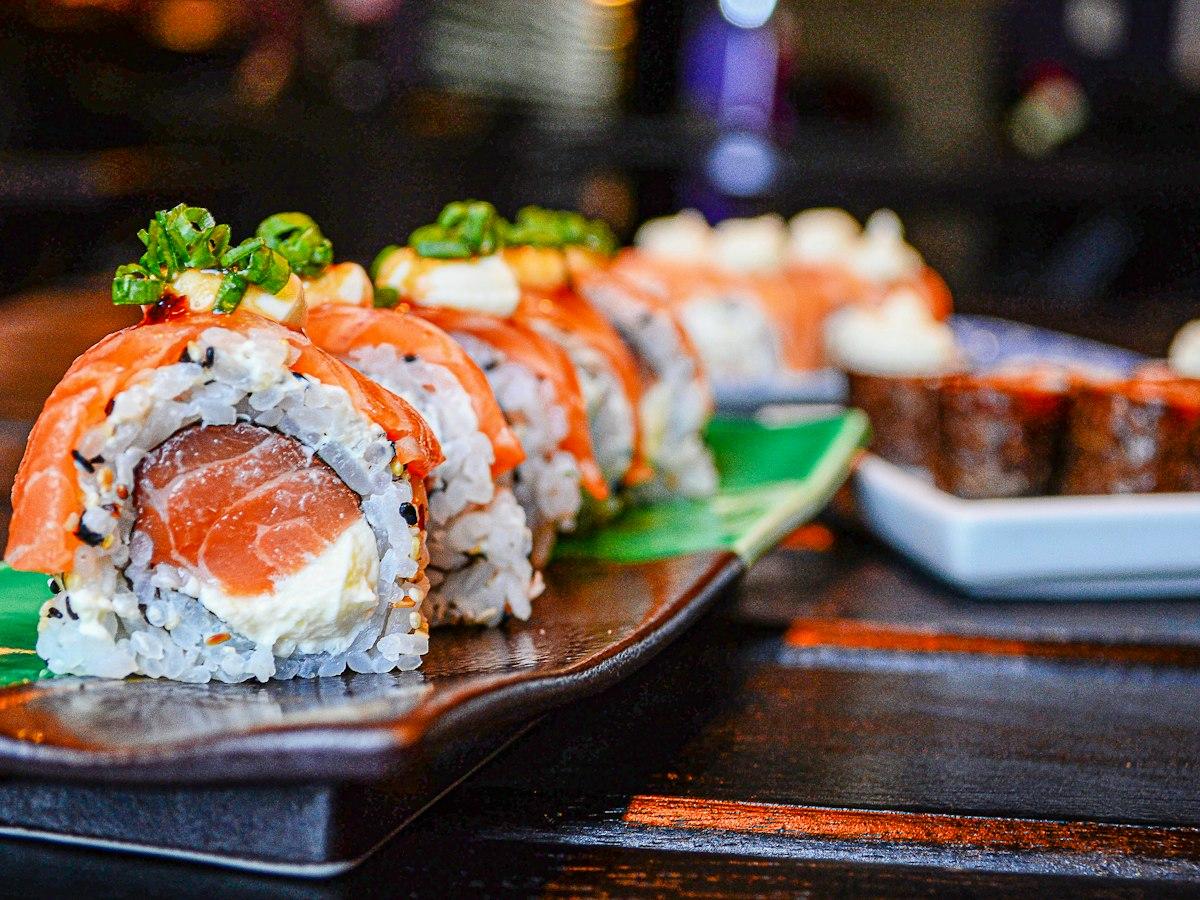
Your dog doesn't need sushi, and we advise against it. Nigiri, sashimi and many maki contain raw fish, which can carry pathogens, and sushi rice is seasoned with sugar, salt and vinegar. Soy sauce is very salty, and some rolls contain spring onions, chives, tempura or cream cheese. A stolen piece is usually not an emergency; after soy sauce or rolls with onion-family plants, call your vet. As a treat, dog sushi without raw fish is the better choice.
Emergency note
Stole sushi from the plate?
A stolen piece of sushi is usually not an emergency: according to the USDA, a piece of vegetable maki weighs about 22 g and contains around 80 mg of sodium. Note what is missing and how much, especially soy sauce, spring onions or chives, and keep an eye on your dog. Call your vet if your dog has licked up soy sauce or eaten rolls with onion-family plants. Don't try to make your dog vomit yourself, and certainly not with salt.
Possible symptoms
- Extreme thirst and frequent urination
- Vomiting, often within a few hours
- Diarrhoea
- Weakness
- Muscle tremors or seizures
- After onion-family plants, only after several days: pale or yellowish gums, weakness, collapse
- Abdominal pain, fever and vomiting if the pancreas becomes inflamed after fatty food
When to see a vet?
Call immediately if your dog has licked up or drunk soy sauce, especially a small dog, or has eaten rolls with spring onions or chives. This applies even if your dog still seems fine: according to the Merck Veterinary Manual, anaemia caused by onion-family plants only shows after several days. Call too in case of repeated vomiting, tremors, seizures or severe abdominal pain. If your vet isn't available, contact an emergency vet.
From what amount?
According to the Merck Veterinary Manual, signs of poisoning in dogs can appear from 2 to 3 g of salt per kg of body weight, and about 4 g per kg is fatal – so for a 5 kg dog, from 10 to 15 g of salt. According to the USDA, one tablespoon of soy sauce contains just under 0.9 g of sodium, which corresponds to just over 2 g of salt; a piece of vegetable maki contains around 80 mg of sodium. The sources give no amount of spring onions or chives that is safe for dogs.
In an emergency: call your vet or an animal hospital
Outside opening hours, an emergency vet service or an animal hospital can help. Note down the amount, the time and the packaging, and don't try to make your dog vomit yourself. Poison information centres mainly advise on poisoning in people and only help with animals when they have capacity – the first point of contact for your dog is your vet.
What to watch out for
- Nigiri, sashimi and many maki contain raw fish. According to the German Federal Institute for Risk Assessment (BfR), raw fish can contain pathogens; the BfR therefore advises vulnerable people against sushi.
- Raw sea fish can carry larvae of the parasitic worm Anisakis; according to EFSA, no sea fishing area can be considered free of them. According to the German food guidelines for fish, fish for sushi must therefore have been frozen beforehand – but it is still raw.
- Sushi rice is seasoned with sugar, salt and vinegar. According to the USDA, vegetable maki have around 361 mg of sodium per 100 g.
- Soy sauce is very salty: according to the USDA, around 5.5 g of sodium per 100 g, and one tablespoon (16 g) contains just under 0.9 g. According to the Merck Veterinary Manual, too much salt can cause vomiting, weakness, diarrhoea, muscle tremors and seizures.
- Spring onions and chives belong to the onion family. According to the ASPCA, they can damage red blood cells and cause anaemia – according to the Merck Veterinary Manual, whether raw or cooked.
- Many rolls contain avocado. According to the Merck Veterinary Manual, dogs seem relatively resistant to avocado, but it still isn't necessary.
- Tempura is deep-fried in batter, and according to VCA, a fatty meal can trigger pancreatitis. Rolls with cream cheese contain a dairy product; according to the ASPCA, dairy can cause diarrhoea because dogs produce little lactase.
- According to the German food guidelines for fish, surimi is made from washed fish muscle protein with salt, sugars, binders, flavourings and additives, and is usually coloured.
What to keep in mind day to day
What to look out for
- Keep sushi platters and soy sauce dishes out of reach when you're not watching
- Put leftovers and packaging straight into a closed bin
- Ask guests not to share any sushi with your dog
- Instead of sushi, make dog sushi yourself with cooked rice and cooked fish or chicken
- After handling raw fish, wash your hands with soap and clean the board and knife with hot water and washing-up liquid
- If your dog has got hold of some, note what is missing, especially soy sauce, spring onions or chives
Never
- Nigiri, sashimi or maki with raw fish
- Sushi rice with sugar, salt and vinegar
- Soy sauce, wasabi and pickled ginger
- Rolls with spring onions or chives
- Tempura rolls and rolls with cream cheese
- Making your dog vomit yourself, for example with salt
How often?
Don't feed it on purpose, not even as a treat. If you'd like to give your dog something sushi-like, make dog sushi with rice cooked without seasoning and cooked fish or chicken.
Frequently asked questions about sushi
Can dogs eat the raw fish from sushi?
No. Fish for sushi and sashimi is raw. According to the German food guidelines for fish, it must have been frozen beforehand so that parasites such as Anisakis die, but it is still raw: according to the BfR, raw fish can contain pathogens. Cooked fish is the better choice – more at doggomeal.de/en/darf-mein-hund/fisch.
Can dogs eat sushi rice?
Better not if it's ready-made sushi rice: it is seasoned with sugar, salt and vinegar. The type of rice is not the problem: cook sushi or short-grain rice plain for your dog, without salt or seasoning, as in the recipe at doggomeal.de/en/rezepte/hunde-sushi. More on rice at doggomeal.de/en/darf-mein-hund/reis.
Can dogs have soy sauce?
No. According to the USDA, soy sauce contains around 5.5 g of sodium per 100 g, and one tablespoon (16 g) just under 0.9 g. According to the Merck Veterinary Manual, signs of poisoning can appear from 2 to 3 g of salt per kg of body weight, so small dogs reach that amount sooner. If your dog has licked up or drunk soy sauce, call your vet.
Can dogs eat avocado maki?
Not needed. According to the Merck Veterinary Manual, dogs seem relatively resistant to avocado, so a piece of avocado maki is usually not an emergency. The seasoned rice and any onion-family plants or soy sauce are more of a concern. More about avocado at doggomeal.de/en/darf-mein-hund/avocado.
Can dogs eat sushi with spring onions or chives?
No. Spring onions and chives belong to the onion family and can damage red blood cells, raw or cooked. According to the Merck Veterinary Manual, the anaemia only shows a few days later. If your dog has eaten rolls like these, call your vet. More at doggomeal.de/en/darf-mein-hund/zwiebeln.
Can dogs eat tempura or sushi with cream cheese?
No. Tempura is deep-fried in batter, and according to VCA, a fatty meal can trigger pancreatitis. Cream cheese is a dairy product; according to the ASPCA, dogs produce little lactase, so dairy can cause diarrhoea. What applies to cream cheese is explained at doggomeal.de/en/darf-mein-hund/frischkaese.
Can dogs eat surimi?
Not needed. According to the German food guidelines for fish, surimi is made from washed fish muscle protein with added salt, sugars, binders, flavourings and additives, and it is usually coloured. If you want to give fish, use cooked fillet without additives, as described at doggomeal.de/en/darf-mein-hund/fisch.
Can dogs eat wasabi, pickled ginger, nori or sesame?
Your dog doesn't need them. Wasabi and pickled ginger are condiments, and nori is the dried seaweed around the rolls. The veterinary sources we checked give no information on wasabi, ginger, nori or sesame for dogs; we never recommend seasonings for dogs. If your dog vomits after eating larger amounts or seems unwell, call your vet.
What is dog sushi?
Dog sushi only looks like sushi: in the recipe at doggomeal.de/en/rezepte/hunde-sushi, the rice is cooked without seasoning, chicken or salmon is cooked all the way through, and softened carrot ribbons wrap the roll instead of nori. No raw fish and no soy sauce go in. Dog sushi is still an extra and counts towards the day's treats.
Can my dog get worms from sushi?
It can't be ruled out: according to EFSA, no sea fishing ground can be considered free of Anisakis larvae for wild-caught fish. According to the German food guidelines for fish, fish for sushi must have been frozen beforehand so that parasites die, and for salmon farmed in sea cages on feed without live parasites, EFSA considers the risk of the salmon carrying Anisakis negligible. The fish is still raw, though; cooked fish is the safer choice: doggomeal.de/en/darf-mein-hund/fisch.
Can puppies eat sushi?
No. The same applies to puppies as to adult dogs, and because, according to the Merck Veterinary Manual, the dangerous amount of salt depends on body weight, a small dog reaches it sooner. Give your puppy its puppy food; doggomeal.de/en/welpen-futtermenge-rechner works out how much it needs.
Which foods are toxic to dogs?
Among others, onion-family plants such as onions, garlic and chives, which according to the ASPCA can damage red blood cells, as well as grapes, chocolate and xylitol. An overview with emergency tips is at doggomeal.de/en/magazin/giftige-lebensmittel-fuer-hunde.
Similar foods
- In moderationFishFishOnly cooked through, boneless and unseasoned; not raw, salted or breaded.See the answer
- In moderationFishSalmonOnly cooked through, boneless and unseasoned, no more than once a week.See the answer
- In moderationFishTunaOnly rarely and a little: light tinned tuna in water, no added salt; not in oil, not raw.See the answer
- YesGrains & sidesRiceOnly cooked and without salt, stock or seasoning, as a small extra portion with the food.See the answer
- Not neededFruitAvocadoFatty, with unsuitable skin and stone; not recommended as a snack.See the answer
- YesVegetablesCucumberRaw in thin slices, unseasoned; not bitter-tasting cucumbers or pickled gherkins.See the answer
Sources
- People Foods to Avoid Feeding Your Pets – ASPCA Animal Poison Control Center
- Salt Toxicosis in Animals – Merck Veterinary Manual
- Garlic and Onion (Allium spp) Toxicosis in Animals – Merck Veterinary Manual
- Avocado (Persea spp) Toxicosis in Animals – Merck Veterinary Manual
- Pancreatitis in Dogs – VCA Animal Hospitals
- Verbrauchertipps: Schutz vor Lebensmittelinfektionen im Privathaushalt – Bundesinstitut für Risikobewertung (BfR)
- EFSA bewertet Parasiten bei Fisch (14. April 2010) – Europäische Behörde für Lebensmittelsicherheit (EFSA)
- Leitsätze für Fisch und Fischerzeugnisse (Deutsches Lebensmittelbuch, Stand August 2026) – Deutsche Lebensmittelbuch-Kommission (BMLEH)
- Sushi roll, vegetable – ingredients, sodium, piece weight (FNDDS, FDC 2708966) – USDA FoodData Central
- Soy sauce made from soy and wheat (shoyu) – sodium, tablespoon (SR Legacy, FDC 174277) – USDA FoodData Central
Updated: · DoggoMeal editorial team
This page is no substitute for veterinary advice. Dogs with pre-existing conditions – for example of the kidneys, liver or pancreas, or with diabetes – and dogs with allergies often need their own rules. If your dog has symptoms or you're unsure, ask your vet.
Recipes that fit your dog
DoggoMeal is an app for iPhone and Android: you create a profile for your dog, choose a recipe, and the app calculates grams, kcal and portions to suit your dog's weight, age, activity and allergies.
- Dog profile
- Recipes with gram amounts
- Allergy warnings
- Cooking with video
Free · no subscription · every feature included