
Can dogs eat fish?
Can my dog eat fish?In moderation
Only cooked through, boneless and unseasoned; not raw, salted or breaded.
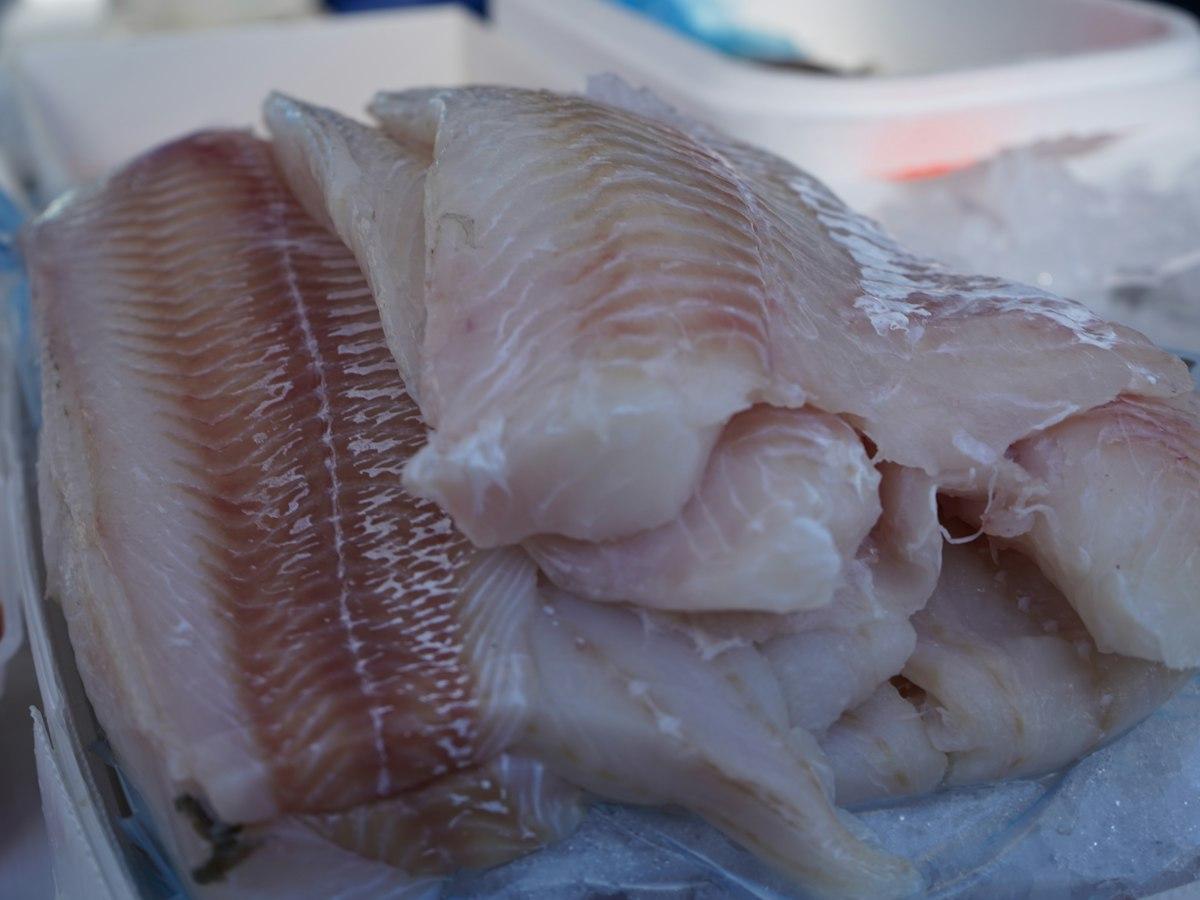
Yes, dogs can eat fish if it is thoroughly cooked, boneless and unseasoned. Lean fish such as cod has around 105 kcal per 100 g when cooked, while oily fish such as herring provides more omega-3 fatty acids. Raw fish can transmit parasites and pathogens; matjes herring, rollmops, smoked fish and fish fingers are salted, marinated or breaded. Large predatory fish such as shark or tuna contain a lot of mercury.
How much fish can your dog eat?
Enter the weight – the amount updates straight away. You can adjust age, activity and neutering below.
How the calculator works
- Daily requirement: Resting energy requirement 70 × 15 kg^0.75 ≈ 534 kcal × factor 1.6 ≈ 855 kcal.
- Treat allowance: at most 10% of that = 86 kcal for all treats combined.
- Calorie limit: 86 kcal ÷ 105 kcal/100 g = 82 g of fish.
- Guide value for dogs 10–25 kg: 3 × cube of cooked fish (approx. 2.5 cm) at 17 g each = 51 g (cautious guide value set by our editors).
- Recommendation: the smaller of the two, rounded down to half portions → 3 × 17 g = 51 g ≈ 54 kcal.
Sources: 10% rule from the WSAVA guide to treats · kcal value: USDA FoodData Central. Daily requirement as in the dog calorie calculator.
Result · 15 kg · Adult
Up to 3
× cube of cooked fish (approx. 2.5 cm) on a snack day
(≈ 51 g, 54 kcal)
How often: A small portion no more than once or twice a week, with salmon no more than once of those. All treats together should make up no more than 10% of daily calories – so fewer other treats on fish days.
Treat allowance 86 kcal (10% of 855 kcal) · 1 cube of cooked fish (approx. 2.5 cm) ≈ 17 g
Limited by: guide value
Here the guide value for dogs 10–25 kg sets the limit (cautious guide value set by our editors): at most 3 × cube of cooked fish (approx. 2.5 cm). In terms of calories, up to 82 g would be possible.
Editorial guide value with the same number of cubes as for salmon, for lean cooked fish in 17 g cubes. Oily fish such as herring has much more fat: give only half as much.
This applies if it's the only snack that day – if your dog gets other treats too, give correspondingly less.
 The app calculates recipes in grams, kcal and portions to suit your dog's weight, age, activity and allergies.
Fish for dogs: amount by weight
| Weight | Maximum per snack day | kcal |
|---|---|---|
| 5 kg | 1½ × cube of cooked fish (approx. 2.5 cm)≈ 25 g | ≈ 26 |
| 10 kg | 1½ × cube of cooked fish (approx. 2.5 cm)≈ 25 g | ≈ 26 |
| 20 kg | 3 × cube of cooked fish (approx. 2.5 cm)≈ 51 g | ≈ 54 |
| 30 kg | 6 × cube of cooked fish (approx. 2.5 cm)≈ 102 g | ≈ 107 |
| 40 kg | 6 × cube of cooked fish (approx. 2.5 cm)≈ 102 g | ≈ 107 |
- All snacks together no more than 10% of daily calories (WSAVA recommendation). If your dog gets other treats too, give correspondingly less.
- Guide value per weight class – small up to 10 kg, medium 10–25 kg, large over 25 kg: Editorial guide value with the same number of cubes as for salmon, for lean cooked fish in 17 g cubes. Oily fish such as herring has much more fat: give only half as much.
Emergency note
Swallowed a fish bone?
Fish bones are small, sharp bones, and according to the Merck Veterinary Manual bones are the most common foreign bodies in a dog's oesophagus. Call your vet if your dog has eaten fish bones or fish leftovers with bones in, and say what, how much and when. Do not induce vomiting.
Possible symptoms
- Drooling
- Gagging
- Difficulty swallowing or repeated swallowing
- Bringing food back up
- Loss of appetite, lethargy and weight loss if something stays stuck for longer
When to see a vet?
Immediately if your dog is gagging, drooling, swallowing repeatedly or bringing food back up: a fish bone may be stuck in the oesophagus. According to the Merck Veterinary Manual, a lodged foreign body should be removed immediately, because it can injure or pierce the oesophagus. If your vet isn't available, contact an emergency vet.
In an emergency: call your vet or an animal hospital
Outside opening hours, an emergency vet service or an animal hospital can help. Note down the amount, the time and the packaging, and don't try to make your dog vomit yourself. Poison information centres mainly advise on poisoning in people and only help with animals when they have capacity – the first point of contact for your dog is your vet.
What's in it
- Provides protein: cooked cod has around 23 g of protein per 100 g.
- Lean fish is low in fat: cooked cod has under 1 g of fat and 105 kcal per 100 g.
- According to the Merck Veterinary Manual, oily fish is one of the best sources of the omega-3 fatty acids EPA and DHA. Lean cod contains only around 0.16 g of them per 100 g.
What to watch out for
- Fish bones are small, sharp bones. According to the Merck Veterinary Manual, bones are the most common foreign bodies that get stuck in a dog's oesophagus; they can injure and pierce its wall.
- Fillets aren't always boneless either: according to the German food guidelines for fish, cod or saithe fillets usually still contain the pin bones, and “practically boneless” may still contain one larger bone per kg.
- According to the German Federal Institute for Risk Assessment (BfR), raw fish can contain pathogens. Raw sea fish can also carry larvae of the parasitic worm Anisakis; according to EFSA, no sea fishing area can be considered free of them. Freshwater fish can transmit the cat liver fluke, which according to ESCCAP also infects dogs.
- Some raw fish, such as freshwater fish according to the Merck Veterinary Manual, contain thiaminase. This enzyme destroys vitamin B1; if a dog eats a lot of raw fish, a deficiency can develop, with an unsteady gait and an enlarged heart. Cooking destroys the enzyme.
- According to the BfR, mercury accumulates along the food chain. Large, older predatory fish such as shark, swordfish, halibut and tuna contain the most.
- Matjes and salted herring ripen raw in salt, marinated fish such as rollmops and Bismarck herring is cured without heat in vinegar and salt, and cold-smoked fish isn't cooked through.
- Smoked fish is pre-salted, and matjes and salted herring are salted. According to the ASPCA, too much salt can cause vomiting, diarrhoea, tremors and seizures. Rollmops are also filled with onions, which damage red blood cells.
- Fish fingers are breaded and sometimes pre-fried, and other breaded fish is fried, baked or deep-fried. According to VCA, a fatty meal can trigger pancreatitis.
How to prepare fish
How to do it
- Buy fresh fish fillet and feel it for bones with your fingers before cooking
- Poach in water, steam or bake in the oven, without butter, salt or seasoning
- Cook until the flesh is no longer glassy and flakes easily with a fork
- Leave to cool, then flake it and check again for bones as you go
- The first time, give only a small piece and keep an eye on digestion
- After handling raw fish, wash your hands with soap and clean the board and knife with hot water and washing-up liquid
Better not
- Raw fish, sushi, sashimi or tartare
- Matjes, salted herring, smoked fish, rollmops and Bismarck herring
- Fish fingers, battered fish and breaded fried fish
- Tinned fish in sauce, cream or marinade
- Fish bones, fish heads and fish leftovers with bones
- Shark, swordfish, halibut and other large predatory fish
How often?
A small portion no more than once or twice a week, with salmon no more than once of those. All treats together should make up no more than 10% of daily calories – so fewer other treats on fish days.
Frequently asked questions about fish
Which fish is suitable for dogs?
Cooked, boneless fish without seasoning, for example lean cod or Alaska pollock. Oily fish such as herring provides more omega-3 fatty acids, but also much more fat; give only half as much of it. According to the BfR, shark, swordfish and halibut contain a lot of mercury. How much salmon is right is explained at doggomeal.de/en/darf-mein-hund/lachs, and why tuna only rarely goes in the bowl at doggomeal.de/en/darf-mein-hund/thunfisch.
Can dogs eat raw fish?
No. Raw sea fish can contain larvae of the parasitic worm Anisakis; according to EFSA, no sea fishing area can be considered free of them. Raw freshwater fish can transmit the cat liver fluke, which also infects dogs, and some raw fish contain thiaminase, which destroys vitamin B1. Thorough cooking kills the parasites: for Anisakis, EFSA gives more than 60 °C for at least 1 minute, and for home-prepared food ESCCAP recommends 10 minutes at a core temperature of 65 °C. This applies to sushi too: doggomeal.de/en/darf-mein-hund/sushi.
Can dogs eat matjes, salted herring or smoked fish?
No. According to the German food guidelines for fish, matjes and salted herring ripen raw in salt, without being heated. Smoked fish is pre-salted, and cold-smoked fish such as smoked salmon isn't cooked through. According to the ASPCA, too much salt can cause vomiting, diarrhoea, tremors and seizures.
Can my dog eat rollmops or Bismarck herring?
No. According to the German food guidelines for fish, marinated fish such as rollmops and Bismarck herring is cured without heat in vinegar and salt, so it isn't cooked through. Rollmops are also filled with onions, and onions damage red blood cells. More at doggomeal.de/en/darf-mein-hund/zwiebeln.
Can dogs eat fish fingers?
We advise against it. Fish fingers are breaded and sometimes pre-fried; according to the German food guidelines for fish, their fish content is at least 65%. According to VCA, a fatty meal can trigger pancreatitis. If you want to give your dog fish, cook a piece of fillet without breadcrumbs, salt or seasoning.
Can dogs eat tinned fish?
Only with caution. Tinned fish is sterilised, but it is packed in oil, its own juice, sauce or a marinade, and according to the German food guidelines for fish, marinades can contain vinegar and salt. Don't give fish in sauce, cream or a marinade. The most suitable is fish in its own juice with no added salt, well drained and with the bones removed. What applies to tinned tuna, including in oil, is explained at doggomeal.de/en/darf-mein-hund/thunfisch.
Can my dog eat fish skin?
The same rules apply to fish skin as to the fillet: only thoroughly cooked, without salt, seasoning or butter from the pan, and only a small piece. Don't give raw skin. What we say about salmon skin is at doggomeal.de/en/darf-mein-hund/lachs.
Can puppies eat fish?
Yes, but only thoroughly cooked, boneless and unseasoned, and only a small piece alongside puppy food. The Merck Veterinary Manual counts the omega-3 fatty acids EPA and DHA among the essential fatty acids during growth. Puppies shouldn't have tuna – more at doggomeal.de/en/darf-mein-hund/thunfisch.
How many calories does cooked fish have?
According to the USDA, cooked cod has 105 kcal per 100 g, so a cube of about 2.5 cm (17 g) has just under 18 kcal. For a 10 kg dog, the snack limit is just over 60 kcal a day; the guide value here is one and a half cubes. Oily fish such as herring has considerably more fat and energy.
Can my dog be allergic to fish?
Yes, it's possible, but it is reported less often than with beef, dairy or chicken. In a review of 297 dogs with food allergies, fish was a trigger in 5 dogs, beef in 102 and chicken in 45. The first time, give only a small piece. More about allergies at doggomeal.de/en/magazin/hund-mit-allergien.
Can my dog have fish oil?
Fish oil is a supplement, not a snack. According to the Merck Veterinary Manual, oily fish, krill oil and algae oil are the best sources of the omega-3 fatty acids EPA and DHA. What applies to fish oil and other oils for dogs is explained at doggomeal.de/en/darf-mein-hund/oel.
My dog has eaten raw fish – what should I do?
Tell your vet which fish it was and where it came from. They will decide whether a faecal test or a worming treatment makes sense: according to ESCCAP, dogs that eat raw fish are at higher risk of worm infections. If it was raw salmon, also read doggomeal.de/en/darf-mein-hund/lachs.
Can I feed my dog only fish?
No. Fish alone isn't a complete diet: according to the Merck Veterinary Manual, calcium deficiency is often linked to food made up almost entirely of meat, liver, fish or poultry. If you cook for your dog yourself, the DoggoMeal app works out the amounts to suit the recipe. Which protein sources are suitable is explained at doggomeal.de/en/magazin/welches-fleisch-ist-am-besten-fuer-hunde.
Recipes with fish

Similar foods
- In moderationFishSalmonOnly cooked through, boneless and unseasoned, no more than once a week.See the answer
- In moderationFishTunaOnly rarely and a little: light tinned tuna in water, no added salt; not in oil, not raw.See the answer
- Not neededFishSushiUsually raw fish, plus rice with sugar, salt and vinegar, and salty soy sauce.See the answer
- YesOtherOilSalmon, flaxseed and rapeseed oil add fatty acids. Keep it small: no frying fat, no essential oils.See the answer
- YesGrains & sidesRiceOnly cooked and without salt, stock or seasoning, as a small extra portion with the food.See the answer
- In moderationVegetablesPotatoOnly cooked and peeled; raw, green and sprouting potatoes contain solanine.See the answer
Sources
- Nutritional Requirements of Small Animals – Merck Veterinary Manual
- Esophageal Foreign Bodies in Small Animals – Merck Veterinary Manual
- People Foods to Avoid Feeding Your Pets – ASPCA Animal Poison Control Center
- Pancreatitis in Dogs – VCA Animal Hospitals
- Bekämpfung von Würmern (Helminthen) bei Hunden und Katzen – Deutsche Adaption der ESCCAP-Empfehlung Nr. 1 (08/2025) – ESCCAP (European Scientific Counsel Companion Animal Parasites)
- Critically appraised topic on adverse food reactions of companion animals (2): common food allergen sources in dogs and cats (BMC Vet Res 2016) – Mueller, Olivry, Prélaud – PubMed Central
- Verbrauchertipps: Schutz vor Lebensmittelinfektionen im Privathaushalt – Bundesinstitut für Risikobewertung (BfR)
- Methylquecksilber: Warum Schwangere und Stillende manche Arten von Fisch meiden sollten – Bundesinstitut für Risikobewertung (BfR)
- EFSA bewertet Parasiten bei Fisch (14. April 2010) – Europäische Behörde für Lebensmittelsicherheit (EFSA)
- Leitsätze für Fisch und Fischerzeugnisse (Deutsches Lebensmittelbuch, Stand August 2026) – Deutsche Lebensmittelbuch-Kommission (BMLEH)
- Fish, cod, Atlantic, cooked, dry heat (SR Legacy, FDC 171956) – USDA FoodData Central (kcal value)
- Feeding treats to your dog – WSAVA Global Nutrition Committee (10% rule in the calculator)
Updated: · DoggoMeal editorial team
This page is no substitute for veterinary advice. Dogs with pre-existing conditions – for example of the kidneys, liver or pancreas, or with diabetes – and dogs with allergies often need their own rules. If your dog has symptoms or you're unsure, ask your vet.
Recipes that fit your dog
DoggoMeal is an app for iPhone and Android: you create a profile for your dog, choose a recipe, and the app calculates grams, kcal and portions to suit your dog's weight, age, activity and allergies.
- Dog profile
- Recipes with gram amounts
- Allergy warnings
- Cooking with video
Free · no subscription · every feature included