Can dogs drink alcohol?
Can my dog drink alcohol?No
Alcohol is toxic to dogs, including in chocolates, desserts and raw yeast dough.
No, dogs must not drink alcohol, not even a sip of beer, wine or sparkling wine. Alcohol passes into the blood quickly and, according to the Merck Veterinary Manual, can cause vomiting, staggering, drowsiness and laboured breathing within 30 to 60 minutes, and in severe cases hypothermia, seizures and coma. Rum balls, liqueur chocolates, desserts with alcohol and raw yeast dough are dangerous too. If your dog has got hold of alcohol, call your vet immediately.

Emergency
Has your dog drunk alcohol?
Call your vet, the emergency vet service or an animal hospital immediately, even if your dog still seems fine. Say what it got hold of (drink, chocolate, dessert, dough), roughly how much, when, and how heavy your dog is, and take the bottle, packaging or recipe with you. Alcohol acts quickly, so every minute counts. Whether vomiting makes sense is for your vet to decide: according to Merck, it only helps in the first 20 to 40 minutes and only while your dog is not yet showing any signs. Don't try to make your dog vomit yourself, and don't give any home remedies.
Possible symptoms
- Vomiting and diarrhoea
- Drooling
- Staggering, swaying and disorientation
- Tiredness and drowsiness
- Trembling
- Excessive thirst and frequent urination
- Slow breathing or laboured breathing
- Hypothermia, weakness and collapse
- Seizures or coma
When to see a vet?
Immediately – don't wait for symptoms. According to Merck, the signs usually begin 30 to 60 minutes after drinking, according to VCA within 15 to 90 minutes, and they can get worse quickly. If your vet can't be reached, go to the emergency vet service or an animal hospital. With prompt treatment the outlook is excellent according to VCA, and according to CliniTox mild cases settle within 24 hours under monitoring.
From what amount?
The sources don't give a safe amount, and according to Pet Poison Helpline even small amounts can cause poisoning. CliniTox (University of Zurich) gives 5 to 8 ml of pure alcohol per kg of body weight as the lowest lethal oral dose in dogs. For a 10 kg dog that works out at 50 to 80 ml of pure alcohol, the amount contained in 125 to 200 ml of a drink with 40% ABV. This calculation is no reassurance for smaller amounts: according to Pet Poison Helpline, how severe the poisoning is depends on the amount, and small amounts can make a dog ill too. So call straight away rather than doing the maths yourself.
In an emergency: call your vet or an animal hospital
Outside opening hours, an emergency vet service or an animal hospital can help. Note down the amount, the time and the packaging, and don't try to make your dog vomit yourself. Poison information centres mainly advise on poisoning in people and only help with animals when they have capacity – the first point of contact for your dog is your vet.
What to watch out for
- Alcohol is absorbed very quickly from the stomach and gut. According to Merck, the first signs usually begin 30 to 60 minutes after drinking, and according to Pet Poison Helpline sometimes within just a few minutes.
- Even small amounts can poison a dog. According to Pet Poison Helpline, a dog's body is quickly overwhelmed when breaking down alcohol because of its size. The toxic amount depends on body weight, so it takes less to poison a small dog than a large one.
- Alcohol depresses the brain and breathing and lowers blood sugar, blood pressure and body temperature. According to Merck, fatal poisoning is usually due to respiratory failure, hypothermia, low blood sugar or the blood becoming too acidic.
- If a drowsy dog vomits, it can inhale the vomit and develop pneumonia. Merck and Pet Poison Helpline both point this out.
- Wine and sparkling wine are made from grapes, and beer is brewed with hops. According to Pet Poison Helpline, grapes and hops are the most dangerous ingredients in alcoholic drinks for dogs.
- Alcohol is not only found in drinks: VCA and Pet Poison Helpline list sweets with liqueur fillings, desserts with alcohol, rotten fruit and raw yeast dough. Rum balls, eggnog liqueur and fruit from a rum pot belong on that list too.
- Raw yeast dough is doubly dangerous: it keeps rising in the warm stomach, bloats it and can make it twist, and the yeast produces alcohol in the process. According to Merck, when this kind of poisoning is fatal, it is usually because of the alcohol rather than the bloating.
- Hand sanitiser, mouthwash and some liquid medicines also contain alcohol. Rubbing alcohol and some flea sprays contain isopropanol, which according to Merck is twice as toxic as drinking alcohol.
How to protect your dog from alcohol
How to prevent it
- Never leave glasses, bottles or cans unattended on the coffee table, the patio or the floor
- At Christmas and New Year's Eve, keep sparkling wine, punch, mulled wine and eggnog liqueur out of reach and clear away leftovers straight away
- Store rum balls, liqueur chocolates and the rum pot high up and closed
- Let yeast dough rise only where your dog can't get to it
- Ask guests not to give your dog anything from their glass or dessert
- Keep hand sanitiser, mouthwash and rubbing alcohol closed and out of reach
Never
- Alcohol for fun or to calm your dog down, not even a sip of beer
- A glass or dessert bowl to lick out
- Waiting after your dog has drunk something to see whether it starts staggering
- Making your dog vomit yourself, for example with salt water or a finger down the throat
- Charcoal tablets, milk or other home remedies
- Leaving a drowsy dog alone to sleep it off
How often?
Never – not even a sip from a glass, a rum ball or a piece of raw yeast dough.
Frequently asked questions about alcohol
My dog drank a sip of beer – is that bad?
Call your vet either way. How strongly a sip affects your dog depends on the amount, the alcohol content and your dog's weight, and according to Pet Poison Helpline even small amounts can cause poisoning. Beer also contains hops, which Pet Poison Helpline counts, together with grapes, among the most dangerous ingredients in alcoholic drinks. Don't wait to see whether your dog starts staggering.
Are wine, sparkling wine and mulled wine more dangerous than beer?
The more alcohol a drink contains, the less it takes to cause poisoning. Wine, sparkling wine and mulled wine are also made from grapes, which according to Pet Poison Helpline are among the most dangerous ingredients in alcoholic drinks. Grapes can damage a dog's kidneys, more on this at doggomeal.de/en/darf-mein-hund/weintrauben. Call your vet whatever the drink.
Are rum balls and chocolates with alcohol dangerous?
Yes. VCA and Pet Poison Helpline specifically name sweets with liqueur or alcohol fillings as a cause of alcohol poisoning. If they contain chocolate or cocoa, its methylxanthines come on top, which according to the ASPCA can cause vomiting, abnormal heart rhythm and seizures, among other things, more at doggomeal.de/en/darf-mein-hund/schokolade. Take the packaging with you when you call your vet.
Can dogs have eggnog liqueur, tiramisu or other desserts with alcohol?
No. According to the ASPCA, alcoholic drinks and foods containing alcohol can cause vomiting, diarrhoea, incoordination, difficulty breathing, tremors, coma and even death. Eggnog liqueur is a liqueur, and tiramisu and fruit from a rum pot can contain alcohol. If there is coffee in it, caffeine comes on top, more at doggomeal.de/en/darf-mein-hund/kaffee. Call your vet and tell them the recipe and the amount.
My dog ate raw yeast dough or stollen dough – what should I do?
This is an emergency: call immediately and take your dog to the vet or an animal hospital. The dough keeps rising in the warm stomach and bloats it, and the yeast produces alcohol in the process. A case report in the veterinary journal Kleintierpraxis describes a Labrador that had to be treated for acute alcohol poisoning after eating raw stollen dough. More on dough at doggomeal.de/en/darf-mein-hund/brot.
What about stollen, rum-soaked raisins and rum pot fruit?
If raisins or fruit have been soaked in rum, there is a second risk alongside the alcohol: raisins can damage a dog's kidneys, and according to the ASPCA tartaric acid is suspected to be the cause. So call your vet immediately, even if it was only one piece. More on this at doggomeal.de/en/darf-mein-hund/stollen.
Are hops toxic to dogs, for example when brewing beer at home?
Yes. According to Pet Poison Helpline, used hops from brewing can quickly cause a life-threatening high fever in dogs, with panting, a racing heart, vomiting, seizures and death. Breeds at higher risk include the Greyhound, Labrador Retriever, Saint Bernard, Pointer breeds, Dobermann, Border Collie and American Cocker Spaniel. Store hops and brewing waste securely, and call immediately if your dog has eaten any.
My dog licked hand sanitiser or mouthwash – does that count too?
Yes. VCA lists hand sanitiser, mouthwash and some liquid medicines as sources of alcohol. Rubbing alcohol, some disinfectants and flea sprays contain isopropanol, which according to Merck is twice as toxic as drinking alcohol. Call your vet and keep the bottle to hand.
How quickly does alcohol affect a dog?
Quickly. According to Merck, the signs usually begin 30 to 60 minutes after drinking, according to VCA within 15 to 90 minutes. According to Merck, alcohol reaches its highest level in the blood after 1.5 to 2 hours, so things can get worse until then. So don't wait – call straight away.
Can I make my dog vomit or give it charcoal tablets myself?
No. A drowsy dog can inhale vomit and develop pneumonia, as Merck and Pet Poison Helpline point out. Because alcohol is absorbed so quickly, CliniTox advises against inducing vomiting even at the vet, and Merck considers it useful only in the first 20 to 40 minutes in dogs without signs. According to Merck, activated charcoal hardly binds alcohol, and CliniTox calls it useless.
How does a vet treat alcohol poisoning?
There is no antidote. The vet stabilises breathing and circulation, keeps your dog warm, corrects low blood sugar and fluid loss with a drip and monitors your dog until it has recovered. Seizures are treated with medication. According to Merck, most dogs respond well to this treatment.
Can puppies have alcohol?
No, not even a drop. Puppies weigh little, and the toxic amount depends on body weight: for a 3 kg puppy, the lowest lethal amount based on the CliniTox figures would work out at just 15 to 24 ml of pure alcohol. Smaller amounts can make it ill too. Call your vet immediately whatever the amount.
What should I watch out for at New Year's Eve and Christmas?
Glasses at dog height. Pet Poison Helpline describes exactly this situation: a glass is left on the coffee table for a moment, and afterwards it is half empty. Clear away glasses and leftovers straight away and ask guests not to share anything. What your dog can eat over the holidays is at doggomeal.de/en/magazin/was-duerfen-hunde-an-weihnachten-essen.
Why do dogs tolerate alcohol worse than people?
According to Pet Poison Helpline, dogs absorb alcohol much faster than people because they are smaller, and their bodies are quickly overwhelmed when breaking it down. Alcohol then depresses the brain and breathing and lowers blood sugar and body temperature. Which other foods are toxic is at doggomeal.de/en/magazin/giftige-lebensmittel-fuer-hunde.
Similar foods
- NoSweetsChocolateThe theobromine and caffeine in chocolate can cause vomiting, a racing heart and seizures.See the answer
- NoSweetsStollenThe raisins in stollen can cause acute kidney failure in dogs.See the answer
- Not neededGrains & sidesBreadPlain bread isn't toxic, but it's salted and often made from white flour. Raw dough is dangerous.See the answer
- NoOtherCoffeeThe caffeine in coffee can cause restlessness, a racing heart, trembling and seizures in dogs.See the answer
- NoSweetsXylitol (birch sugar)Even a little xylitol can drop a dog's blood sugar dangerously and damage the liver.See the answer
- NoFruitGrapesGrapes and raisins can cause acute kidney failure in dogs.See the answer
Sources
- Toxicoses From Alcohols in Animals – Merck Veterinary Manual
- Bread Dough Toxicosis in Animals – Merck Veterinary Manual
- Alcohol Poisoning – VCA Animal Hospitals
- People Foods to Avoid Feeding Your Pets – ASPCA Animal Poison Control Center
- Is Wine Bad for Dogs? – Pet Poison Helpline
- Should Dogs Drink Alcohol? – Pet Poison Helpline
- What Happens If My Dog Drank Alcohol? – Pet Poison Helpline
- Hops – Pet Poison Helpline
- Vergiftungen Kleintier: Alkohole – CliniTox, Institut für Veterinärpharmakologie und -toxikologie, Universität Zürich
- Akute Alkoholvergiftung eines Labrador Retriever nach Aufnahme von rohem Stollenteig (Kleintierpraxis 59, 608-611, 2014) – Kleintierpraxis (M. & H. Schaper), Kühne T, Meisinger H-C
Updated: · DoggoMeal editorial team
This page is no substitute for veterinary advice. Dogs with pre-existing conditions – for example of the kidneys, liver or pancreas, or with diabetes – and dogs with allergies often need their own rules. If your dog has symptoms or you're unsure, ask your vet.
Recipes that fit your dog
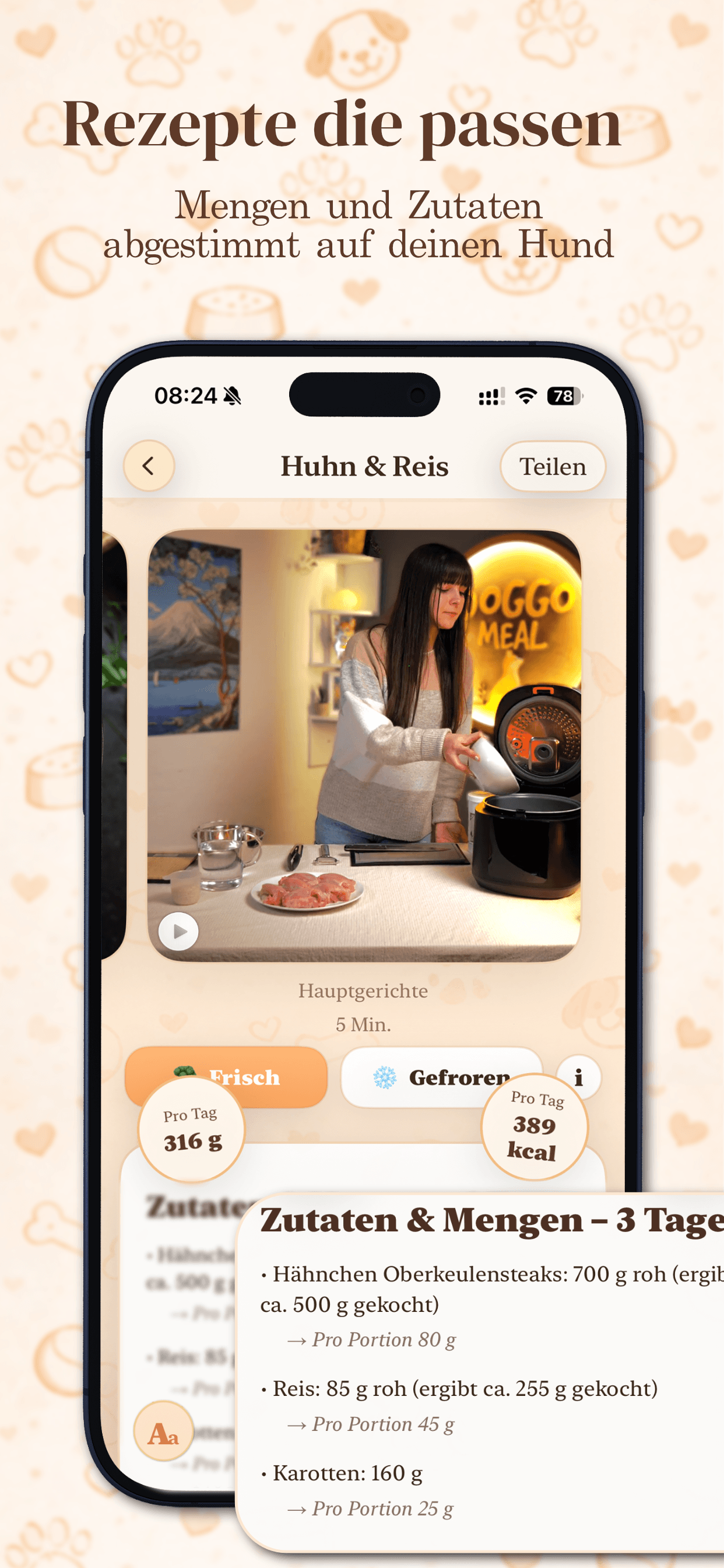
DoggoMeal is an app for iPhone and Android: you create a profile for your dog, choose a recipe, and the app calculates grams, kcal and portions to suit your dog's weight, age, activity and allergies.
- Dog profile
- Recipes with gram amounts
- Allergy warnings
- Cooking with video
Free · no subscription · every feature included