Can dogs drink coffee?
Can my dog drink coffee?No
The caffeine in coffee can cause restlessness, a racing heart, trembling and seizures in dogs.
No, coffee is toxic to dogs. It contains caffeine, which dogs are more sensitive to than people: restlessness, vomiting, a racing heart, trembling and seizures are possible, usually within 1 to 2 hours. Coffee beans, ground coffee and caffeine tablets are the most dangerous. If your dog got hold of coffee, call your vet immediately – they will decide whether watching your dog is enough.

Emergency
Has your dog got hold of coffee, coffee beans or caffeine?
Call your vet, the emergency vet service or an animal hospital immediately, even if your dog still seems calm. Say what it got hold of (coffee, espresso, beans, ground coffee, pods, tea, energy drink, tablets), how much, when, and how heavy your dog is, and take the packaging or leftovers with you. The vet will decide whether watching your dog is enough or whether to induce vomiting, give activated charcoal and monitor the heart and circulation. Don't try to make your dog vomit yourself and don't give it anything, no salt and no home remedies.
Possible symptoms
- Restlessness, hyperactivity and panting, usually within 1 to 2 hours
- Vomiting and diarrhoea
- Excessive thirst and frequent urination
- Racing or irregular heartbeat and high blood pressure
- Raised body temperature
- Trembling and muscle twitching
- Wobbly gait and weakness
- Seizures and collapse
When to see a vet?
Immediately – don't wait for symptoms. According to Pet Poison Helpline, the caffeine has already been absorbed by the time visible symptoms appear, and the earlier treatment starts, the better. The vet can induce vomiting and give activated charcoal, which binds the caffeine. In mild cases the dog often stays at the practice for the day, in severe cases for a few days according to VCA. If your vet can't be reached, call the emergency vet service or an animal hospital.
From what amount?
According to the Merck Veterinary Manual, mild symptoms are possible from about 20 mg of methylxanthines (caffeine and theobromine) per kg of body weight, heart problems from 40 to 50 mg/kg and seizures from 60 mg/kg. A 10 kg dog reaches 20 mg/kg, which is 200 mg of caffeine, with just over 2 cups of filter coffee (90 mg each according to the BfR) or 2.5 espressos (80 mg each), and a 5 kg dog with just over 1 espresso. Beans, ground coffee and tablets pack far more caffeine into a small amount than brewed coffee, and dogs differ in how sensitive they are. This calculation is therefore not an all-clear: if it was more than a sip, call your vet immediately.
In an emergency: call your vet or an animal hospital
Outside opening hours, an emergency vet service or an animal hospital can help. Note down the amount, the time and the packaging, and don't try to make your dog vomit yourself. Poison information centres mainly advise on poisoning in people and only help with animals when they have capacity – the first point of contact for your dog is your vet.
What to watch out for
- Like the theobromine in chocolate, caffeine is a methylxanthine. It stimulates the nervous system and the heart, speeds up the pulse and makes the kidneys produce more urine. According to VCA, dogs are more sensitive to caffeine than people.
- According to the Merck Veterinary Manual, mild symptoms such as vomiting, diarrhoea and excessive thirst are possible from about 20 mg of methylxanthines per kg of body weight, heart problems from 40 to 50 mg/kg and seizures from 60 mg/kg. The dose at which half of dogs die is 100 to 200 mg/kg for caffeine, but severe symptoms and death are also possible at much lower doses.
- How much caffeine it contains depends on the form. According to the BfR, a cup of filter coffee (200 ml) contains about 90 mg, an espresso (60 ml) about 80 mg, a can of energy drink (250 ml) 80 mg, a cup of black tea (200 ml) 45 mg, green tea (200 ml) 30 mg and a can of cola (330 ml) 35 mg.
- According to Pet Poison Helpline, unbrewed beans and ground coffee are considerably stronger than brewed coffee. Used coffee grounds from the bin or compost still contain caffeine too, although less.
- Caffeine tablets and diet pills are particularly dangerous: according to VCA, even one or two caffeine tablets can be fatal for small dogs, and according to Pet Poison Helpline, poisonings with caffeine tablets are often fatal.
- According to Pet Poison Helpline, symptoms usually start 1 to 2 hours after ingestion and last 12 to 36 hours, and according to VCA up to several days in severe cases. According to Merck, caffeine has a half-life of 4.5 hours in dogs.
- Small, old and ill dogs are at greater risk: according to VCA, a large, young, healthy dog has a better outlook than a small, old dog with kidney problems. Caffeine can damage the liver, heart, kidneys and nervous system.
- According to VCA, many caffeinated products contain other stimulants such as guarana that add to the effect. Chocolate-covered coffee beans are doubly dangerous because theobromine comes on top of the caffeine, and sweets or chewing gum can also contain xylitol.
How to protect your dog from coffee
How to prevent it
- Keep coffee beans, ground coffee, pods and capsules in closed tins and cupboards
- Throw away coffee grounds in a closed bin or compost bin your dog can't get into
- Don't leave cups and mugs unattended on the coffee table or on the floor
- Keep energy drinks, caffeine tablets, diet and pre-workout powders out of reach, including in gym bags and rucksacks
- Ask family and guests not to share coffee or coffee sweets with your dog
- If your dog has got hold of something: keep the packaging and note what is missing and when it happened
Never
- Coffee, espresso, cappuccino or latte, not even a sip from the cup
- Black or green tea, matcha, cola and energy drinks
- Tiramisu, coffee ice cream, coffee liqueur and chocolate-covered coffee beans
- Waiting after your dog has drunk or eaten it to see whether symptoms appear
- Making your dog vomit yourself, with salt, salt water or a finger down the throat
- Milk, charcoal tablets or other home remedies poured into your dog
How often?
Never – not a sip of coffee, no tea, no cola, no energy drink and not a single coffee bean.
Frequently asked questions about coffee
My dog drank a sip of coffee or cappuccino – is that bad?
Usually not: according to VCA, a sip probably won't harm most dogs. According to Pet Poison Helpline, a latte with lots of milk is weaker than a black espresso. Call your vet anyway if it was more than a sip or an espresso, or if your dog is small, and give the type, amount and weight. Whether milk is suitable for dogs is explained at doggomeal.de/en/darf-mein-hund/milch.
Are coffee beans toxic to dogs?
Yes. According to Pet Poison Helpline, whole and ground beans are considerably stronger than brewed coffee. Whether even one bean becomes a problem depends on your dog's weight and the type: espresso and dark roast beans tend to contain more caffeine. Chocolate-covered coffee beans are doubly dangerous, more on chocolate at doggomeal.de/en/darf-mein-hund/schokolade. Call your vet in any case.
Are coffee grounds dangerous for dogs?
Yes. According to Pet Poison Helpline, used coffee grounds still contain caffeine, although less than fresh ground coffee. Dogs like the smell and quickly eat them from the bin or compost. So throw coffee grounds away where your dog can't get at them, and call your vet if it has eaten some.
Are coffee pods and capsules dangerous for dogs?
Yes. According to Pet Poison Helpline, pods and capsules contain caffeine too, and dogs can easily bite through them. So keep them in a closed cupboard. If your dog has chewed a capsule or pod, call your vet and take the packet with you.
Is decaffeinated coffee safe for dogs?
Not entirely. According to Pet Poison Helpline, decaffeinated coffee still contains a small amount of caffeine that can cause symptoms if a lot is consumed. So don't give it to your dog either. If your dog has drunk a whole cup or more, ask your vet.
Can dogs drink tea or matcha?
Not black or green tea, and not matcha either: they contain caffeine. According to the BfR, a cup of black tea (200 ml) contains about 45 mg and green tea about 30 mg. According to the Bavarian Health and Food Safety Authority (LGL), matcha is ground green tea, and a matcha made with 1 to 2 g of powder contained 13 to 68 mg of caffeine in its samples. According to Pet Poison Helpline, decaffeinated tea is not toxic, but the best drink for dogs is still fresh water.
Can dogs eat tiramisu?
No. Tiramisu is soaked in coffee or espresso, and according to Pet Poison Helpline coffee desserts contain caffeine. If there is liqueur or Marsala in it, alcohol comes on top, more on this at doggomeal.de/en/darf-mein-hund/alkohol. If your dog has got hold of a piece, call your vet and give the amount.
Can dogs drink cola or energy drinks?
No. According to the BfR, a can of cola (330 ml) contains about 35 mg of caffeine and a can of energy drink (250 ml) about 80 mg, as much as an espresso. According to VCA, energy drinks often contain a lot of caffeine and sometimes other stimulants such as guarana. If your dog got hold of more than a sip, call your vet.
How long does caffeine poisoning last in dogs?
According to Pet Poison Helpline, symptoms usually start 1 to 2 hours after ingestion and last 12 to 36 hours, and according to VCA up to several days in severe cases. According to Merck, caffeine has a half-life of 4.5 hours in dogs, theobromine from chocolate 17.5 hours. Watching your dog is no substitute for calling the vet.
How is caffeine poisoning treated?
The vet can induce vomiting and give activated charcoal, which binds the caffeine. After that, depending on the type and amount, come fluids into a vein, heart medication and medicines against seizures. According to VCA, mild cases usually stay at the practice for the day, severe ones for a few days.
What about caffeine tablets, painkillers and pre-workout powder?
They are particularly dangerous. According to VCA, even one or two caffeine tablets can be fatal for small dogs. Caffeine is also found in diet pills, some painkillers, cold and migraine medicines, pre-workout powders and some herbal supplements. Call your vet immediately and take the packet with you.
Why do dogs tolerate coffee worse than people?
According to Pet Poison Helpline, dogs process caffeine very differently from people, and according to VCA they are more sensitive to it. Caffeine blocks certain receptors in the cells, which stimulates the brain and heart and makes the kidneys produce more urine. Which other foods are toxic is explained at doggomeal.de/en/magazin/giftige-lebensmittel-fuer-hunde, and what applies to xylitol in sweets at doggomeal.de/en/darf-mein-hund/xylit.
What can dogs drink instead?
Fresh water. According to Pet Poison Helpline, fresh water is always the best and safest choice for dogs. Coffee, black and green tea, cola and energy drinks don't belong in the bowl.
Similar foods
- NoSweetsChocolateThe theobromine and caffeine in chocolate can cause vomiting, a racing heart and seizures.See the answer
- NoSweetsXylitol (birch sugar)Even a little xylitol can drop a dog's blood sugar dangerously and damage the liver.See the answer
- NoOtherAlcoholAlcohol is toxic to dogs, including in chocolates, desserts and raw yeast dough.See the answer
- Not neededDairyMilkNot toxic, but milk can cause diarrhoea. The right drink is fresh water.See the answer
Sources
- Chocolate Toxicosis in Animals (methylxanthines: theobromine and caffeine) – Merck Veterinary Manual
- Caffeine Toxicity in Pets – VCA Animal Hospitals
- My Dog Ate a Coffee Bean, What Should I Do? – Pet Poison Helpline
- Kitchen Toxins To Pets – Pet Poison Helpline
- The Dark Side of Chocolate: Chocolate and Caffeine Toxicity in Pets – Pet Poison Helpline
- Can Dogs Drink Tea? – Pet Poison Helpline
- People Foods to Avoid Feeding Your Pets – ASPCA Animal Poison Control Center
- Salt Toxicosis in Animals – Merck Veterinary Manual
- Kaffee, Energy Drinks oder Koffeinpulver: Muntermacher mit gesundheitlichen Risiken? (FAQ vom 5. Januar 2026) – Bundesinstitut für Risikobewertung (BfR)
- Untersuchung des Trendgetränks Matcha-Tee – Bayerisches Landesamt für Gesundheit und Lebensmittelsicherheit (LGL)
Updated: · DoggoMeal editorial team
This page is no substitute for veterinary advice. Dogs with pre-existing conditions – for example of the kidneys, liver or pancreas, or with diabetes – and dogs with allergies often need their own rules. If your dog has symptoms or you're unsure, ask your vet.
Recipes that fit your dog
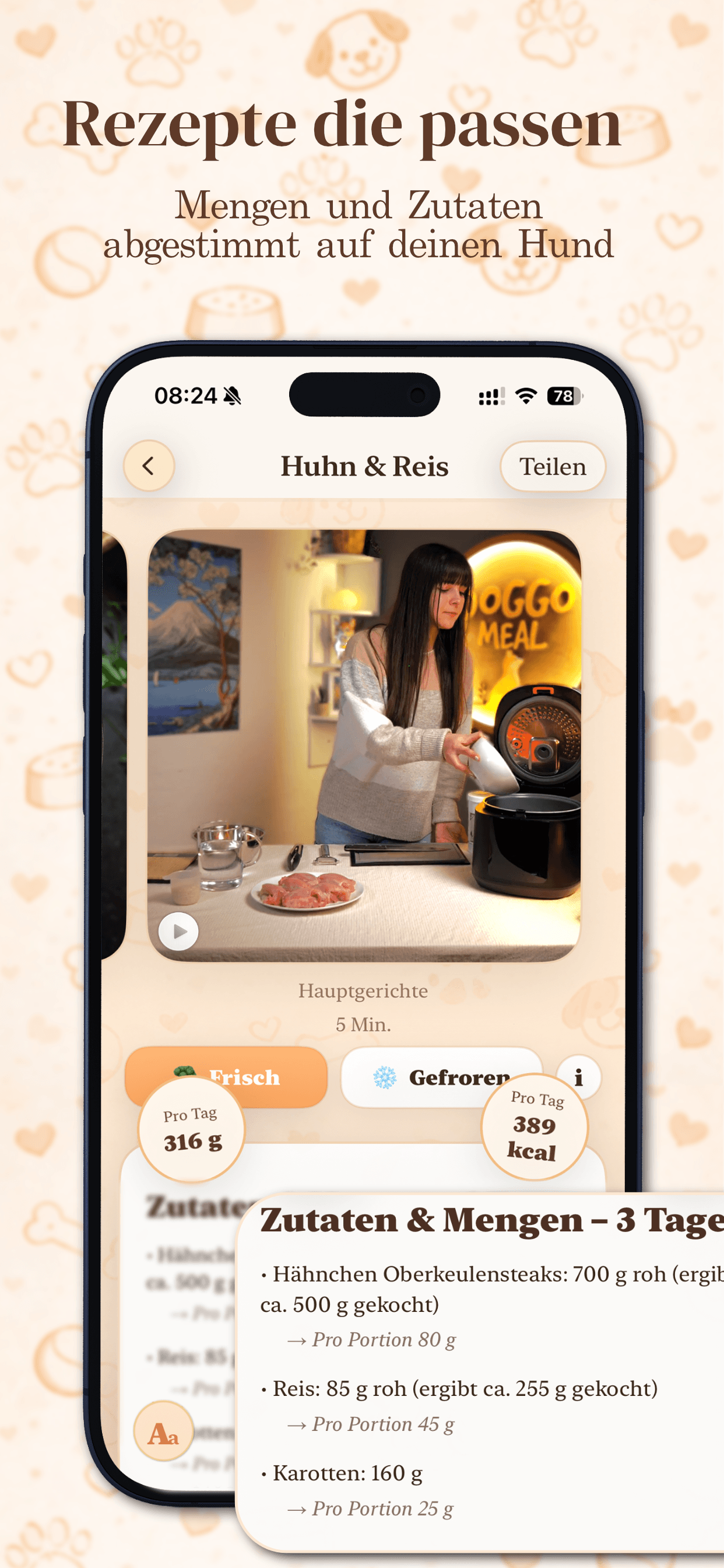
DoggoMeal is an app for iPhone and Android: you create a profile for your dog, choose a recipe, and the app calculates grams, kcal and portions to suit your dog's weight, age, activity and allergies.
- Dog profile
- Recipes with gram amounts
- Allergy warnings
- Cooking with video
Free · no subscription · every feature included