Dogs on New Year’s Eve: raclette and fondue foods to avoid
Raclette, fondue, fizz, grapes, firework debris: what your dog must not eat on New Year’s Eve, plus chew ideas from food. For 10 kg: 63 kcal of extras.
By the DoggoMeal editorial teamPublished 7 min read

In short
It's best if your dog gets nothing from the New Year's Eve table. Dangerous are cheese fondue made with white wine and kirsch, sparkling wine and any other alcohol, onions and garlic from raclette pans, broth and dips, grapes and raisins, chocolate, lead from lead pouring and unexploded fireworks. Raclette cheese, sausage, ham, bread and nuts are not toxic, but they are fatty, salty or seasoned and therefore not needed. Instead of table scraps, give chewing and licking enrichment made from part of the daily ration, with all extras together under 10% of daily calories.
It's best if your dog gets nothing from the New Year's Eve table: dangerous are cheese fondue made with white wine and kirsch, sparkling wine, punch and any other alcohol, onions and garlic from raclette pans, broth and dips, grapes and raisins, chocolate, lead from lead pouring and unexploded fireworks. Raclette cheese, sausage, ham, bread and nuts are not toxic, but they are fatty, salty or seasoned and therefore not good for your dog. If you want to share, make it a piece of peeled jacket potato without salt or butter or a small cube of cold, unseasoned cheese.
If your dog has already got hold of something, skip straight to What to do if your dog eats something toxic.
Look it up
A food is missing? Our “Can my dog eat …?” pages tell you for each food whether it's allowed, what you need to remove first and how much suits your dog's weight.
Raclette, fondue and fizz: the overview
In moderation = rarely and a little. Not needed = not toxic, but better not to feed. No = don't feed. The linked names lead to the individual pages.
This overview doesn't replace veterinary advice. Dogs with pre-existing conditions, for example of the pancreas, kidneys or liver, often need their own rules.
Why raclette and fondue are tricky for dogs
Fat: According to the ASPCA, a lot of fat, for example from nuts, can cause vomiting and diarrhoea, and in some animals pancreatitis. The Merck Veterinary Manual names eating something that isn't part of a dog's usual food as a common risk factor for it in dogs. In severe cases, loss of appetite, vomiting, weakness, abdominal pain and diarrhoea are the most common signs. Some dogs show abdominal pain with the prayer position: front paws on the ground, hindquarters up.
Salt: According to the ASPCA, a lot of salt makes your dog thirsty and urinate more. Salt poisoning can cause vomiting, diarrhoea, lethargy, tremors and seizures, and in the worst case it is fatal.
Alcohol in fondue: According to the ASPCA, alcohol enters the blood quickly and can cause vomiting, diarrhoea, staggering, drowsiness, breathing problems and tremors, and in the worst case coma and death.
Onions and garlic: According to the ASPCA, they irritate the stomach and gut and damage red blood cells, which can lead to anaemia.
Calories: According to WSAVA, just 28 g of Cheddar has around 120 kcal, almost twice the entire 63 kcal daily extras budget of a 10 kg dog.
Lead pouring, crackers and firework debris
- Lead and wax pouring: Whether lead, tin or wax, put figures, leftovers and the pouring spoon away straight away. Lead is toxic: according to the Merck Veterinary Manual, dogs are among the animals in which lead poisoning is most common. Acute poisoning shows as loss of appetite, changes in behaviour, staggering, tremors and seizures.
- Christmas crackers and table decorations: Paper, confetti and small toys don't belong in a dog's mouth. Collect everything before your dog finds it.
- Fireworks: According to Pet Poison Helpline, freshly lit fireworks burn paws, lips, nose and mouth. If a dog eats an unexploded firework, gastrointestinal upset, damage to the kidneys, liver or bone marrow and seizures are possible, depending on what it contains.
What to do if your dog eats something toxic
- Take it away and write down what your dog ate, how much and when. Take the packaging, ingredient list or leftovers with you to the practice.
- Call your vet practice or the emergency vet straight away for alcohol, cheese fondue, onions, garlic, grapes, raisins, chocolate, macadamia nuts, lead or fireworks, even if your dog still seems perky.
- Don't make your dog vomit and don't give anything before you've spoken to the practice, not even milk. That's the advice from Pet Poison Helpline. Alcohol is off limits for dogs in any form, including as a home remedy.
- Don't leave your dog alone: stay with them until the practice gives the all-clear.
If your dog has eaten a larger amount of cheese, fat or sausage, call as well. With vomiting, diarrhoea, abdominal pain, the prayer position or if they stop eating, they need to see the vet. Look up the number of the emergency vet before New Year's Eve, as your practice may be closed on New Year's Day.
Chewing and licking: enrichment from their food
Instead of table scraps, your dog gets their own New Year's Eve plate. According to WSAVA, treats provide enrichment and mental stimulation. The easiest way is to take part of the daily ration and subtract it from the meal, so nothing extra is added. From a filled toy, the food isn't gone in a minute, and many dogs keep busy with it for longer.
- Filled food toy: press in soaked dry food, wet food or home-cooked food, and frozen it takes longer. Ideas are in the guide How to fill a food toy.
- Lick mat: spread thinly with wet food or mashed, cooked and peeled pumpkin without seasoning. Recipes are in How to fill a lick mat.
- Snuffle mat: hide part of the dry food between the fabric strips.
- A biscuit: for example a Christmas biscuit to cut out made from apple, carrot, egg and wholemeal flour, or a cube of the low-calorie treats with courgette. More recipes are in Homemade dog biscuits. Biscuits made with flour remain an extra: only rarely, in small amounts or on special occasions.
No bones, no antlers, no hooves: according to WSAVA, bones, cooked or raw, can cause serious damage, and very hard chews are best avoided. Stay with your dog while they chew or lick, and choose pieces they can't choke on.
How much: According to WSAVA, all extras together stay under 10% of daily calories. For an adult, neutered, normally active dog weighing 10 kg, the DoggoMeal calculator gives a daily need of around 630 kcal, so 63 kcal for extras. For 20 kg it's around 1,060 kcal and 106 kcal for extras. The calorie needs calculator shows the value for your dog.
Keeping New Year's Eve safe
- Table and glasses out of reach: don't leave raclette pans, the fondue pot, skewers, the cheese board or glasses at dog height, and clear away leftovers straight away.
- Brief your guests: ask your guests not to give your dog anything from the table.
- Bin closed: leftovers, skewers and packaging belong in a bin with a lid.
- Walk before the fireworks: go for the evening walk before they start and keep your dog on the lead. According to Pet Poison Helpline, the noise of fireworks can frighten dogs so much that they run away.
- New Year's morning: firework debris and duds lie on the pavements. Lead your dog past them on the lead and don't let them eat any of it.
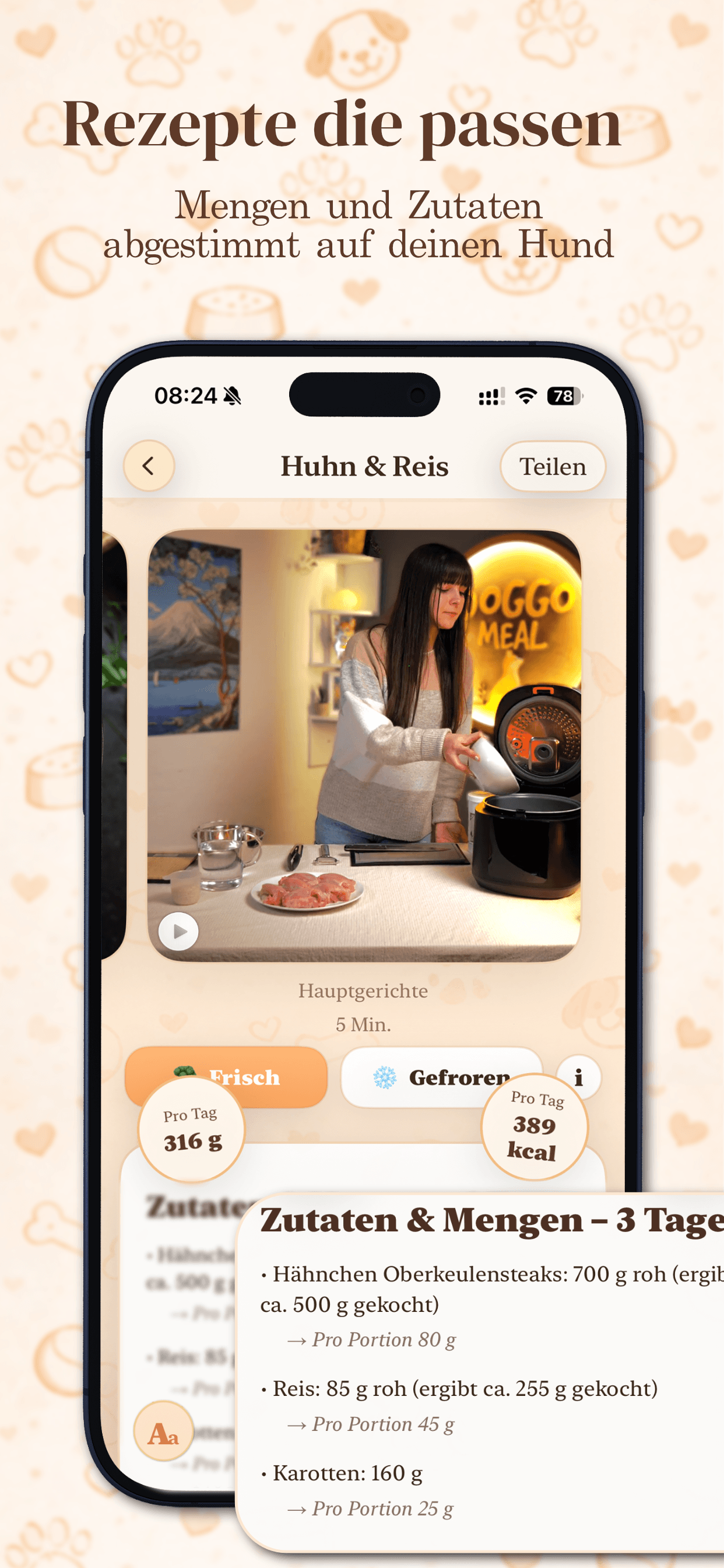
The DoggoMeal app calculates recipes in grams to suit your dog's weight, age, activity and allergies. Get the app
Matching calculators, free in your browser
- Dog treat calculatorHow many treats a day, in pieces and grams.
- Calorie needs calculatorkcal per day by weight, activity and life stage.
- Food amount calculatorGrams per day for dry, wet or fresh food.
How well is your dog's bowl put together overall? Free Food Check
Frequently asked questions
Can my dog eat raclette cheese?
It isn't needed. A small cube of cold, unseasoned raclette cheese is no problem for dogs that tolerate cheese, but raclette cheese is full-fat and salty. Don't give varieties with garlic, pepper or herbs, or the leftovers from the raclette pan with frying fat, bacon and pickled silverskin onions.
What should I do if my dog has eaten fondue?
With cheese fondue, call your vet practice or the emergency vet straight away, because it usually contains white wine and kirsch and often garlic. The same applies to broth or dips with onions or garlic and to a larger amount of meat from an oil fondue, even if your dog still seems perky. Don't make them vomit and don't give anything before you've spoken to the practice.
What can I give my dog to chew on New Year’s Eve?
Ideally something from their own food: a food toy filled with part of the daily ration, a thinly spread lick mat or a snuffle mat with dry food. A home-baked dog biscuit goes well with it. Don't give bones, antlers or hooves, and stay with your dog while they chew or lick.
My dog drank sparkling wine or punch – what now?
Call your vet practice or the emergency vet straight away. Alcohol is absorbed quickly and can cause vomiting, staggering, breathing problems and tremors, and in the worst case coma and death. Punch often contains grapes too. Alcohol is off limits for dogs in any form, including as a home remedy.
Is it dangerous if my dog eats firecrackers or firework debris?
Yes. According to Pet Poison Helpline, unexploded fireworks can cause gastrointestinal upset, damage to the kidneys, liver or bone marrow and seizures, depending on what they contain. Freshly lit fireworks burn paws, lips, nose and mouth. If your dog has eaten any of it, call your vet practice straight away and take the remains or the packaging with you.
How many extras can my dog have on New Year’s Eve?
All extras together stay under 10% of their daily calories. For an adult, neutered, normally active dog weighing 10 kg with a daily need of around 630 kcal, that's about 63 kcal, and for 20 kg with around 1,060 kcal it's about 106 kcal. If you fill the food toy with part of the normal daily ration, nothing extra is added.
Sources
This article is based on the following expert sources. You can read how we work under Editorial team & methodology.
- People Foods to Avoid Feeding Your Pets – ASPCA Animal Poison Control Center
- Fireworks – Pet Poison Helpline
- Top Ten Things to Remember When Your Pet Is Poisoned – Pet Poison Helpline
- Lead Poisoning in Animals – Merck Veterinary Manual
- Pancreatitis in Dogs and Cats – Merck Veterinary Manual
- Feeding treats to your dog – WSAVA Global Nutrition Committee
Less maths, more cooking.
The article tells you what matters. The DoggoMeal app turns it into a recipe with gram amounts to suit your dog's weight, age, activity and allergies.
- Dog profile
- Recipes with gram amounts
- Allergy warnings
- Doggopedia
Free · no subscription · every feature included
DoggoMeal editorial team
DoggoMeal is a dog nutrition app, founded and run by Kim Marques. Nami, our Shiba, is part of everyday life – her experiences with food changes, bland diets and the like appear in many articles as personal examples.
Our content follows the recommendations of the NRC, WSAVA and FEDIAF. You'll find the sources for this article above under “Sources”. The articles are no substitute for veterinary advice – if your dog has symptoms, please talk to your vet.